Share
Summarise

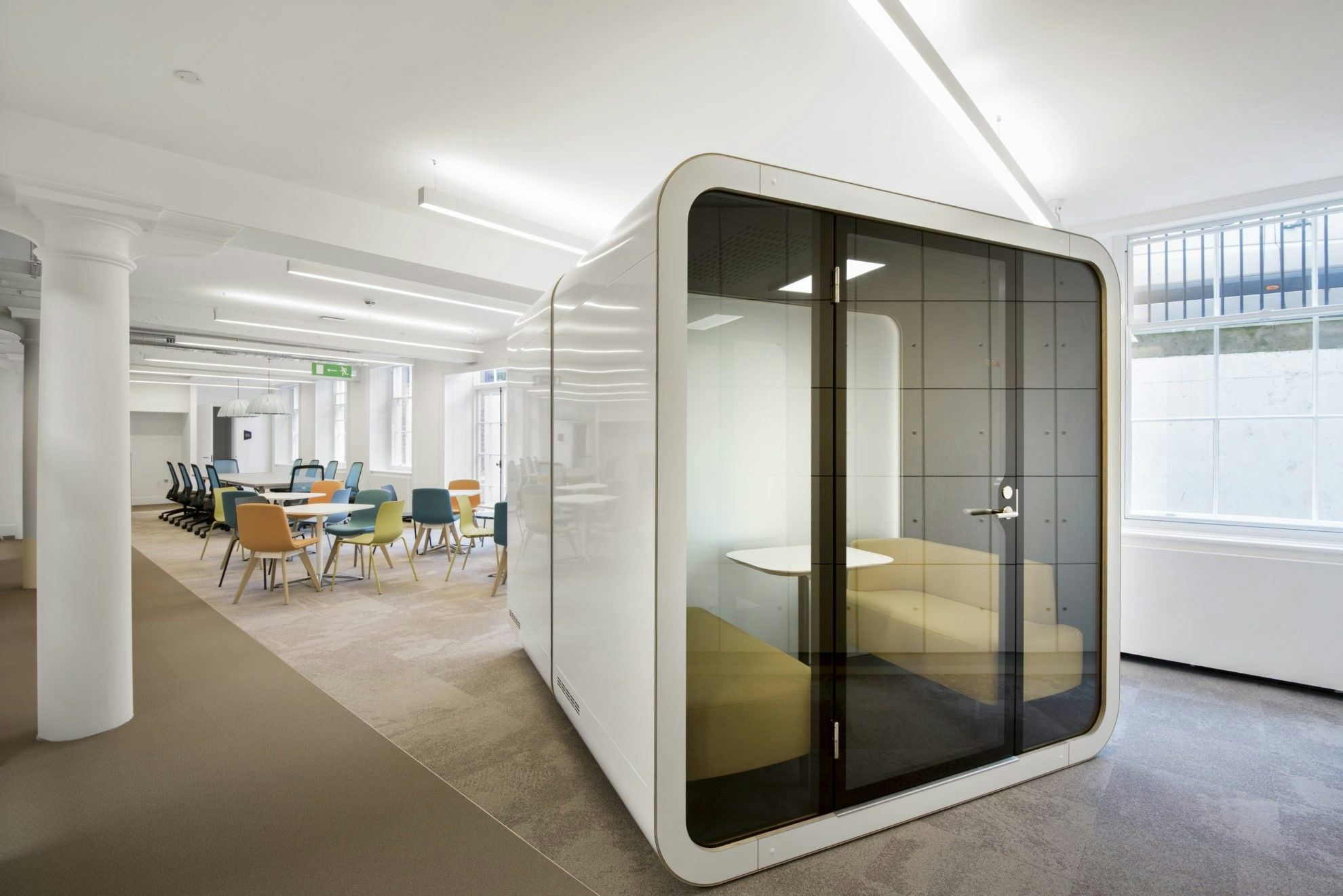
A guide to office pod pricing in the UK, covering single-person booths, meeting pods, acoustic performance, key features, and how to get the right balance of specification and budget for your workspace.
Office pod pricing depends on several overlapping factors. Brand and design quality is the most obvious driver, with premium manufacturers like Framery and Orangebox sitting at a very different price point to mid-range or budget alternatives. Size and configuration matter too, from compact single-user phone booths through to six-person meeting pods. Beyond that, the spec plays a major role: acoustic performance (full sound isolation versus basic noise reduction), built-in features (lighting, ventilation, power and USB connectivity), and flexibility (whether the pod is modular, relocatable, or fixed) all affect the final price.
The table below gives a realistic overview of current UK pricing across the main pod categories.
| Pod Type | Price Range |
|---|---|
| 1-person Office Pod (Phone Booth) | £3,000 – £17,000 (Excl. VAT) |
| 2-person Meeting Pods | £7,500 – £20,000 (Excl. VAT) |
| 4-person Meeting Pods | £12,000 – £26,000 (Excl. VAT) |
| 6-person Meeting Pods | £22,000 – £35,000 (Excl. VAT) |
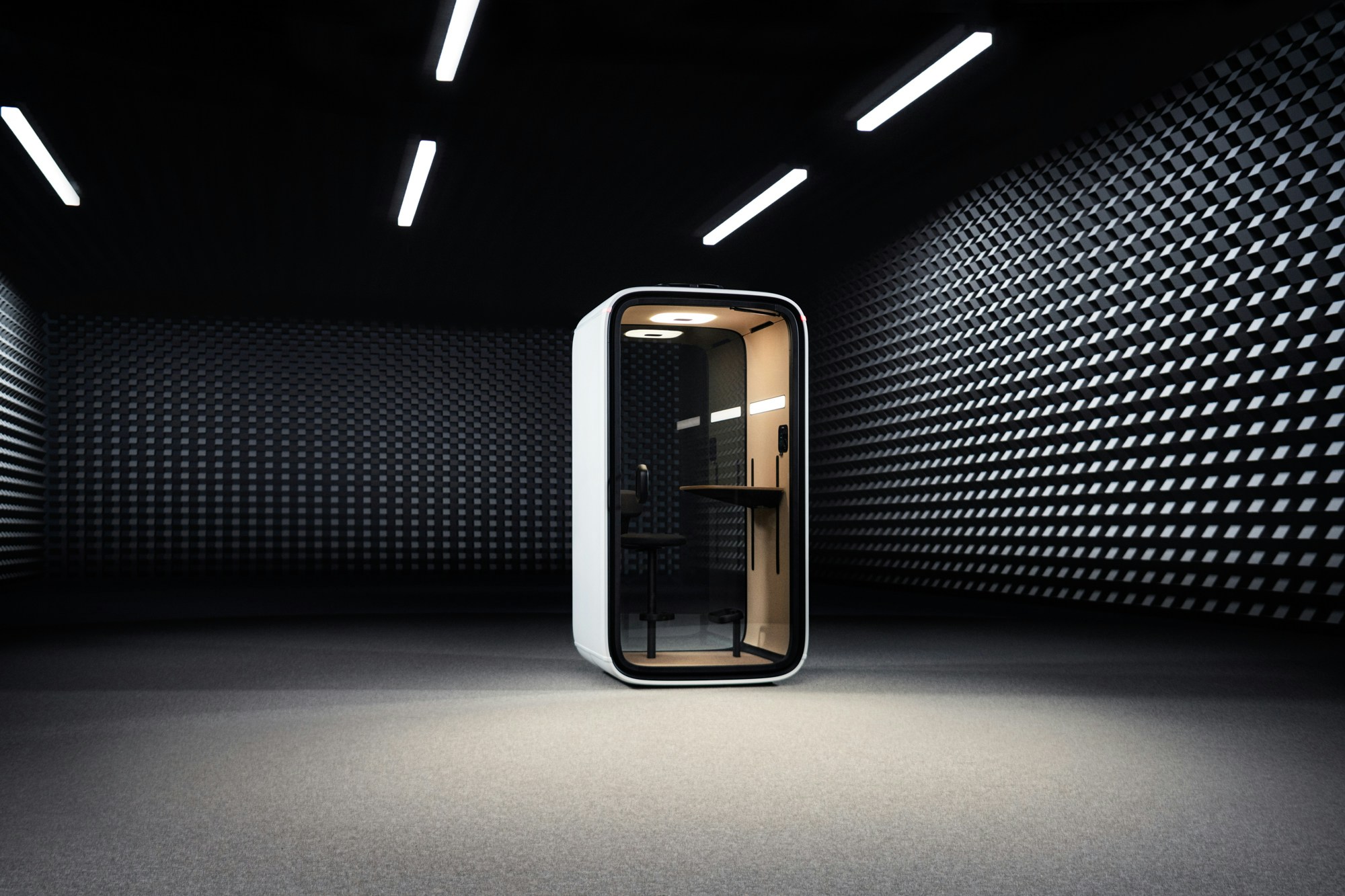
Those ranges reflect the breadth of options available. At the entry level, a basic single-person booth from a brand like Workstories (established in 2013) offers clean, modern design at an accessible price. At the premium end, Framery, the Finnish manufacturer founded in 2010, offers A-class soundproofing rated to ISO 23351-1, with smart booking technology and adaptive ventilation.
Their Framery One single pod typically starts from around £6,000 to £10,000, depending on specification, while the Framery 2Q meeting pod for four to six people sits considerably higher. Orangebox, the UK-based manufacturer behind the Air3 range, was one of the first companies to bring acoustic pods to market back in 2006. Their modular system starts from around £7,000 for a compact configuration and scales upward with size and specification, with the full Air3 range from around £15,000.
K2 Space works with all three brands and can advise on the right balance of performance, design, and budget for your workspace. For a broader view of office furniture options, our team is happy to guide you through what is available.

The purchase price of an office pod is shaped by four main factors, and understanding each one helps organisations make better decisions about where to invest and where to save.
A single-person phone booth is the most affordable format, designed for individual calls and focused work. These compact pods typically range from £3,000 to £17,000. Multi-person meeting pods for groups of two to six are larger, more complex to engineer, and priced accordingly, from £7,500 to £35,000 or more for high-end configurations. The jump in cost between a two-person and a six-person pod reflects not just additional materials but also the acoustic engineering needed to maintain sound isolation across a bigger volume.
Premium brands like Framery and Orangebox use superior materials, advanced ventilation systems, and integrated technology such as smart booking screens and occupancy sensors. These pods command higher prices but tend to last longer, perform better acoustically, and hold their value if the workspace is reconfigured in future. Lower-cost alternatives can work well for lighter use, but they often compromise on soundproofing, ventilation, and the quality of internal finishes.
Pods with genuine soundproofing, rated to standards like ISO 23351-1, use specialist materials and engineering to achieve speech-level reductions of 30 dB or more. This level of performance is worth the investment in busy open-plan offices where confidential calls and focused work need proper isolation. Budget pods may offer some noise reduction but rarely deliver the same level of speech privacy, which limits their usefulness in high-traffic environments.
Some pods are genuinely plug-and-play, delivered flat-packed or pre-assembled and placed in position within a few hours. Others, particularly larger meeting pods or those with integrated AV equipment, require professional installation that adds to the overall cost. It is worth confirming delivery and installation terms at the quoting stage, as these can vary considerably between manufacturers and suppliers.
The right approach is to match the pod specification to the way it will actually be used. A phone booth in a quiet corner does not need the same acoustic rating as a meeting pod next to a busy trading floor. Getting that balance right means the investment delivers genuine value without overspending on features that will not be needed.

The features included with an office pod have a direct impact on both price and how useful the pod is day-to-day. Understanding what is standard and what is optional helps avoid surprises at the quoting stage.
Built-in lighting is now standard on most mid-range and premium pods. The best systems offer adjustable brightness with preset modes optimised for video calls and focused work. Framery’s pods, for example, include automated LED lighting that responds to occupancy, while simpler models may offer a fixed overhead light with no dimming control.
Ventilation is one of the most important features to get right. A sealed pod without proper airflow quickly becomes uncomfortable, particularly during longer meetings. Premium pods like the Framery One fully change the air inside approximately every 66 seconds, with adaptive systems that adjust based on occupancy. Budget pods may rely on passive ventilation or basic fans, which can introduce noise and still leave the interior feeling stuffy.
Power and connectivity has become a baseline expectation. Most pods now include at least one power socket and a USB port, with higher-specification models offering USB-C fast charging, HDMI connectivity for external displays, and cable management integrated into the furniture. For meeting pods used regularly for video conferencing, these features make a real difference to usability.
Integrated furniture rounds out the specification. Many pods come with built-in desks, height-adjustable stools or seating, and optional extras like whiteboards or screen brackets. These integrated setups provide a ready-to-use workspace straight out of the box, though they do add to the price. For organisations that already have a furniture consultancy relationship in place, it may be more cost-effective to specify seating and surfaces separately.
The features that matter most depend on how the pod will be used. A quick-call phone booth needs good acoustics, ventilation, and a power socket. A four-person meeting pod used for client video calls needs all of that plus proper lighting, display connectivity, and comfortable seating for longer sessions.
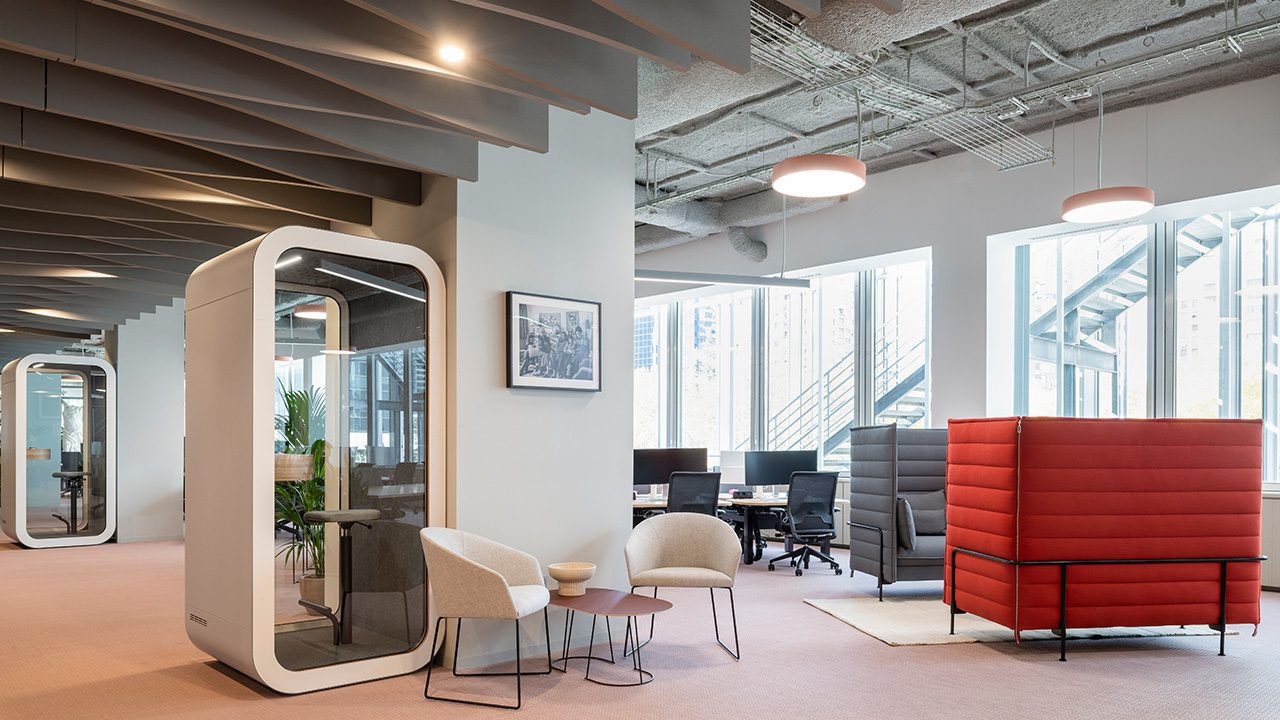
The self-contained, relocatable nature of office pods makes them a practical addition to open-plan offices, hybrid workspaces, and more compact working environments. When considering space requirements, or perhaps planning an office move, there are several ways pods can be integrated effectively into your office layout.
Office pods fit into a range of configurations without requiring structural changes. For smaller spaces, compact single-person booths can be tucked into corners or against perimeter walls, providing privacy and functionality without eating into the open floor area. Larger meeting pods work well as freestanding room alternatives, avoiding the cost and disruption of building traditional partitioned meeting rooms. Because pods sit on top of the existing floor and connect to a standard power supply, they can be repositioned as needs change.
Open-plan offices are often criticised for noise and distractions, and with good reason. Placing pods in these environments creates dedicated quiet zones for focused work, confidential calls, or private conversations. By turning underused areas into functional workspaces, pods improve the overall usability of the office without undermining its collaborative character.
Getting the right mix of pod types matters. Single-person booths suit quick calls and individual focus time, while larger meeting pods accommodate team discussions, client video calls, and workshop-style sessions. A considered mix, informed by actual usage data and headcount patterns, keeps the workspace efficient and avoids the common mistake of over-providing one type at the expense of another. Our space planning approach can help identify the right balance.
Pod placement should follow the natural movement patterns within the office. Positioning pods away from high-traffic corridors and entry points helps maintain accessibility while preserving the sense of privacy that makes them useful. The goal is to make pods easy to reach but discreet enough that they do not disrupt the broader office layout.
In high-rent areas like Central London, where office rents for prime space can exceed £100 per sq ft, efficient use of every square foot counts. Pods offer a compact alternative to traditional built-in meeting rooms, which require partitioning, mechanical ventilation, and often building control approval. Because pods are classified as furniture rather than construction, they avoid many of these costs and can be relocated or removed at the end of a lease without making good.
For organisations weighing the options, pods represent a flexible, cost-effective way to add privacy and meeting capacity to a workspace without the commitment or expense of permanent construction.
Where pods sit on the floor matters as much as which you buy – more in our design ideas.