Office Refurbishment vs Office Relocation: How to Decide in 2026
Few property decisions carry as much weight for an organisation as the choice between staying put and relocating. Both routes commit significant capital, leadership attention, and operational risk, and both shape the workplace experience for years afterwards. This guide sets out the financial, operational, and cultural factors that should drive the decision, drawing on our experience since 2004 of delivering both office refurbishments and office relocations across London.
Every organisation faces the stay-or-relocate question eventually. It tends to arrive at a lease event, a growth or contraction inflection point, or a moment of strategic reassessment when the workplace stops keeping pace with how the business runs.
The instinct is to treat it as a binary triggered by a single number, whether that is rent, headcount, or the look of the existing space. A sound answer rests on a layered analysis that weighs property economics against business strategy, employee experience, building condition, and operational risk. For organisations already past the decision and ready to plan the move itself, our office move guide sets out the steps that follow.
The London market in 2026 has sharpened the question on every front. Prime City rents reached £130.80 per sq ft in Q1 2026, up 40 percent year on year, with seven City deals signed above £100 per sq ft in the quarter and a new high of £160 per sq ft. Prime West End rents are now approaching £168 per sq ft, with further growth forecast through 2026.
Vacancy in best-in-class buildings has tightened to 0.3 percent in the City Core and 0.8 percent in the West End Core, with no significant new Grade A supply coming through until Q3 2027. Relocating in this market means contending with thin supply at the top of the range. Staying often means refurbishing in a building that no longer reflects what your people, clients, or investors expect from a modern workplace.
Why the Stay-or-Relocate Question Matters More in 2026
The economics of office occupation have shifted in ways that make this decision more consequential than at any point in recent memory. Hybrid working has changed how much space organisations need and what that space is for.
Sustainability regulation is reshaping the building stock itself. Talent expectations have raised the bar on workplace quality. The shifts do not point cleanly in one direction. They simply mean the wrong call carries a longer tail of consequences than it did a decade ago.
The clearest signal in the current market is the flight to quality. Savills reported that 99 percent of Q1 2026 Central London take-up was Grade A, with occupier demand polarised in favour of new, well-located, amenity-rich buildings. Secondary stock is being passed over in deal after deal. For occupiers approaching a lease event, the temptation to default to renewal can be strong because renewing avoids the disruption of a move and the uncertainty of a fit-out programme.
Yet renewing into a building that no longer supports the way people work commits the organisation to years of compromise, often at a rent that has been pulled upwards by the very polarisation that makes the existing building feel tired.
Sustainability has hardened the same trend. Around 71 percent of City of London offices and 78 percent of Westminster offices currently fail the EPC B rating that will be required from 2030 under tightening MEES regulation. For many older buildings the retrofit cost to close that gap is significant, and where the work is needed regardless of whether the organisation stays or leaves, it changes the comparison. The right answer depends on a structured assessment that begins long before any decision is made.
Most organisations benefit from starting the conversation two to three years before a lease event, allowing time to evaluate options without pressure and to engage landlords from a position of strength.

The Case for Staying and Refurbishing
Staying in your existing building can be the right answer for organisations whose location, lease economics, and building fundamentals still serve them well. A well-executed refurbishment delivers a transformed workplace without the disruption, cost, and risk of a full relocation. For occupiers with strong landlord relationships and favourable lease terms, refurbishment often represents the best return on workplace investment available to them.
The financial case for staying rests on avoided costs. A relocation typically involves dilapidations on the existing space, double rent during overlap, fit-out of the new space, and the soft costs of a move programme. Refurbishment removes most of those line items. Where landlords are willing to contribute to the refurbishment in return for a lease renewal, the economics tilt further.
Landlord contributions toward refurbishment costs have become more common as owners look to retain quality tenants in a market where supply has tightened in core submarkets. Lease incentives, rent-free periods, and capital contributions are all on the table for tenants who negotiate early and engage from a position of optionality.
Operational continuity is the other major advantage. A complex live office refurbishment can be phased to minimise disruption, allowing teams to remain productive while their environment is transformed around them. Address books, postal arrangements, supplier relationships, and the mental maps your clients hold of where you are all stay intact. For organisations whose location itself is a strategic asset, refurbishment preserves that asset rather than putting it through the uncertainty of relocation.
Refurbishment also offers a faster path to a refreshed workplace. A full relocation typically runs 12 to 18 months end-to-end. A focused refurbishment can be delivered in a fraction of that time. For organisations responding to cultural or operational change that cannot wait, this speed can matter as much as the cost saving.
The Case for Relocating
Relocating offers something refurbishment cannot, which is the chance to start with a building genuinely matched to current and future needs. For organisations whose existing space has reached the end of its useful life, whose location no longer serves the business, or whose footprint is too large or too small for the way they now work, relocation is the option that addresses the underlying problem rather than working around it.
Talent attraction sits high on the list of reasons organisations choose to move. The 99 percent Grade A take-up figure is not an accident. Occupiers who compete for senior talent know that the building plays a role in recruitment outcomes, particularly for graduate and early-career hires who use the workplace as a signal about the organisation. Vacancy rates in prime towers running well below the wider average reflect a market in which the best buildings command real premiums for a reason.
Sustainability has become another driver of relocation decisions, and a sharper one in 2026 than it was even two years ago. Newer buildings typically deliver superior energy performance, better certifications, and lower running costs. For organisations with public ESG commitments or whose investors and clients scrutinise environmental performance, the gap between an older building and a new one can be too wide to bridge through refurbishment alone. MEES exposure on a secondary asset can transform what looks like a routine lease renewal into a significant capital decision, and that decision often points toward relocation. Sustainable office design in modern buildings is engineered into the fabric rather than retrofitted as an afterthought.
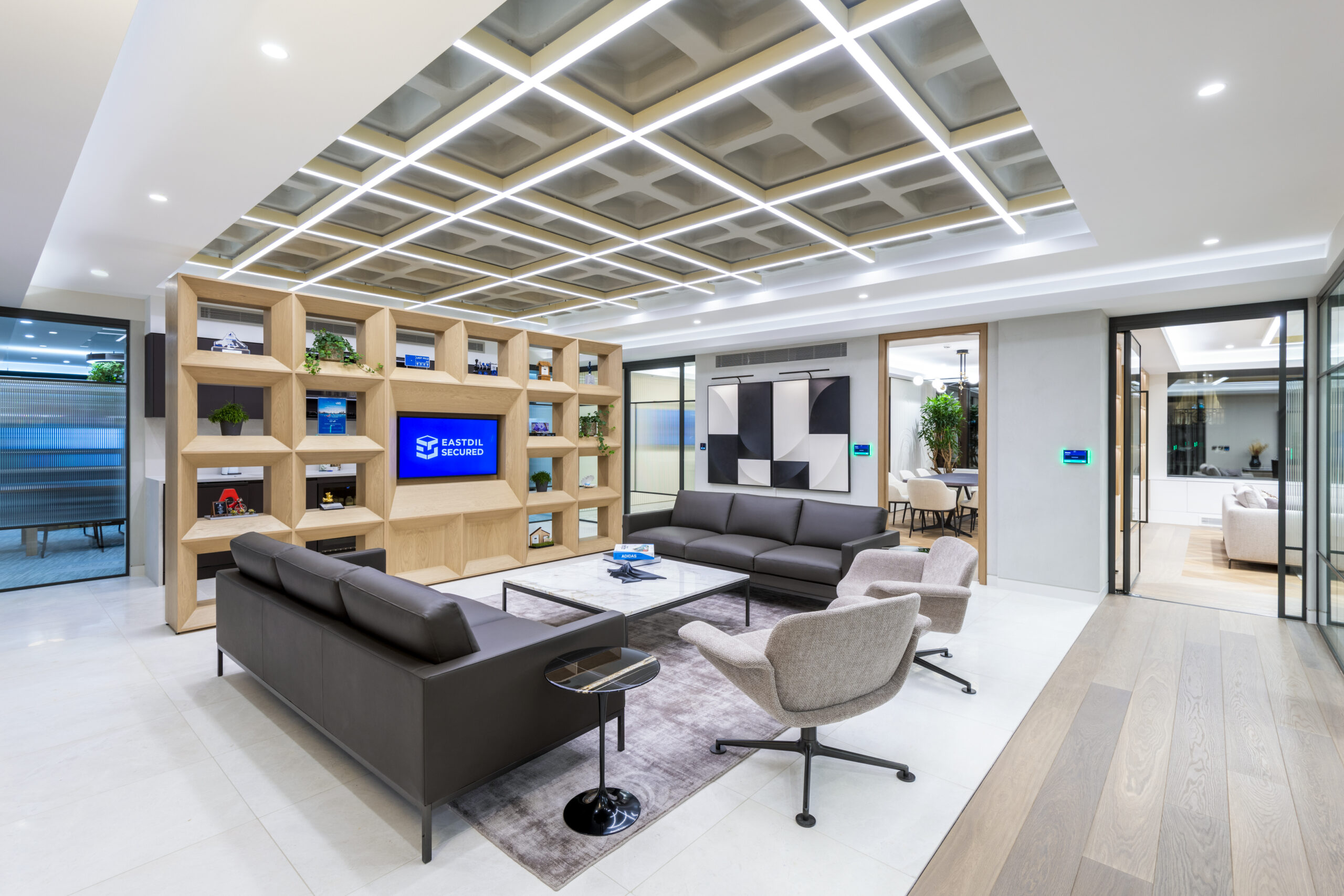
Relocation also resets organisational habits in ways that refurbishment rarely achieves. A new building creates a moment when leaders can introduce new ways of working, retire legacy practices, and reframe what the workplace is for. The transformation of a 1930s former bank into PJT Partners’ London headquarters illustrates the point. A move of that kind delivers a step change in identity, client experience, and operational fit that an in-situ refurbishment would have struggled to match.

Lease and Financial Considerations
The financial analysis behind the stay-or-relocate decision needs to be honest about the full cost picture on each side, not just the headline rent. A like-for-like comparison should bring together rent, service charges, business rates, fit-out, furniture, dilapidations, professional fees, IT migration, and the cost of disruption. Looking only at rent per square foot produces misleading conclusions in both directions.
Headline rent figures can also mislead in a different way. The £130.80 per sq ft City prime number captures the very top of the market. Grade A average rent in Central London reached £80.43 per sq ft in Q1 2026, up 15 percent year on year, which is a more useful benchmark for most renewal conversations. Working out where your building, floor, and lease event sit relative to that average is more informative than reaching for the prime headline.
For organisations approaching a lease break or expiry, the timing shapes what is possible. A break clause within 12 months provides flexibility, while a renewal still several years away creates room to negotiate. Engaging landlords early, before any decision has been made, almost always produces better outcomes than waiting until alternatives have been identified. Landlords with a quality tenant in place have a clear interest in retaining them, and that interest can translate into improved rent reviews, refurbishment contributions, or extended lease terms.
Dilapidations can shape the economics of a move in ways that surprise organisations encountering them for the first time. Dilapidation costs vary widely and rise where the lease requires a full strip-out and reinstatement of M&E services in a prime central building. For a 10,000 sq ft office, that is a six-figure liability that needs to be settled regardless of whether the organisation moves or stays. Understanding the exposure early allows it to be factored into negotiations and decisions rather than appearing as a late-stage shock.
Fit-out economics work in both directions. A refurbishment of an occupied space carries different costs from a fresh fit-out of an empty floor, with phasing, out-of-hours working, and protection of existing operations adding to the project budget. Conversely, fitting out a new space from a Cat A shell allows greater design freedom but means starting from zero on furniture, technology, and finishes. Our office fit-out cost guide sets out the 2026 benchmarks, with London projects typically ranging from £55 to £120+ per sq ft depending on specification. London is now the second most expensive city in the world for office fit-out, so cost discipline matters wherever the project lands.

People, Culture and the Employee Experience
The financial analysis is necessary but rarely sufficient. The stay-or-relocate decision is also a decision about your people. A move changes commutes, lunch routines, after-work patterns, and the daily texture of working life. A refurbishment, particularly a live one, asks teams to work through months of change in their immediate environment. Both options have human consequences that deserve to be weighed alongside the economic ones.
Commuting patterns should be analysed before any move is committed to. A new building that is technically closer to public transport hubs can still represent a meaningful change in journey time for staff travelling from particular directions. Postcode mapping of the workforce, alongside a journey-time analysis, gives a clearer picture than headline location data. For some organisations the analysis confirms the proposed new location works well. For others it reveals that the talent base would be put under unnecessary strain by even a short relocation.
Cultural fit with a building also matters. A heritage building in Mayfair tells a different story from a glass tower in the City. The right answer depends on the organisation, the sector, and the brand, and it is not always the most expensive or the most modern option. The relationship between workplace design and company culture means the building you occupy contributes to the identity of the organisation, whether intentionally or by default.
Engagement with employees through the decision process tends to improve outcomes regardless of which direction the organisation chooses. Staff who feel their working lives have been considered are more likely to support the change and contribute to its success. Staff who feel decisions have been made over their heads tend to resist, regardless of how good the new space turns out to be.

Assessing Building Condition and Operational Fit
A building survey of your existing space is the most reliable way to ground the stay-or-relocate conversation in physical reality. Heating, ventilation, and air conditioning are often the deciding factor. Older systems that struggle to maintain comfort across the floor, or that have reached the end of their useful life, can require capital investment substantial enough to alter the comparison on its own. The same is true of power distribution, data infrastructure, and lifts.
Floorplate efficiency is the other structural consideration. A building with deep floorplates, inefficient cores, or awkward dimensions limits what design can achieve regardless of budget. Space planning can rework an existing floor to a remarkable degree, but it cannot fundamentally change the geometry of the building. For organisations whose ways of working have evolved, the existing floorplate may simply be the wrong shape for what they now do. The BCO has revised its general density benchmark to 10 sq m per person, with a hybrid-adjusted effective density closer to 15 sq m per occupant once realistic utilisation is factored in. Older floorplates designed for 8 sq m and full-week occupancy can struggle to absorb that shift gracefully.
Compliance deserves a separate assessment. Accessibility requirements, fire safety standards, and energy performance regulations have all evolved, and older buildings often need significant work to meet current expectations. The 2030 EPC B threshold under MEES is the headline risk in 2026, but it is not the only one. Where compliance investment is required regardless of whether the organisation stays or moves, it changes the comparison. The cost of bringing an older building up to current standards can close the gap with the cost of moving to a building where those standards are already met.
An honest assessment of operational fit closes the loop. Does the existing building support the way your teams actually work, or does it force compromises that have become normalised? Run a structured occupancy study or utilisation audit before deciding. The data routinely reveals that perceptions of how the space is used differ markedly from the reality, and those insights inform whether refurbishment can deliver what the organisation needs.
A Cost Framework for Comparing Stay and Relocate
Comparing the two options on a like-for-like basis means building parallel cost models that capture every meaningful line item over the same time horizon. A five or ten-year view tends to surface differences that a year-one comparison misses, particularly where capital expenditure on a refurbishment is amortised against ongoing rent in a more affordable location.
The stay model should include refurbishment costs, any uplift in rent on lease renewal, dilapidations deferred to a future move, and the cost of any compliance or building services upgrades required to remain in the building. The relocate model should include dilapidations on the existing space, fit-out and furniture for the new space, professional fees, IT migration, the cost of double rent during overlap, and the operational cost of the move itself. Both models should include sensitivity analysis on the variables most likely to move, such as rent, fit-out scope, and timeline.
A worked example helps illustrate the order of magnitude. For a 20,000 sq ft City occupier on a lease renewal at current Grade A average rent, a mid-spec refurbishment delivers a refreshed workplace with dilapidations deferred to the next event. A relocation into a new building at the same rent costs the same fit-out plus typical dilapidations of £300,000 to £500,000 on the existing space, double rent and services through overlap, and the soft costs of the move itself. The relocation can still be the right answer if the new building delivers a step change in talent outcomes, ESG performance, or operational fit. The cost framework keeps the conversation honest about what each option asks of the business.
Hidden costs deserve specific attention. IT migration, furniture procurement, and the lost productivity associated with disruption are routinely underestimated. So is the cost of running two operations during a transition. Where the existing space cannot be vacated immediately, double rent and double services add up quickly. Off-site furniture warehousing can help manage those timing pressures, but it is itself a cost that needs to sit in the model.
Investment value is the other side of the cost picture. Both refurbishment and relocation should be evaluated against what they deliver, not just what they cost. A workspace that improves recruitment outcomes, raises productivity, supports new ways of working, or strengthens client perceptions can produce returns that more than justify the investment. Treating the decision purely as a cost-minimisation exercise misses the upside that workplace investment is capable of delivering.

Timeline, Programme and Risk Considerations
Timeline is often the silent driver of stay-or-relocate decisions. Organisations that leave the conversation too late find their options narrowed by external constraints rather than strategic choice. A lease event approaching in 12 months removes negotiating room and limits the buildings realistically available. A lease event approaching in three years allows the full range of options to be explored without pressure. The supply backdrop matters here too. With no significant new Grade A delivery until Q3 2027, occupiers waiting until late 2026 to start the conversation will find the prime shortlist materially shorter than it is today.
A realistic relocation programme runs to 12 to 18 months for most projects, though larger or more complex moves can extend beyond that. This includes property search, lease negotiation, design development, fit-out construction, furniture procurement, and the move itself. Compressed timelines are possible but tend to increase cost and reduce the quality of decisions made along the way. Refurbishment programmes are typically shorter, with a focused project delivered in 12 to 20 weeks depending on scope, though phased live refurbishments extend that timeline to keep operations running.
Risk profile differs between the two options. Refurbishment carries the risk of disruption to a live operation, the possibility that the building reveals issues during the project, and the constraint of working within an existing structure. Relocation carries the risk of programme slippage, double-running cost, business continuity exposure during the move itself, and the unknowns associated with a new building. De-risking the office move through an integrated design-and-build approach is one of the most reliable ways to manage these exposures, because a single team carries accountability for design, programme, cost, and handover.

The Hybrid Path: Reconfigure Without Relocating
Between full refurbishment and full relocation sits a third option that often gets overlooked. A targeted reconfiguration of the existing space, focused on the areas where the current layout no longer works, can deliver meaningful improvement without the cost or disruption of a full project. For organisations whose building fundamentals are sound but whose layout has fallen out of step with hybrid working, this can be the most efficient path forward.
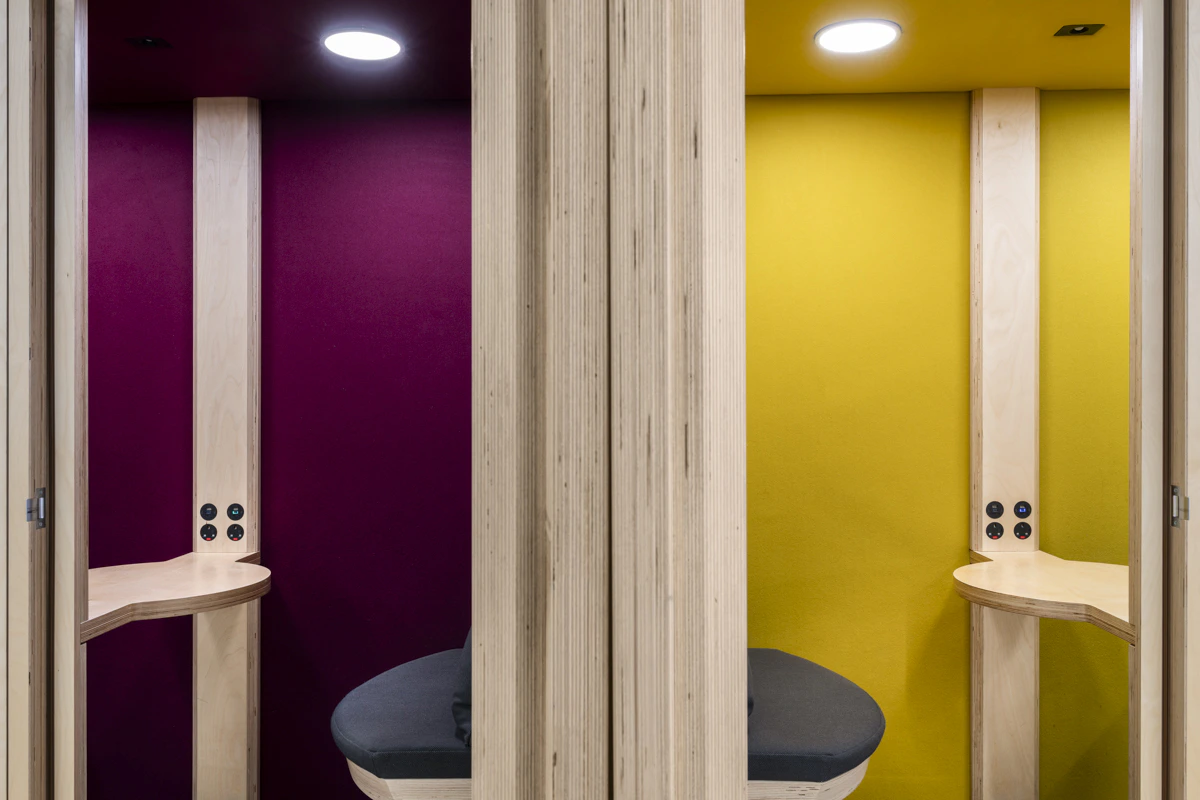
Reconfiguration typically focuses on the highest-impact zones. Reception areas, client meeting suites, and collaboration spaces often deliver disproportionate returns on relatively modest investment. Right-sizing the desk allocation to reflect actual occupancy patterns can free up space for the amenities that hybrid working has made more important, such as quiet rooms, video-call booths, and informal meeting areas. Our guide to office space rationalisation sets out a structured approach for organisations whose footprint has fallen out of step with how they now work, and office furniture and FF&E procurement can transform the look and feel of a space without structural work.
This middle path works best for organisations whose space is fundamentally the right size and in the right location, and whose building services are in reasonable condition. Where any of those conditions does not hold, a fuller intervention or a relocation is usually the better answer. The risk with reconfiguration is that it becomes a series of small projects that consume cumulative time and cost without delivering the step change a more comprehensive approach would have produced.
How to Make the Decision With Confidence
The right approach is structured and starts early. A property strategy review 18 to 36 months before a lease event creates the time needed to evaluate options properly. The review should bring together property, finance, HR, IT, and operational leadership, supported by external specialists in design, fit-out, and property advice. Approaching the question from multiple angles tends to produce better answers than a decision driven by one function in isolation.
A workplace assessment of the current space provides the baseline for any comparison. Understanding how your existing space is used, where it works well, and where it falls short turns the stay-or-relocate question from a hypothetical into a grounded analysis. Test fits of the existing space, run alongside test fits of candidate new buildings, allow direct comparison of what each option could deliver. The output is rarely a single right answer. It is usually a clearer view of the trade-offs the organisation is making either way, and the confidence to make the trade-off deliberately.
Engaging an experienced delivery partner early tends to surface considerations that would otherwise emerge late. Buildings throw up issues that only experienced eyes spot during a site visit. Programme assumptions that look reasonable on paper turn out to be unrealistic in practice. Cost estimates that assume good base conditions need adjustment when the survey reveals otherwise. Bringing this experience in at the strategy stage, before any commitment has been made, protects the quality of the eventual decision.
The decision should rest on what the organisation needs from its workplace over the next five to ten years, not on what feels most comfortable in the moment. A move that disrupts the organisation in the short term but delivers the right environment for the next decade is usually a better outcome than a renewal that defers the question to the next lease event. Equally, a refurbishment that delivers a transformed workplace at a fraction of the cost of relocation is usually a better outcome than a move pursued for its own sake. Our office relocation checklist provides a structured framework once the decision to move has been made.

Delivering Stay and Relocate Projects With a Single Team
K2 Space has delivered both office refurbishments and office fit-outs for relocating occupiers across London since 2004. Our integrated approach brings together design, fit-out, furniture, and move management under a single team, a defined timeline, and a fixed budget.
Whether the right answer is to stay and refurbish or to relocate to a new building, the same disciplined approach applies. We work with occupiers from the earliest stages of strategy through to handover, helping the decision become a sound investment rather than a leap of faith. For organisations weighing the stay-or-relocate question, partnering with an experienced team is one of the most reliable ways to reach a confident decision and deliver an outcome that serves the business for the years ahead.

