Share
Summarise


/ How to Choose the Right Office Fit-Out Partner
A practical guide to selecting the right fit-out partner for your London workplace project, covering financial due diligence, design capability, sector experience, procurement routes, cost transparency, and programme delivery in a market reshaped by contractor insolvencies and rising specification demands.
Choosing the right office fit-out partner is one of the more consequential decisions an organisation will make during a workplace project. It determines the quality of the finished environment, the experience of the process itself, and the working conditions your people will inherit for years to come. It is also, by any measure, a significant financial commitment. The difficulty is that every fit-out company will tell you they are the right choice. Portfolios are curated, testimonials are selected, and credentials are polished. So how do you cut through the marketing and make a genuinely informed decision? This guide sets out a practical framework for evaluating prospective partners, drawn from the realities of how these projects actually work rather than how they are presented in pitch documents. From delivering workplace projects for over twenty years, we have seen what separates a strong partnership from a problematic one. The warning signs are remarkably consistent, and so are the indicators of a firm that will deliver well. What follows is what we would tell a client sitting across the table from us at the very start of the process. 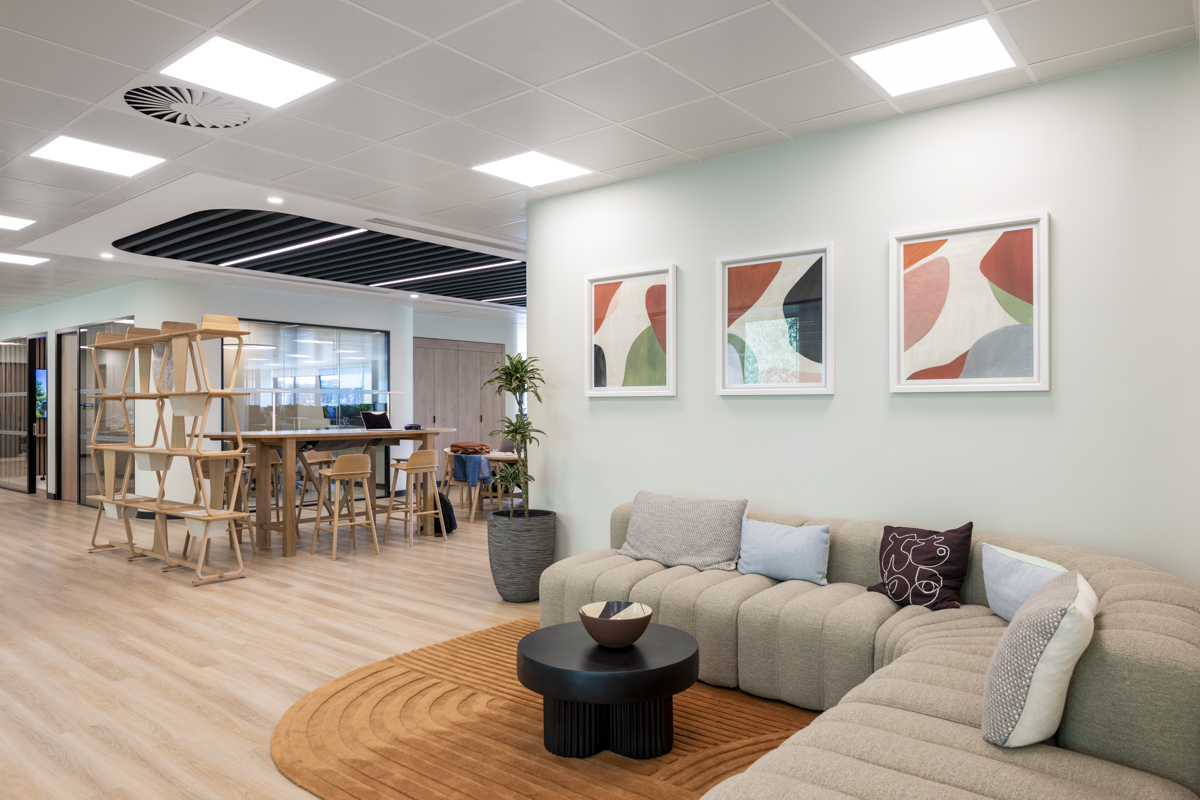
Getting the brief right at the outset of this Global Innovation Institute’s 25,000 sq ft headquarters was critical to delivering a multi-floor workspace that matched the organisation’s collaborative culture. View the full case study.
Before approaching any fit-out company, be clear about what you need the project to achieve. A vague brief produces vague proposals, which makes meaningful comparison almost impossible. Define the business outcomes you are building for. Are you consolidating teams into a single location? Attracting talent in a competitive market? Improving how your people collaborate? The answer shapes everything from the space plan to the specification of materials, and the right partner for one brief may not be the right partner for another. We regularly see organisations begin their search before they have articulated what success looks like. The result is a selection process driven by aesthetics and price rather than capability and alignment. Taking two or three weeks to develop a proper brief before issuing any invitations to tender will save months of confusion later in the project. Consider the delivery model that suits your organisation’s governance and risk appetite. A design-and-build approach places design, construction, and coordination under a single team, which simplifies decision-making and accountability. A traditional route separates the designer from the contractor, which some organisations prefer for highly bespoke schemes or where independent design oversight is a requirement. Neither is inherently better, but the choice affects which firms belong on your shortlist. Think honestly about budget. Published benchmarks from the likes of Cushman and Wakefield and Turner and Townsend provide useful reference points, and our guide to office fit-out costs breaks down the typical ranges in more detail. But every project is different, and understanding where your expectations sit relative to what the market can deliver for that budget will save considerable time during the tender process. An initial cost estimate from a credible firm can help calibrate expectations early.
One of the most practical considerations, and one that is often overlooked, is the relationship between your project’s size and the firm’s typical workload. A project that represents a very large proportion of a small company’s annual turnover creates risk for both parties. The firm becomes overly dependent on the project, which can affect resource allocation and commercial decision-making. Conversely, a relatively small project with a very large contractor may not receive the attention or senior involvement it deserves. The ideal fit is a firm for whom your project is meaningful but not existential. It should be large enough to warrant their best people and senior oversight, but not so dominant that it distorts their business. This is worth asking about directly during the selection process. How many projects of similar scale has the firm delivered in the past three to five years? What proportion of their current workload does your project represent? As a practical benchmark, we find the best outcomes tend to occur when a project represents roughly 10 to 25 per cent of a firm’s annual capacity. Below that threshold, the project may not command enough senior attention. Above it, the firm’s commercial exposure becomes a risk factor for the client. For projects exceeding 15,000 to 20,000 square feet, or those involving complex Cat A and Cat B interfaces, the procurement and coordination requirements often favour firms with dedicated project management infrastructure and established supply chain relationships. Smaller, design-led practices may excel on boutique schemes but struggle with the logistics of a larger programme. Our 102,000 square foot FF&E project in Paris, which involved coordinating 32 manufacturers across a four-week install in a listed building, is an example of the kind of scale where dedicated procurement infrastructure becomes essential rather than optional. 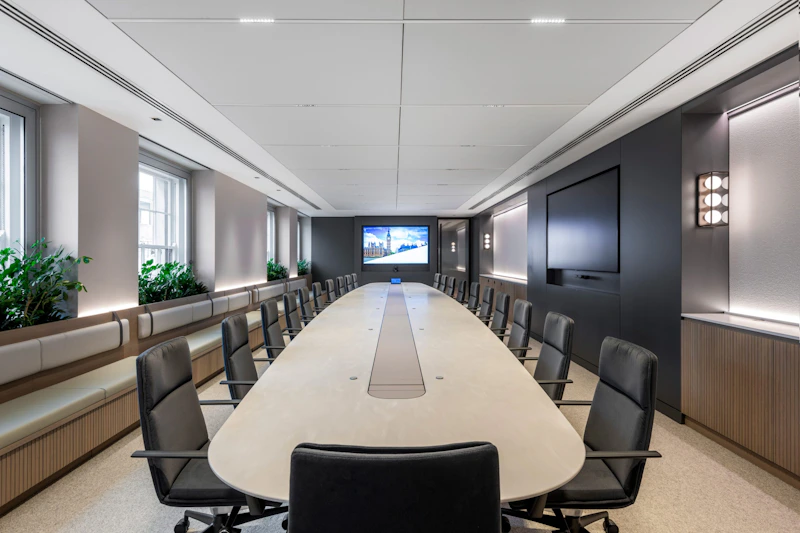
A bespoke 9.2-metre Corian boardroom table with leather inlay, designed and delivered for a private investment firm in Mayfair. Projects of this specification demand a partner with the scale and supply chain to manage complex bespoke commissions. View the full case study.
A firm’s portfolio tells you what they have done. What it does not tell you is how they did it, what went wrong along the way, and how they responded when it did. These are the things that matter most, and they require deeper investigation than browsing a website. Ask to visit completed projects rather than relying solely on photographs. A well-composed image can make almost any space look impressive, but walking through a finished workplace reveals the quality of detailing, the robustness of materials, and the overall coherence of the design in a way that photographs cannot. If possible, ask to visit a project that was completed two or three years ago rather than last month. Materials age, joinery settles, and the true quality of a fit-out becomes apparent over time. Ask to speak with previous clients, and not just the references the firm chooses to offer. The relationship during the project matters as much as the finished product, and a candid conversation with someone who has been through the process will reveal more than any case study. How did the firm handle unexpected problems? Were they transparent about costs? Did the same team stay on the project from start to finish? There are specific questions that tend to surface the most useful information. Ask whether the final cost matched the original budget, and if not, why. Ask whether the handover date slipped, and by how much. Ask whether the client would use the same firm again. That last question, asked directly, usually produces the most honest answer you will get during the entire selection process.
Sector experience matters more in some industries than others. A financial services firm has specific requirements around security, client confidentiality, and the quality of front-of-house environments that a technology company may not share. Legal practices need particular acoustic performance and document handling infrastructure. Life sciences occupiers have regulatory and ventilation requirements that are genuinely specialist. The transformation of a 1930s former bank into an investment firm’s London headquarters illustrates the kind of sector-specific challenge that requires deep experience. The 2,496 square foot project demanded respect for heritage architecture, including the retention of an original vault door, while delivering a workspace that met the operational and aesthetic standards of a modern financial services firm. Balancing those requirements, working within the constraints of period features while achieving the specification the client expected, required judgement that only comes from repeated exposure to similar briefs. Similarly, the Rolls-Royce & Partners Finance headquarters in London SW1 called for premium materials including Crittall glazing and a white marble boardroom table that reflected the brand’s engineering heritage. The 8,000 square foot scheme needed to communicate the same quality and precision that defines the Rolls-Royce name, which is a very different design challenge from a technology start-up or a creative agency. If your sector has particular regulatory, compliance, or operational requirements, check whether the firm has genuine familiarity with them or whether they are learning on the job at your expense.
The collapse of ISG in 2024 was a stark reminder of what happens when a major contractor fails mid-project. Clients were left with half-completed workplaces, forfeited deposits, and the considerable cost of engaging replacement contractors to finish the work. The ripple effects through the supply chain affected thousands of subcontractors and suppliers. Financial due diligence on a prospective fit-out partner should be thorough and current. Filed accounts provide a baseline, but they are historical documents that may not reflect recent trading conditions. Ask for a current credit report from a recognised provider. Request evidence of appropriate insurance coverage, including professional indemnity and contractor’s all-risks policies. Understand how the firm manages its supply chain payments, as late payment to subcontractors is often an early warning sign of financial strain. A practical step that many clients overlook is asking the firm to name two or three of their regular subcontractors, and then contacting those subcontractors directly to ask about payment practices. Subcontractors who are paid reliably tend to prioritise work for that main contractor, which directly affects the quality and timeliness of your project.
Retention arrangements deserve careful attention. Many contracts withhold a percentage of payment as security against defects, but this mechanism only provides protection if the contractor remains solvent long enough to address any issues that emerge. For larger projects, consider whether a performance bond or parent company guarantee provides additional assurance. These instruments carry cost, but relative to the overall project investment, the premium is modest. Ask how long the firm has been trading. Longevity is not a guarantee of quality, but a company that has sustained client relationships over many years and earned repeat business is demonstrably doing something right. Repeat clients are, in many ways, the most reliable indicator of a firm’s true capabilities, because they have experienced the full reality of working with that team and chosen to do so again. Our longstanding relationship with a US hedge fund client, for instance, has spanned multiple office relocations across their London expansion, each project building on the trust and knowledge established in the one before. 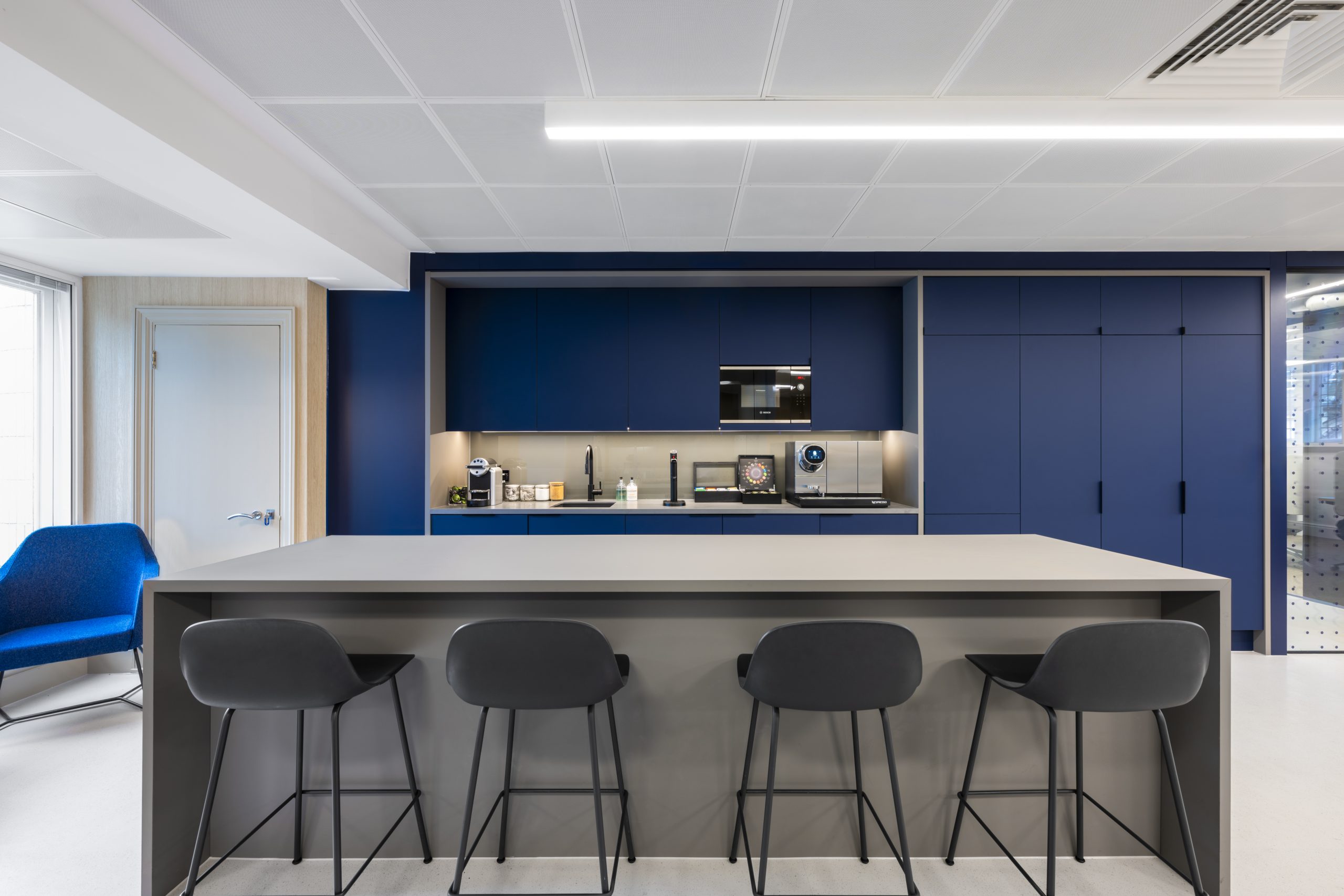
Genetec’s 6,000 sq ft London W1 office, delivered in just eight weeks within a period building. Financial due diligence should include checking whether a firm can sustain this kind of delivery pace without compromising its supply chain. View the full case study.
A fit-out partner’s design capability shapes the environment your people will occupy every day. In a market where the physical workplace is a competitive advantage in attracting and retaining talent, design quality should be a primary selection criterion rather than an afterthought. Evaluate the design team as carefully as the delivery team. Who will lead the design of your project? What is their background and design philosophy? How do they approach the balance between aesthetics and functionality? Ask to see examples of their work across different briefs and sectors. A strong design team adapts its approach to each client rather than applying a house style regardless of context. The difference becomes visible in the finished work. Compare the Scandi-contemporary aesthetic of the Global Innovation Institute, with its natural textures and muted palette across 25,000 square feet, against the bespoke grandeur of a Mayfair investment firm whose centrepiece is a 9.2-metre Corian boardroom table with leather inlay. Both are high-quality outcomes, but they required fundamentally different design sensibilities. A firm that produced only one type of work would have been wrong for the other brief. The space planning process reveals much about a firm’s design rigour. How do they gather information about the way your organisation works? Do they conduct utilisation studies and stakeholder workshops, or do they rely on assumptions? How do they reconcile competing demands, such as the tension between open plan and enclosed space, or between collaboration and concentration? The quality of the questions a design team asks is often the best indicator of the quality of the answers they will provide.
The best workplace designs reflect the organisation that occupies them without resorting to heavy-handed branding. Brand identity should inform the design through material choices, spatial qualities, and the overall atmosphere of the space rather than through logos on every wall. A partner who understands this distinction will create a workplace that feels authentic and considered, one that communicates the organisation’s values to everyone who enters it. The Roald Dahl Story Company’s office in Marylebone is a good example of this principle taken to its logical conclusion. The 4,500 square foot space includes a replica of Dahl’s garden writing shed, built indoors with a thatched roof. It is a design gesture that could easily have felt contrived, but because it grew from a genuine understanding of the organisation’s identity and what the space needed to communicate, it works. That kind of design confidence only comes from a team that has invested the time to understand the client properly.
An office fit-out involves far more than construction. Design, furniture procurement, AV and IT coordination, move management, and post-occupancy support all contribute to the success of the project. How these services are assembled and coordinated makes a significant difference to both the experience and the outcome. Some firms offer a comprehensive service that spans every aspect of the project. Others specialise in one or two areas and rely on the client or separate consultants to coordinate the rest. Both models can work, but the coordination model carries consequences. When furniture consultancy sits within the same team as design and construction, decisions about product selection, spatial planning, and delivery programming happen in a single conversation. When furniture is procured separately, there is a risk that the products selected do not align with the spatial design, or that delivery timing conflicts with the construction programme.
The same principle applies to FF&E procurement more broadly. Specialist joinery, bespoke items, and long-lead products all require early coordination with the design and construction programme. A partner who manages these elements internally can sequence procurement to match build progress, reducing the risk of delays. Where these elements are managed by separate parties, the client often becomes the de facto coordinator, absorbing risk and complexity that would be better managed elsewhere. The scale of this coordination challenge is not always obvious from the outside. On our Paris project for a global tech company, the FF&E programme involved sourcing from 32 separate manufacturers, with deliveries sequenced across a four-week installation window in a historic building where access was restricted and storage space was virtually non-existent. That kind of logistical complexity requires a team that has done it before, with established supplier relationships and the project management systems to track hundreds of individual items through procurement, delivery, and installation. Warehousing and storage capabilities provide additional flexibility. Furniture can be received, inspected, and held off-site until the space is ready, preventing the congestion and damage risk that arises when deliveries arrive before areas are prepared. 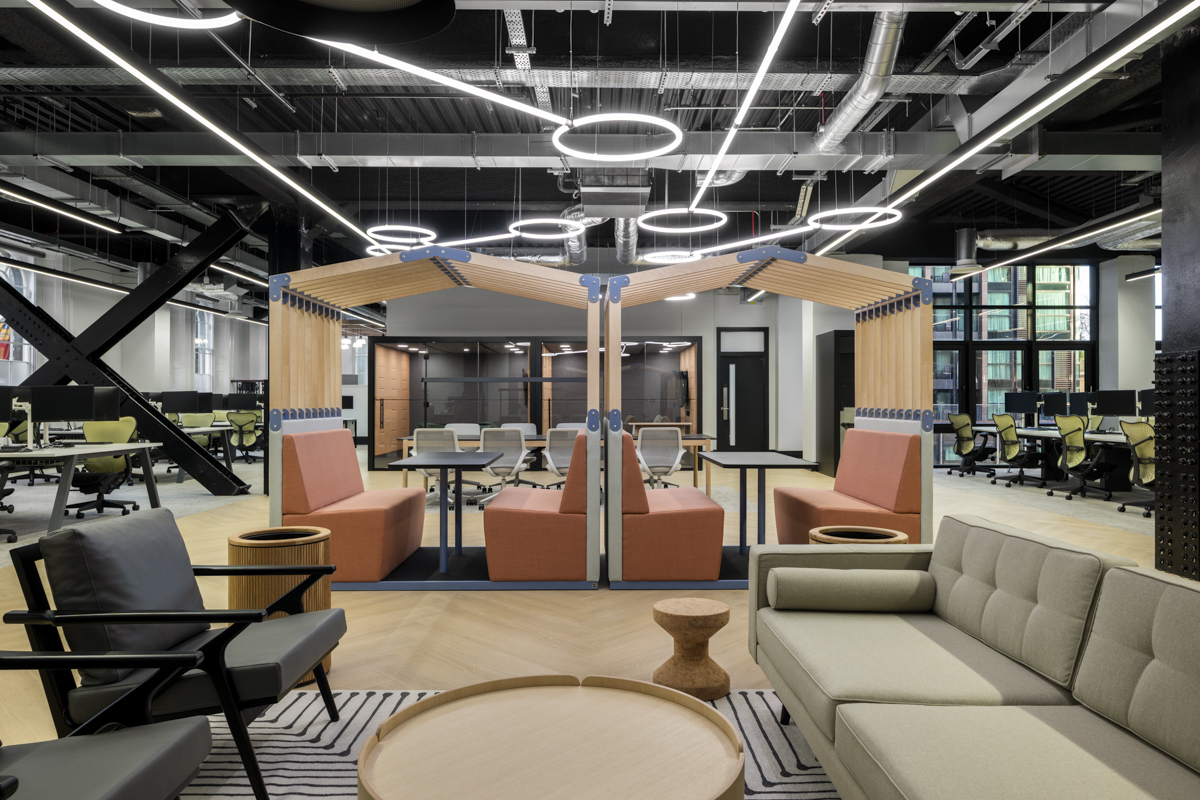
Dentsu’s London office, where AV integration, furniture procurement, and construction were coordinated within a single team. When these services sit under one roof, the risk of misalignment between design intent and delivered product falls significantly. View the full case study.
How a fit-out partner approaches cost management is one of the clearest indicators of how the wider relationship will function. Organisations need to understand not just what the project will cost, but how that cost is structured, what is included, and where the risks of variation lie. Fit-out costs in London vary considerably depending on specification, building condition, and location. A straightforward Cat B fit-out might sit between eighty and one hundred and twenty pounds per square foot, while a high-specification project for a demanding occupier can exceed two hundred pounds per square foot. These ranges are useful as a starting point, but every project is unique and the cost of your specific requirements may differ from published averages. A credible partner will provide a clear cost breakdown at an early stage, identifying the key cost drivers and explaining how different design or specification choices affect the overall budget. They will be transparent about provisional sums and allowances, and will explain how these will be resolved as the project progresses. They will also be honest about what the budget can realistically achieve, advising where investment will have the greatest impact and where savings can be made without compromising quality. One of the most common sources of budget overrun is scope creep driven by decisions that are made too late in the process. When a client changes a floor finish after the subcontract has been let, or adds a meeting room after the M&E design is finalised, the cost impact is disproportionate to the change itself. A good partner will flag these decision points early and hold the client to a realistic programme of sign-offs, which is not always comfortable but protects the budget.
Fixed-price contracts provide cost certainty, which is particularly valuable for organisations that need board approval for capital expenditure. The partner absorbs the risk of cost overruns in exchange for a defined sum. Open-book arrangements offer greater visibility of actual costs but transfer more risk to the client. Either approach can work effectively, provided both parties understand the commercial dynamics involved. What matters most is that the cost conversation is honest from the outset, with no hidden margins or unexpected extras emerging after the contract is signed. 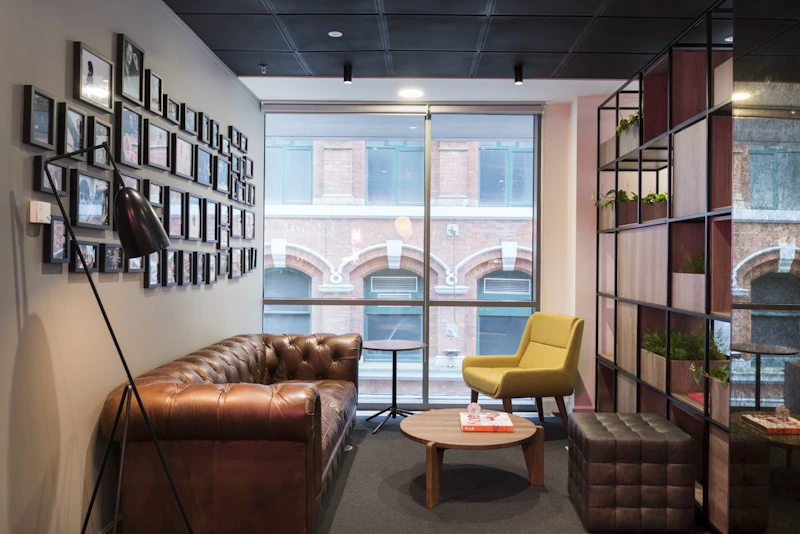
Latham & Watkins’ Manchester office, part of a 25,000 sq ft programme spanning Manchester, London, and Brussels. A clear cost framework agreed at the outset allowed the firm to roll the same specification and commercial terms across multiple locations. View the full case study.
For many organisations, the move date is not negotiable. Lease expiries, business commitments, and staff expectations create hard deadlines that the fit-out must meet. A partner’s ability to deliver on programme is therefore as important as their ability to deliver on cost. Ask how the firm develops and manages project programmes. A robust programme identifies every activity, its duration, and its dependencies. It accounts for long-lead procurement items, building access restrictions, and the time needed for commissioning and testing. Regular reporting against the programme allows both parties to track progress and address potential delays before they become problems.
The DTRE project at 25 Argyll Street in Mayfair demonstrates what disciplined programme management looks like in practice. The 11,000 square foot scheme required coordination of specialist joinery, high-quality furniture, and sophisticated AV integration, all delivered within a compressed timeline to achieve BREEAM Very Good accreditation. By maintaining strict programme discipline and managing contractor interfaces carefully, the project was handed over on schedule and to the client’s exacting standards. Compressed timelines are more common than many clients expect. The Löfbergs project, a 4,000 square foot office for the Swedish coffee company, was delivered in just three months from commission to handover, including a bespoke tasting kitchen. The Genetec scheme in a period building on London’s W1 was completed in eight weeks. These timescales are achievable, but only with a team that has the supply chain relationships and programme management discipline to compress the critical path without cutting corners. Contingency planning is another indicator of a mature delivery team. How does the firm respond when things do not go to plan? What fallback arrangements exist for critical path activities? A firm that can articulate clear contingency strategies has thought about these scenarios in advance, which is considerably better than discovering their approach in the middle of a crisis.
Sustainability has moved from a desirable feature to a material consideration in partner selection. Organisations increasingly need to demonstrate their environmental credentials to stakeholders, employees, and regulators. The workplace is a visible expression of that commitment, and the fit-out partner plays a central role in delivering on it. Ask about the firm’s approach to sustainable design and construction. Do they have established relationships with suppliers of recycled and low-carbon materials? How do they manage construction waste? Can they provide data on the environmental impact of the project? For organisations seeking formal certification, what experience do they have with schemes such as BREEAM or SKA? Beyond certification, consider the firm’s broader approach to environmental responsibility. Specifying products with strong lifecycle performance, designing for flexibility so the space can adapt to changing needs without wholesale reconstruction, and considering the embodied carbon of material choices all contribute to a more sustainable outcome. A partner who raises these issues proactively, rather than waiting to be asked, brings genuine environmental value to the project. It is also worth noting that sustainability credentials are increasingly scrutinised by prospective employees. In a competitive talent market, particularly in London, a visibly sustainable workplace can be a genuine differentiator in recruitment. The investment in better materials and responsible construction practices pays back not just in reduced operating costs but in the calibre of people the space helps attract. 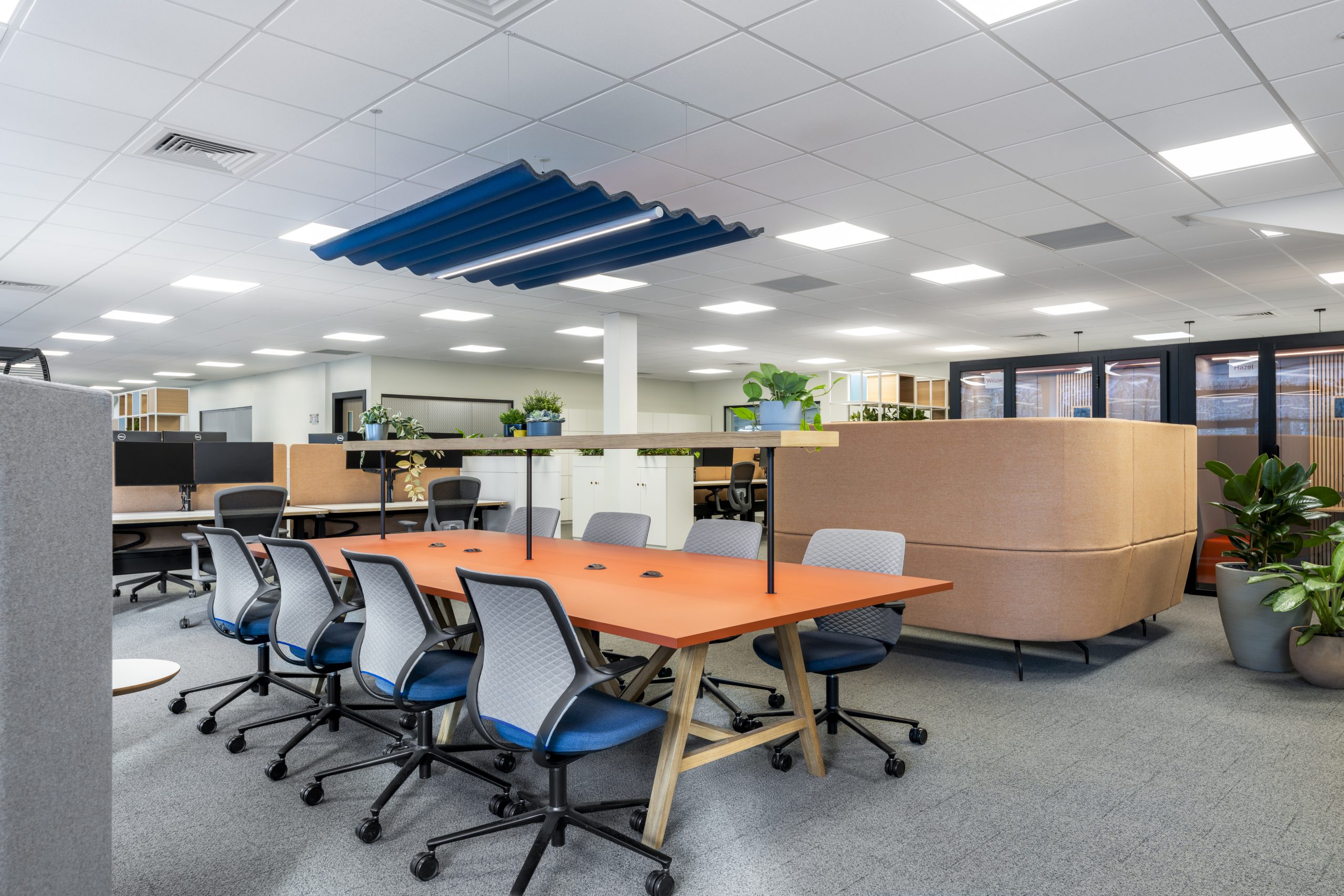
OSRL’s 6,000 sq ft hybrid workspace in Southampton, delivered in eight weeks. Sustainable material choices and flexible zoning allow the space to adapt as the organisation’s working patterns evolve. View the full case study.
An office fit-out is a partnership that typically spans six to eighteen months. During that time, the project team will make hundreds of decisions together, resolve unexpected challenges, and work through the inevitable compromises that every project requires. The quality of the working relationship matters enormously, and this is where the decision becomes as much about instinct as it is about spreadsheets. From our experience delivering workplace projects since 2004, our team has found that the projects which run most smoothly are those where the people genuinely get along. The personalities need to gel. The client’s team and the contractor’s team are going to spend a lot of time together, often under pressure, and if the chemistry is not there from the outset, the process becomes harder than it needs to be. This is not something that appears on a tender evaluation scorecard, but it is real and it matters. Pay attention to how the firm communicates during the selection process. Are they responsive and clear? Do they listen carefully to your requirements, or do they default to presenting their standard approach? Do they ask thoughtful questions that demonstrate genuine interest in your organisation?
Meet the individuals who will actually work on your project, not just the directors who attend pitch meetings. The project manager, site manager, and lead designer are the people you will interact with most frequently. Their competence, communication style, and personal chemistry with your internal team will have a direct impact on the day-to-day experience of the project. One test we have seen work well is to ask the firm to bring their proposed project manager, not a director, to the second meeting. Let that person lead the conversation. You will learn far more about what the working relationship will actually feel like than you would from a polished pitch by senior leadership who will move on to the next bid the following week. Our project directors often say that choosing a fit-out partner is as much an emotional decision as it is a rational one. You can tick every box on paper, but if something does not feel right about the relationship, that instinct is worth listening to. Equally, the firm that feels like the right fit, the one whose team you can imagine working alongside for months, is often the firm that delivers the best outcome, because trust and open communication make problem-solving faster and more effective. Consider how the firm handles the workplace experience conversation. A partner who engages your staff in the design process, who communicates progress clearly, and who manages the transition with care will deliver a better outcome than one who treats the project purely as a construction exercise. 
The Roald Dahl Story Company’s 4,500 sq ft Marylebone office. The design team’s willingness to invest time understanding the organisation’s identity produced a workspace with genuine personality, including an indoor replica of Dahl’s writing shed. That kind of chemistry between client and designer is difficult to assess on paper but unmistakable in the finished space. View the full case study.
With an understanding of what to look for, the practical question becomes how to structure the selection process. A well-managed evaluation protects the organisation’s interests while giving prospective partners a fair opportunity to demonstrate their capability.
Long-listing typically begins with desk research, referrals from professional advisors, and initial conversations with firms that appear to match the project’s requirements. Three to five firms is usually a manageable number to take through to a more detailed evaluation. The brief you issue should be detailed enough to allow meaningful comparison. Provide prospective partners with the same information about the project’s requirements, constraints, budget parameters, and timeline. Ask them to respond with their approach, relevant experience, key team members, and indicative programme and cost framework. The quality and thoughtfulness of these responses reveals much about how the firm will approach the project itself. Presentations and interviews allow you to assess the team, ask probing questions, and evaluate the chemistry between your organisation and the prospective partner. Ask about specific challenges they anticipate in your project and how they would address them. Request examples of how they have handled similar situations on previous projects. Listen not just to what they say, but how they say it. Confidence is reassuring. Overconfidence is a warning sign. Site visits to completed projects, and where possible projects currently under construction, provide the most tangible evidence of a firm’s capabilities. A live site reveals how the firm manages quality, safety, and coordination in real time. A completed project shows the standard of finish that can be expected when everything is done.
Selecting the right office fit-out partner is not simply a procurement exercise. It is a decision that shapes the working environment for years, influences how staff feel about their workplace, and communicates something about the organisation to everyone who enters the space. The objective criteria matter: track record, financial stability, design capability, cost transparency, and programme reliability. But so does the subjective dimension: the quality of the people, the feeling that this is a team you can work with, the confidence that they will care about the outcome as much as you do. Delivering workplace transformations across London since 2004, K2 Space brings together design, fit-out, furniture, and move management under a single team, a defined timeline, and a fixed budget. This integrated approach means that every decision, from initial space planning through to final handover, is coordinated within one team rather than across fragmented supply chains. Our portfolio spans projects from 2,500 to 102,000 square feet, across sectors including financial services, technology, legal, energy, and the cultural sector. For organisations beginning the search for the right partner, we would welcome the opportunity to demonstrate what that looks like in practice. Get in touch or request an initial cost estimate to start the conversation.