Share
Summarise


/ Designing Offices for the Legal Sector
Forward-thinking law firms are rethinking their London workspaces to balance confidentiality, collaboration, and the demands of hybrid working, with practical guidance on acoustic design, client experience, talent retention, and procurement for legal office fit-outs.
The UK legal services market generated revenue of more than £55 billion in 2025, making it one of the country’s most economically significant professional sectors. London sits at the centre of this activity. All of the world’s top 50 law firms maintain offices here, seven of the top 20 by global revenue are headquartered in the UK, and more than 200 foreign firms operate from the capital. The sector employs 364,000 people nationwide, and that number continues to grow. For organisations of this scale and sophistication, the office is far more than a place to house desks. It is a tool for attracting and retaining talent, a stage for client relationships, and a reflection of the firm’s standing in an intensely competitive market. Yet law firms face design challenges that set them apart from almost every other professional sector. The absolute requirement for client confidentiality, the need for focused, uninterrupted work on complex legal documents, and the profession’s deep respect for hierarchy and tradition all shape the brief in ways that generic workplace design simply cannot address. At the same time, the legal sector is changing rapidly. Hybrid working has become the norm for most firms. Artificial intelligence is reshaping how research and document review are conducted. And a new generation of lawyers is entering the profession with expectations for workplace experience that differ significantly from those of their predecessors. As we explored in our guide to law firm office design, the intersection of tradition and innovation is defining the next generation of legal workspaces. For law firms considering a new office design or fit-out, understanding how these forces interact is the first step towards getting the brief right. 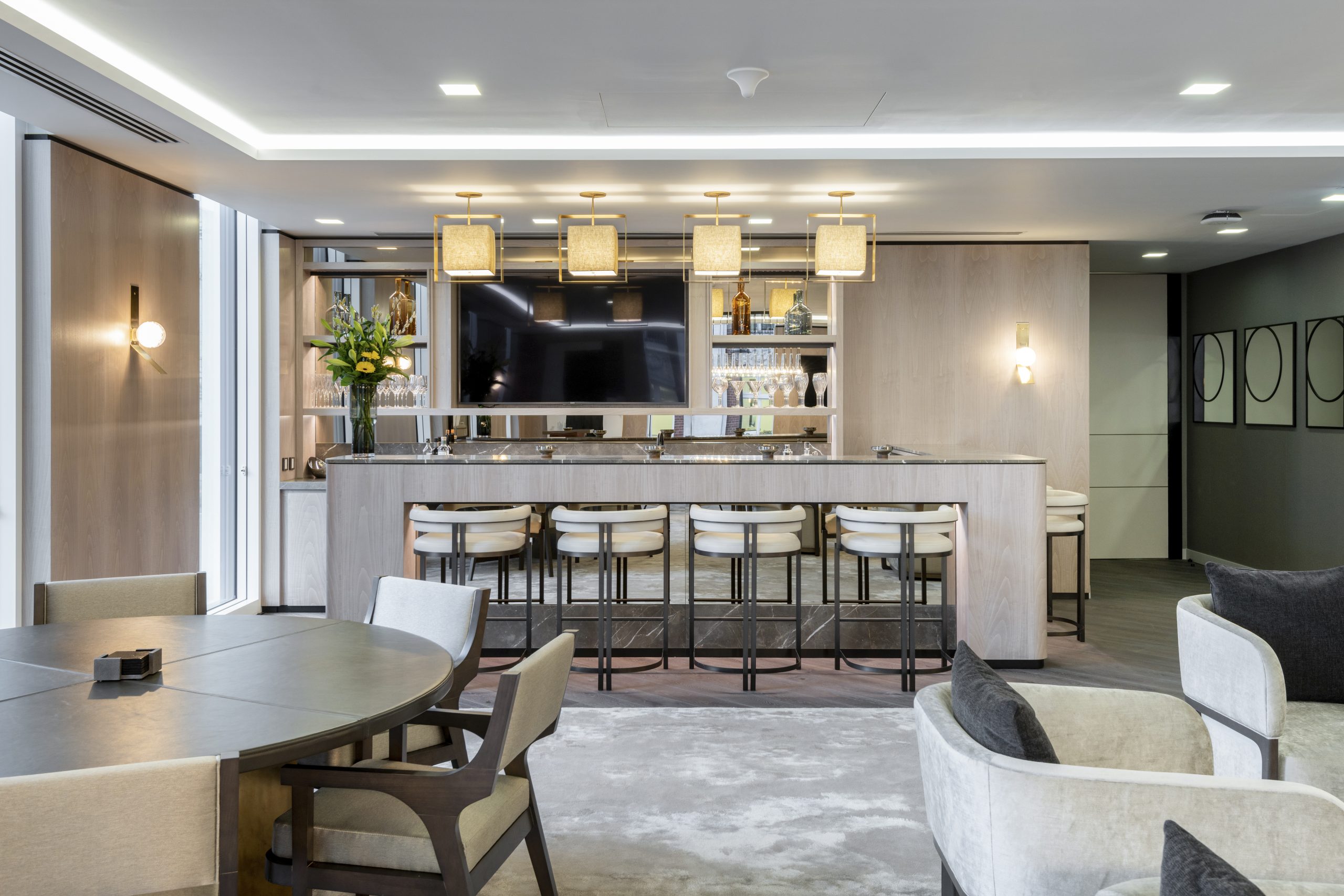
Confidentiality is the foundation of the legal profession. The Solicitors Regulation Authority requires that client information be protected at all times, and the consequences of failure extend beyond regulatory sanctions to include irreparable damage to client trust and the firm’s reputation. In practice, this means that acoustic privacy must be treated as a core design requirement rather than something addressed through a few pods scattered around an open floor. The challenge lies in achieving this without reverting to the enclosed, cellular layouts that characterised law offices for decades. Those environments delivered privacy but often at the cost of collaboration, natural light, and the sense of community that modern firms need to retain their best people. The goal now is to create layered environments where confidential conversations can happen naturally, without requiring lawyers to book formal meeting rooms for every sensitive discussion.
This starts with the building fabric itself. Partition walls between meeting rooms and offices must achieve appropriate sound transmission class (STC) ratings, typically STC 50 or above for spaces where privileged conversations will occur. Glass partitions, increasingly popular for their aesthetic openness, must be specified with acoustic interlayers or combined with sound-masking systems. Door seals, ceiling treatments, and even the routing of building services all help prevent sound transmission between spaces.
Beyond the hard infrastructure, firms are increasingly using acoustic zoning to create distinct areas within the floor plate. Quiet zones adjacent to partner offices and client meeting suites provide a buffer between confidential work and more collaborative or social areas. Acoustic booths and phone rooms offer private spaces for calls without requiring a return to fixed cellular offices. Sound masking systems provide a consistent background level that reduces the intelligibility of speech across open areas, an approach that is particularly effective in reception zones where client names and matters might otherwise be overheard. 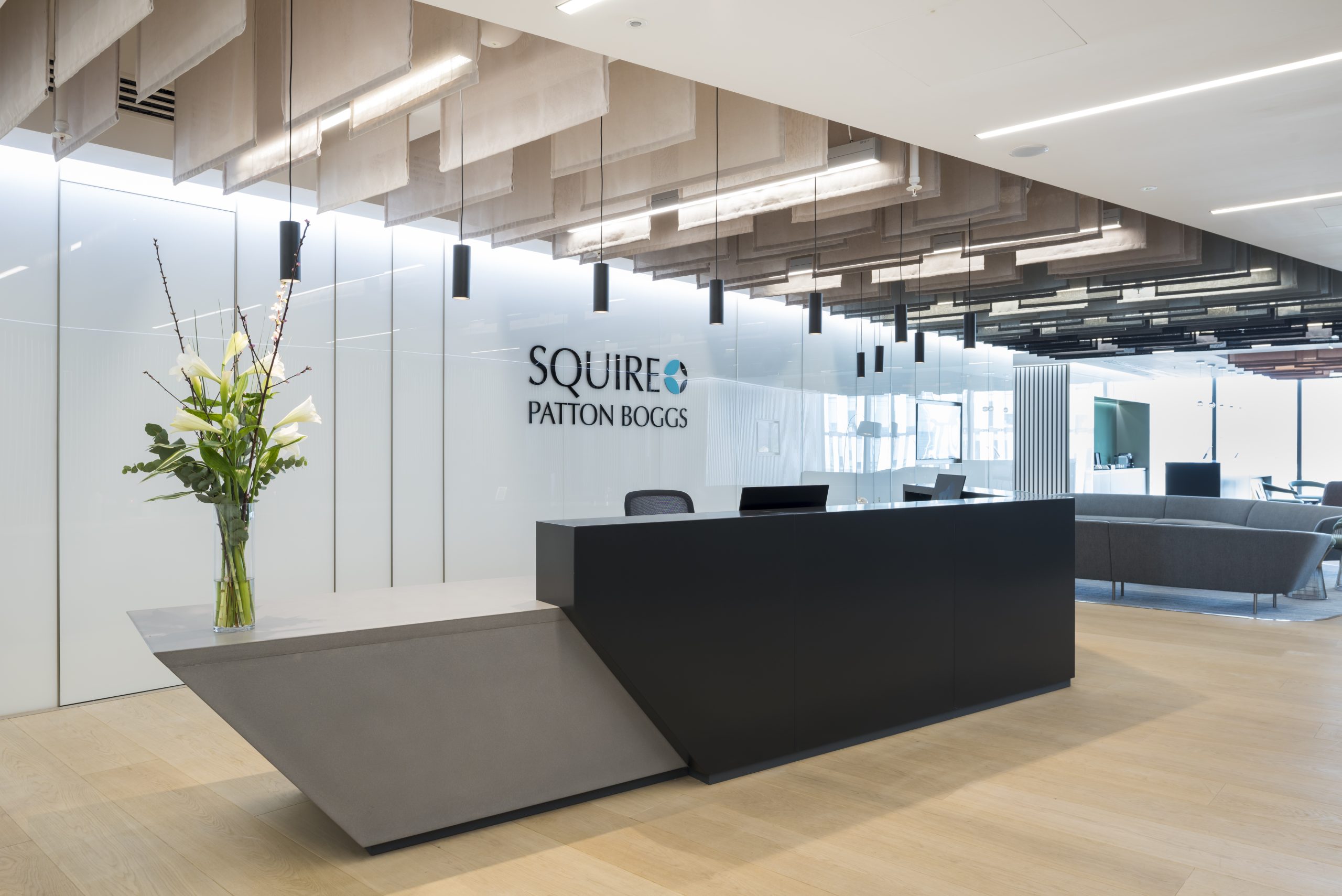
For generations, the allocation of private offices was one of the most visible markers of seniority within a law firm. Partners occupied large corner offices, senior associates had smaller versions, and junior lawyers shared open-plan areas. This model is under pressure from several directions. The shift to hybrid working means that many private offices sit empty for significant portions of the week. Savills research shows that law firms are among the most active occupiers in the Central London market, with the sector driving major transactions throughout 2025, including Simmons and Gibson Dunn’s 154,500 sq ft pre-let and 153,000 sq ft deal. These are substantial commitments, and firms are understandably scrutinising how effectively every square foot is being used.
Many firms are moving towards standardised office sizes across all fee-earner levels, eliminating the traditional hierarchy of progressively larger rooms. This approach frees up floor space for the shared amenities and collaborative areas that attract people back to the office, while still providing the enclosed environments needed for concentrated legal work. The concept of “desks away from the desk” is gaining traction, where lawyers retain access to a private or semi-private workspace but also have a range of alternative settings available, from quiet study areas to informal meeting zones. The most successful legal workplace designs create a spectrum of privacy. At one end sit fully enclosed, acoustically sealed rooms for the most sensitive work. At the other end, open collaborative areas and hospitality-style social spaces encourage the informal interactions that build firm culture and support mentoring. Between these extremes, a range of semi-private settings, including booth seating, screened work areas, and small team rooms, allows lawyers to choose the right environment for each task. This approach to space planning requires careful analysis of how the firm actually works, not simply a replication of traditional space standards. 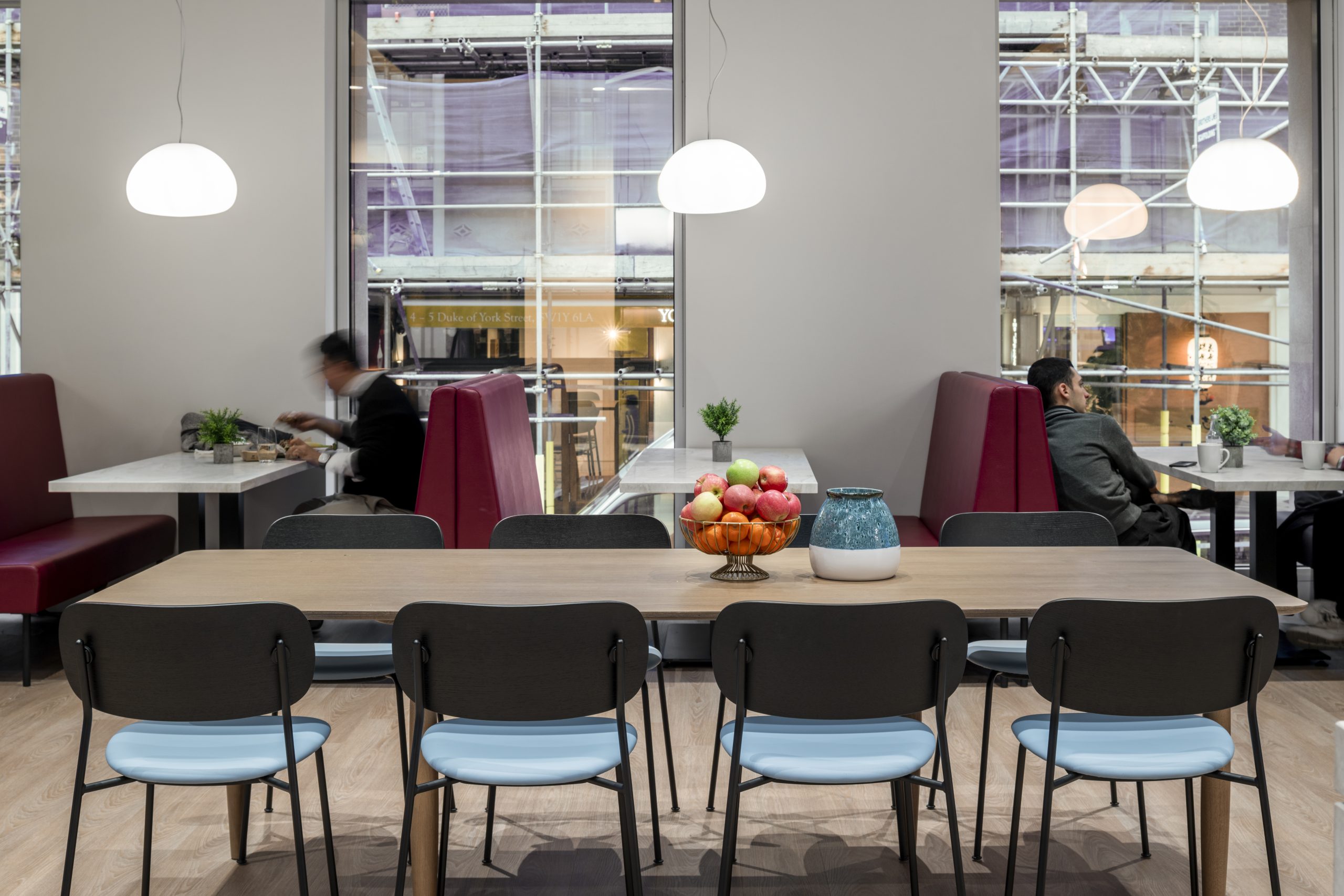
Few sectors place as much weight on client perception as the legal profession. The quality of a firm’s workspace sends a powerful signal about its standing, its attention to detail, and its ability to handle matters of the highest importance. This is not about extravagance for its own sake. It is about creating environments that communicate competence, discretion, and professionalism from the moment a client arrives.
Reception areas set the tone. They need to convey authority without being intimidating and offer enough privacy so clients are not exposed to one another while waiting. In practice, this means designing reception zones with visual screening between seating areas, ensuring that sightlines from the entrance do not extend deep into the working floors, and providing a smooth, discreet journey from arrival to meeting room. In firms handling sensitive M&A work, the ability to bring clients into separate meeting suites without crossing paths is a fundamental design requirement, not a luxury.
Client meeting spaces themselves need to reflect the gravity of the work conducted within them. Boardroom design for law firms typically prioritises high-quality materials, excellent acoustics, and sophisticated AV technology that supports both in-person and hybrid meetings. The integration of video conferencing has become non-negotiable, with courts increasingly permitting hearings via video and clients expecting the same quality of remote engagement they experience in other professional settings. Lighting, backgrounds, and camera angles all need to be considered to ensure that virtual participants receive the same impression of professionalism as those in the room. K2 Space has delivered client-facing environments for professional services organisations across London, including projects for PJT Partners in Mayfair, where 48,000 sq ft of workspace was designed to support both client-facing activities and the firm’s day-to-day operations. The balance between these requirements demanded careful attention to material selection, circulation routes, and the transition between public and private zones. 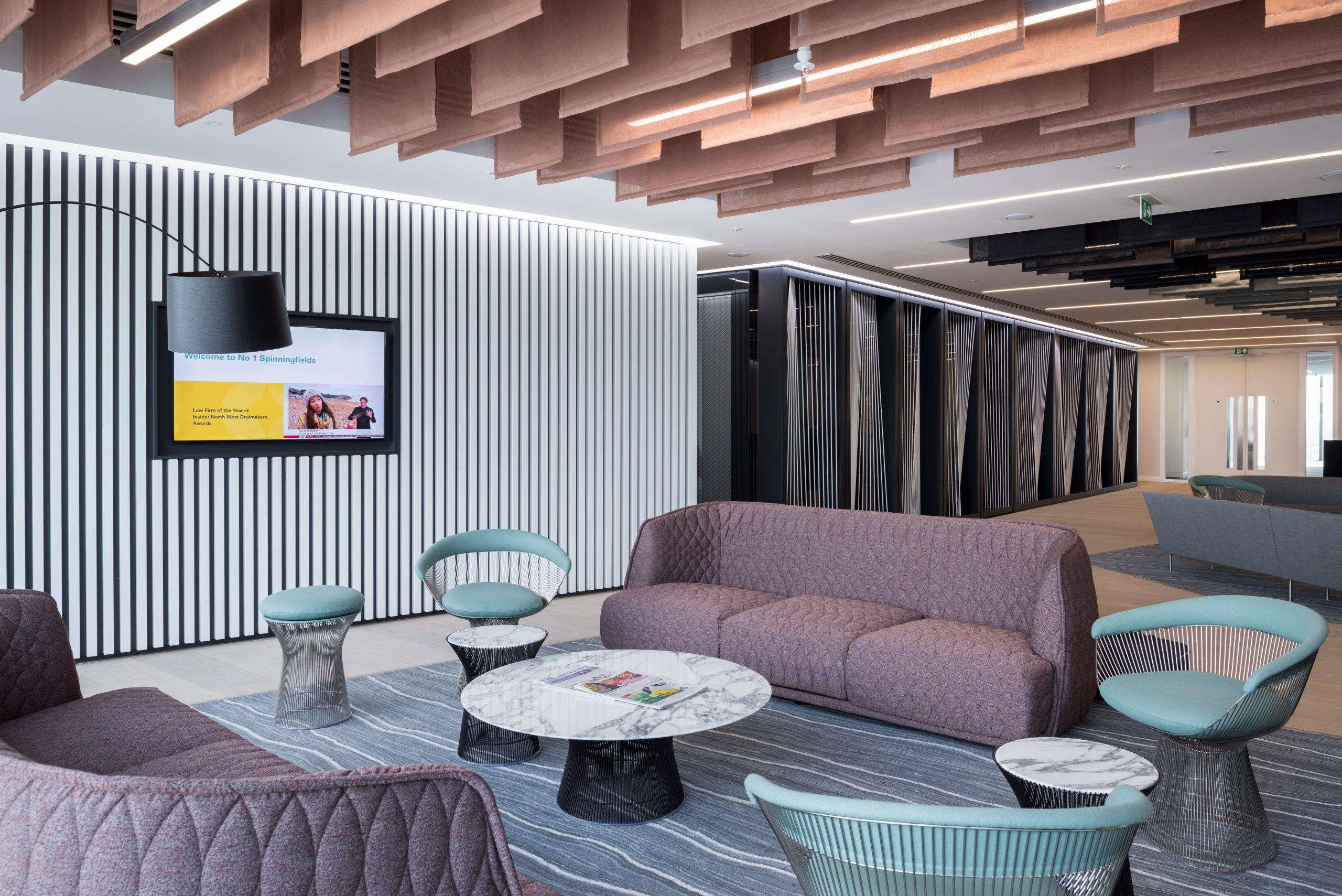
The legal sector was one of the last to embrace flexible working, but the shift is now well underway. Most London law firms operate a hybrid model, with fee earners typically expected to be in the office three to four days per week. This has profound implications for office design. The most obvious consequence is that space utilisation patterns have become less predictable. On busy days, typically mid-week, the office may be at or near capacity. On quieter days, entire floors can feel underpopulated. Designing for peak occupancy wastes space and budget; designing for average occupancy risks creating a cramped, unpleasant experience when everyone is present.
The answer lies in designing for flexibility rather than fixed allocation. Neighbourhood-based seating, where teams are assigned to a zone rather than a specific desk, allows the firm to accommodate fluctuating attendance without empty desks dominating the floor on quiet days. This approach works particularly well in law firms where practice groups need to sit together for collaboration and supervision but do not all attend the office on the same days. Bookable desks within each neighbourhood give individuals a choice over their exact position while maintaining the team identity that is so important to legal practice.
Technology infrastructure becomes more complex in a hybrid working environment. Every meeting room needs to be equipped for hybrid participation, with cameras, microphones, and displays that allow remote attendees to contribute equally. Secure remote access to document management systems and case files must be robust and compliant with data protection requirements. The physical office also needs to provide the connectivity and charging infrastructure that allows lawyers to work effectively from any location within the building. 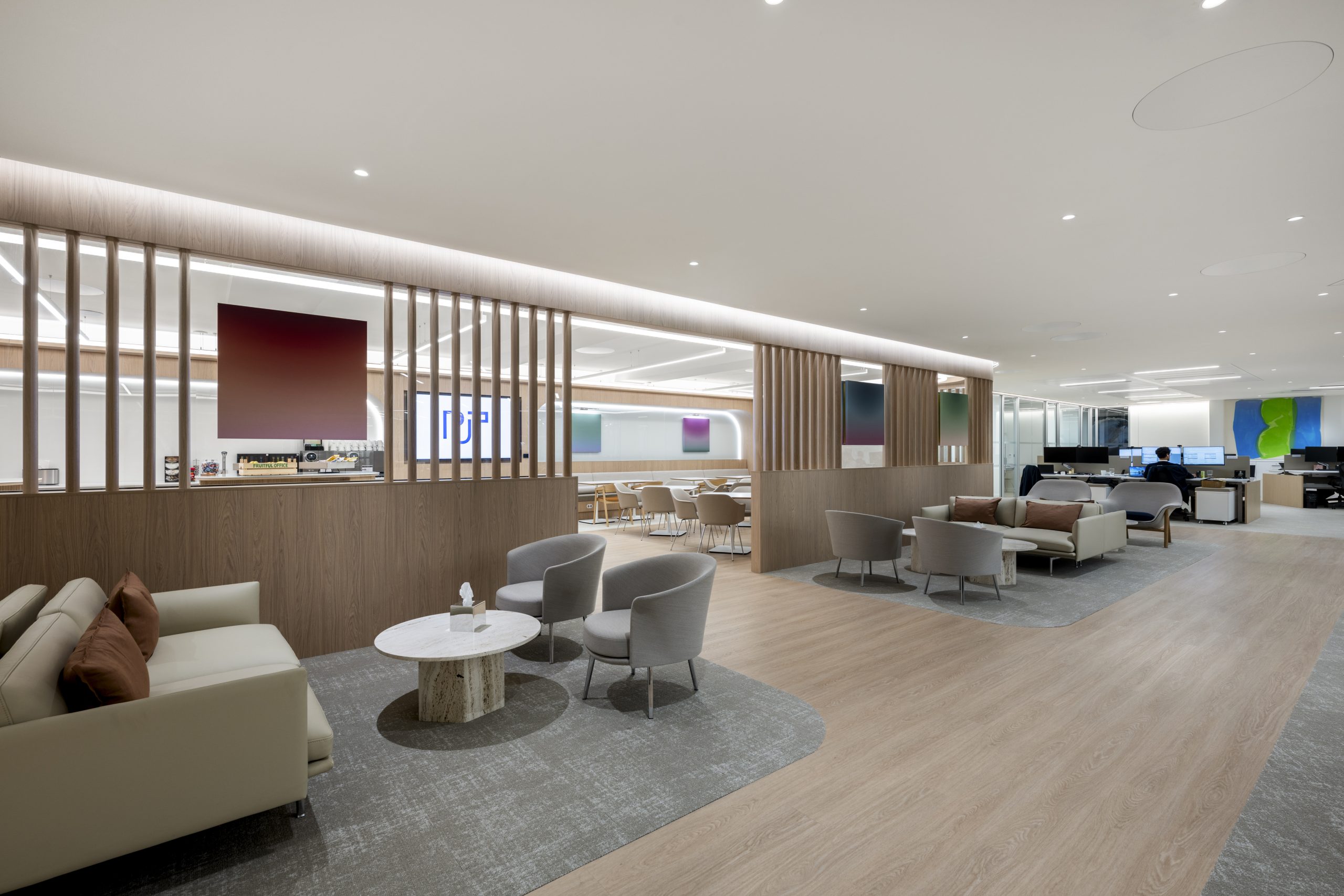
The rapid adoption of artificial intelligence across the legal sector is beginning to shape how workspaces are planned and used. AI-powered research tools, automated contract review, and document analysis platforms are changing the nature of legal work itself, with implications that extend directly to the physical environment. Perhaps most significantly, the reduction in paper-based processes is accelerating. Law firms have historically required substantial dedicated space for filing rooms, legal libraries, and document storage. As digital case management becomes standard, this space is being repurposed for more productive uses, creating opportunities to invest in higher-quality workspace rather than simply maintaining more of it. Smart office technology is also shaping the legal workplace in practical ways. AI-driven room booking systems can allocate meeting spaces based on team size and remote attendance. Occupancy sensors provide data that helps firms understand how their space is actually being used, informing decisions about future requirements. For firms undergoing a fit-out, the key consideration is future-proofing the technology infrastructure. Network capacity, power distribution, and structured cabling all need to anticipate growth in digital tools and connected devices. Retrofitting this infrastructure into a completed office is significantly more disruptive and expensive than planning for it from the outset. 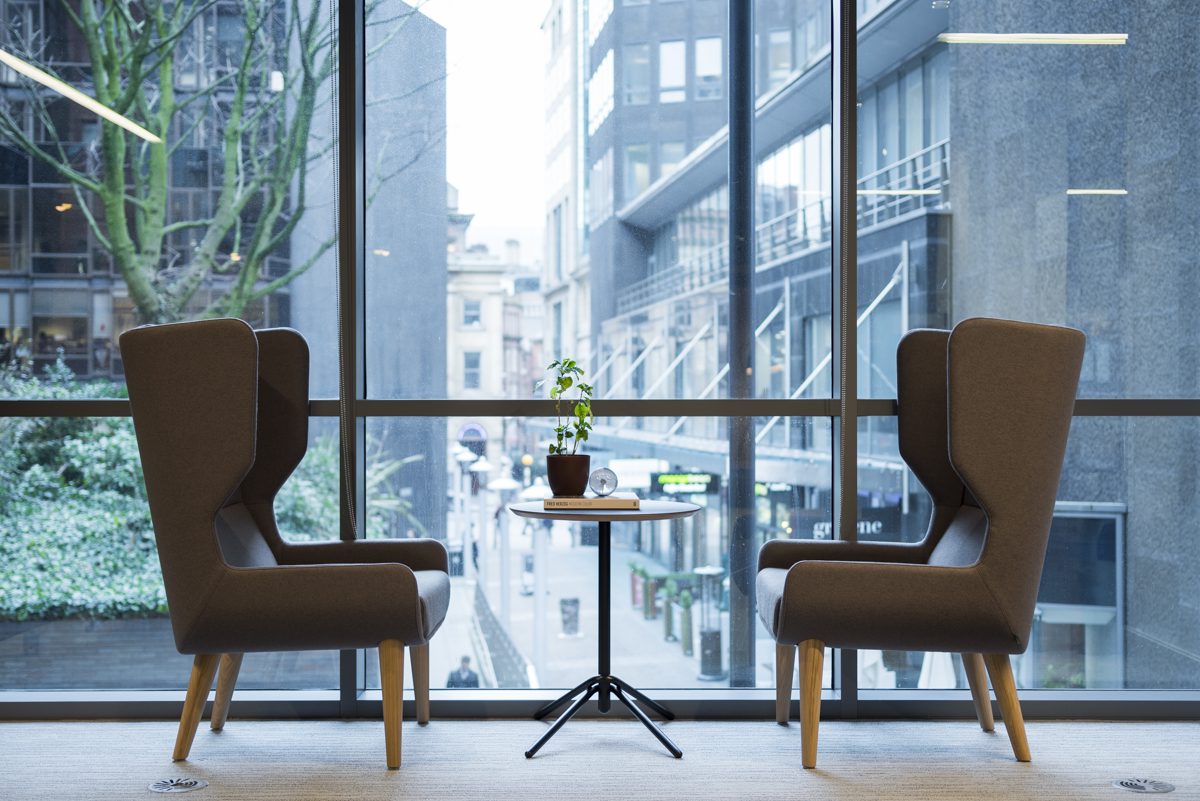
The legal talent market in London remains intensely competitive. US-headquartered firms continue to expand their presence, with record-setting office acquisitions in the City and West End throughout 2025, driving salary inflation and raising the bar for workplace quality. Magic Circle and Silver Circle firms are investing significantly in their own workspaces, recognising that the office plays an increasingly important role in recruitment and retention. For younger lawyers in particular, the workplace is a tangible expression of the firm’s culture and values. A well-designed office communicates that the firm invests in its people, takes their wellbeing seriously, and operates with the professionalism it expects from them. Conversely, a tired, poorly maintained environment sends the opposite message, regardless of what the firm says about culture in its recruitment materials.
Brand expression through office design goes well beyond the reception area. The materials, colours, and finishes used throughout the workspace should reflect the firm’s identity and the image it wants to project. Some firms favour the traditional authority of dark timbers and rich fabrics. Others are moving towards lighter, more contemporary palettes that project approachability and modernity. The most effective designs create a coherent narrative that extends from the building entrance through to the most private internal spaces.
Wellbeing amenities have also become a competitive differentiator. Access to natural light, biophilic design elements, ergonomic furniture, quiet rooms, and high-quality breakout spaces all contribute to an environment that supports the demands of legal work. Given the profession’s reputation for long hours and high stress levels, firms that demonstrate a genuine commitment to employee health through their workspace are better positioned to attract and keep the best talent. 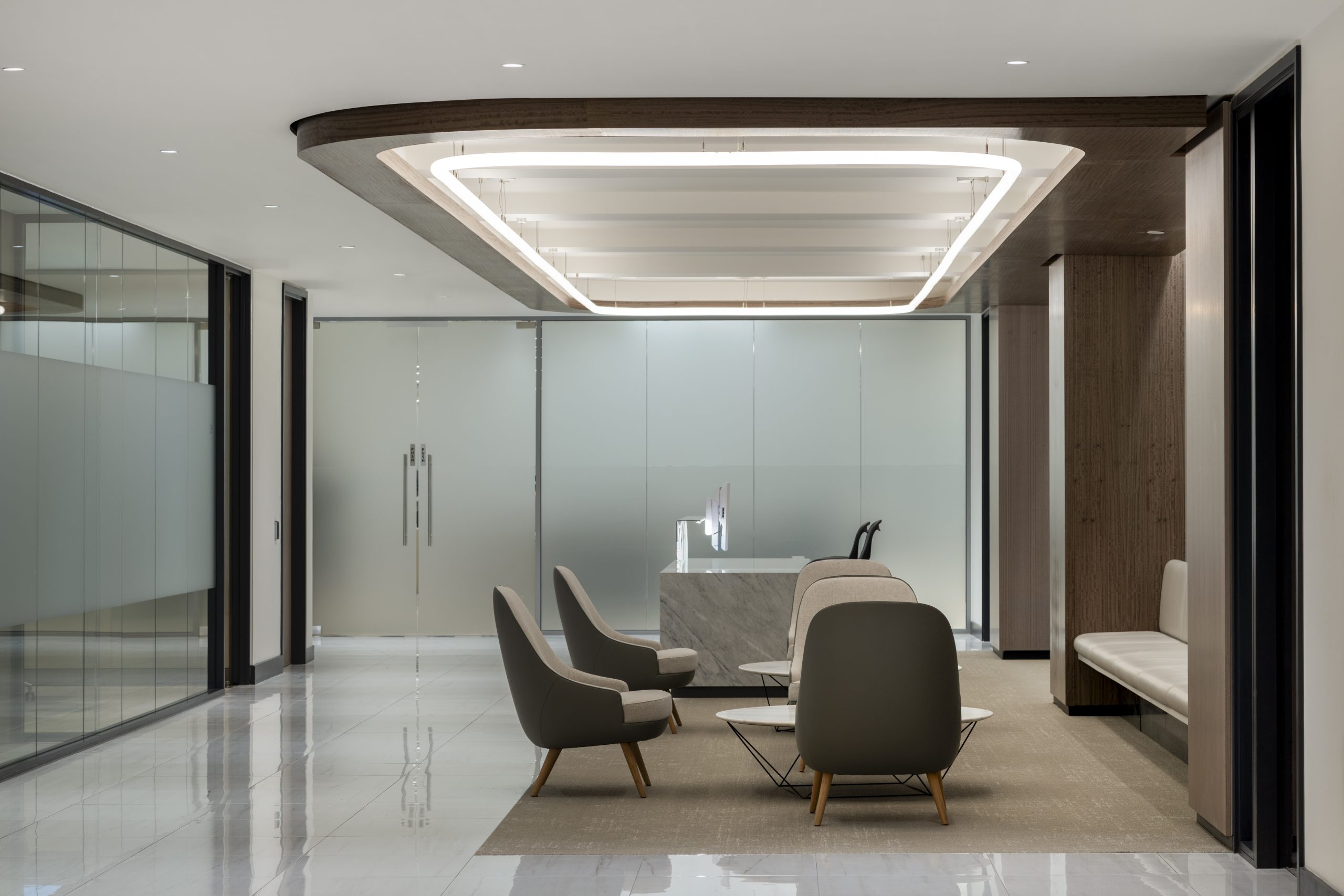
Environmental, social, and governance considerations are increasingly influencing law firm real estate decisions. Research suggests that a significant majority of corporate clients now consider ESG policies when selecting legal representation, and the firms themselves face growing pressure from both regulators and their own employees to demonstrate responsible practices. From a property perspective, this starts with building selection. Savills data shows that 67% of Central London office take-up in 2025 came from EPC A or B-rated buildings, up from just 28% five years earlier. Law firms have been at the forefront of this trend, with several major relocations targeting buildings with the highest sustainability credentials. Occupying a BREEAM Excellent or Outstanding building is increasingly seen as a baseline expectation rather than a point of differentiation. Within the fit-out itself, there are substantial opportunities to reduce environmental impact. The specification of low-embodied-carbon materials, the reuse and refurbishment of existing furniture where appropriate, energy-efficient MEP systems, and the adoption of circular economy principles all contribute to a more sustainable workspace. For firms pursuing BREEAM or SKA ratings for their fit-out, these decisions need to be integrated into the design process from the earliest stages. Sustainable design features also provide visible evidence of the firm’s ESG commitment to every client who visits. 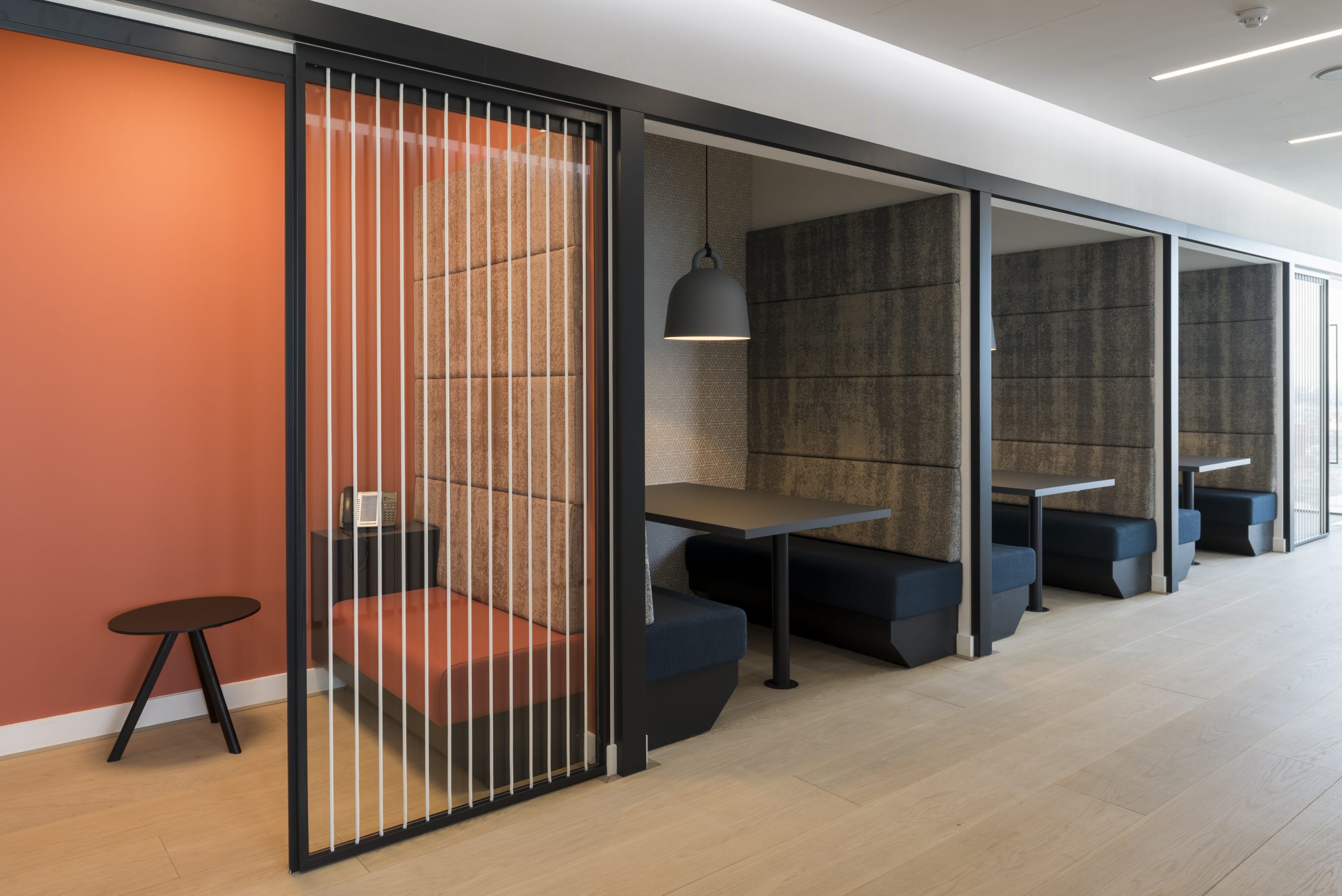
London’s office market is experiencing a pronounced shift towards quality, with particular implications for law firms. City prime rents reached £105 per sq ft by the end of 2025, with record rents being achieved in the West End at over £240 per sq ft for the most sought-after addresses. Savills is forecasting prime rental growth of around 4.3% across both markets in 2026, with Grade B rents continuing to decline as demand polarises towards the best buildings. Law firms have been among the most active occupiers in the market. Notable transactions in 2025 included Gibson Dunn’s 153,000 sq ft pre-let at One Exchange Square, Bristows’ 70,000 sq ft commitment at Bow Bells House, and Proskauer Rose’s expansion at 8 Bishopsgate at £145 per sq ft. These commitments reflect the premium that law firms place on building quality, location, and the ability to create workspaces that meet their exacting standards. For firms planning a move or major refurbishment, the constrained development pipeline adds urgency to the timeline. Completions are expected to fall by over a third in 2026, and a significant proportion of future supply has already been pre-let. Savills reports that 21% of refurbishments and developments over 150,000 sq ft scheduled for 2026 to 2029 have already been pre-let. For firms in the market for premium space, early engagement with both property advisors and design-and-build partners is increasingly important. 
The procurement route for a legal office fit-out deserves careful consideration. The traditional approach, where an architect develops the design, a project manager coordinates the process, and a building contractor delivers the physical works, offers maximum control and is well-suited to the largest, most complex projects where the firm has its own experienced property team. For many mid-sized firms, however, a design-and-build approach offers significant advantages. By bringing design, construction, and furniture under a single team, the process becomes more streamlined, and the risks associated with coordination between multiple parties are substantially reduced. A single point of accountability means that decisions about acoustic performance, technology integration, and material specification can be made holistically rather than in isolation.
The sector-specific requirements of a law firm fit-out make expertise particularly important. Acoustic design is technically complex, and the consequences of getting it wrong are severe. Technology infrastructure must be both robust and secure. Client-facing spaces demand a quality of finish that goes beyond typical commercial fit-out standards. And the programme must accommodate the firm’s operational needs, often requiring phased delivery or out-of-hours working to minimise disruption to billing activities. K2 Space has a long history of working with legal and professional service firms. For Squire Patton Boggs, a 45,000 sq ft project, it required a workspace that balanced the firm’s international reputation with the practical needs of its day-to-day operations. The approach brought design, construction, and furniture together under a single team, allowing decisions about acoustics, finishes, and technology to be coordinated from the outset. 
K2 Space has delivered workplace transformations for professional services organisations across London since 2004. Our experience with legal sector clients, including projects for Latham and Watkins, Squire Patton Boggs, and numerous financial and advisory firms, means we understand the specific demands that legal practice places on workspace design.
Our integrated approach brings together office design, fit-out, furniture consultancy, and move management under a single team, a defined timeline, and a fixed budget. For law firms, this means that the complex interdependencies between acoustic performance, technology infrastructure, client experience, and operational requirements are managed holistically rather than across multiple suppliers.
If you are considering a new office, a relocation, or a refurbishment, our team can guide you through the process from initial space planning and cost planning to completion and handover. Get in touch to discuss how we can help your firm create a workspace that supports the way you work today and adapts to the way you will work tomorrow.