Share
Summarise

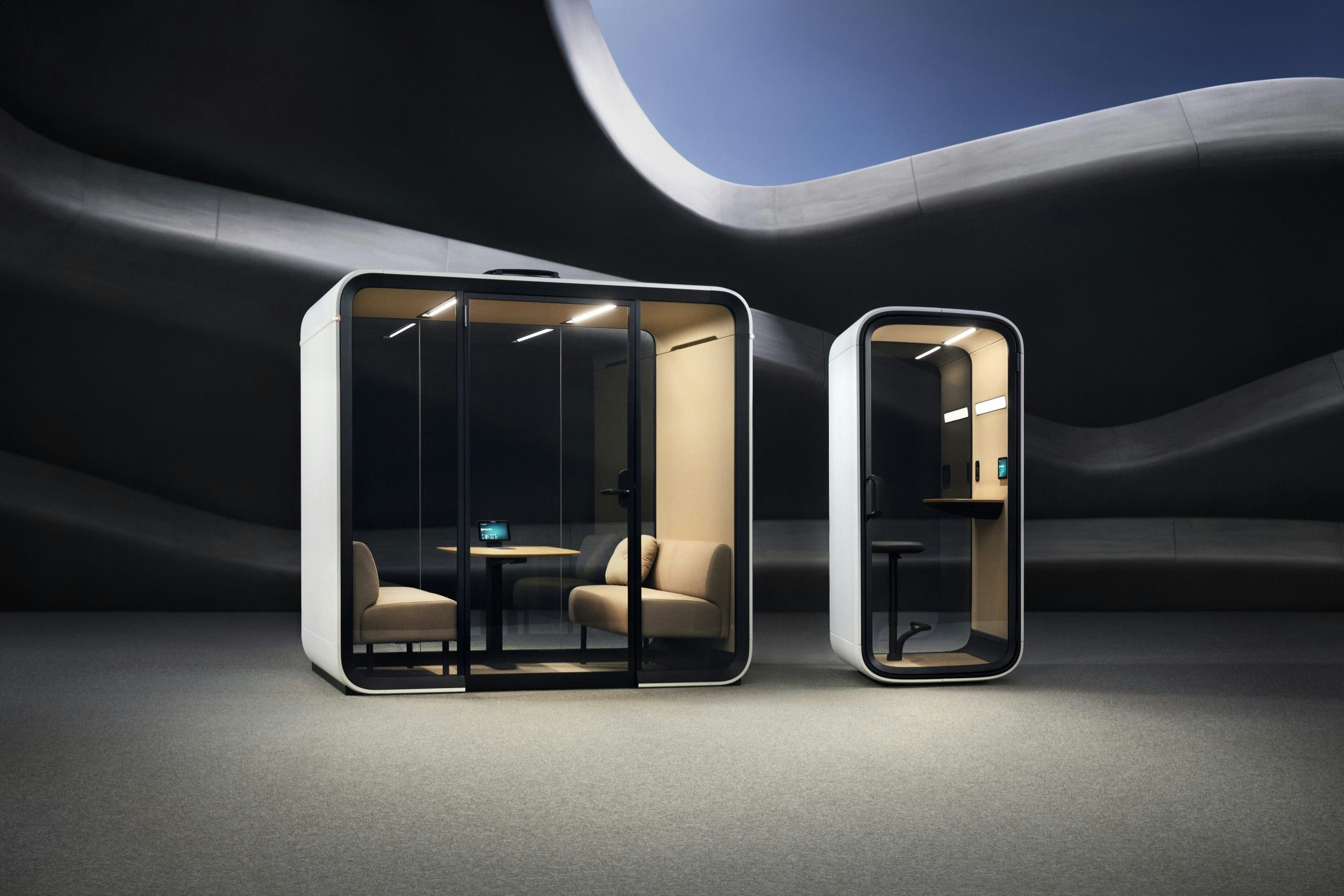
In this definitive guide for UK tenants to office pods, we explore how acoustic office pods are reshaping the modern workplace; balancing privacy, performance, and design flexibility.
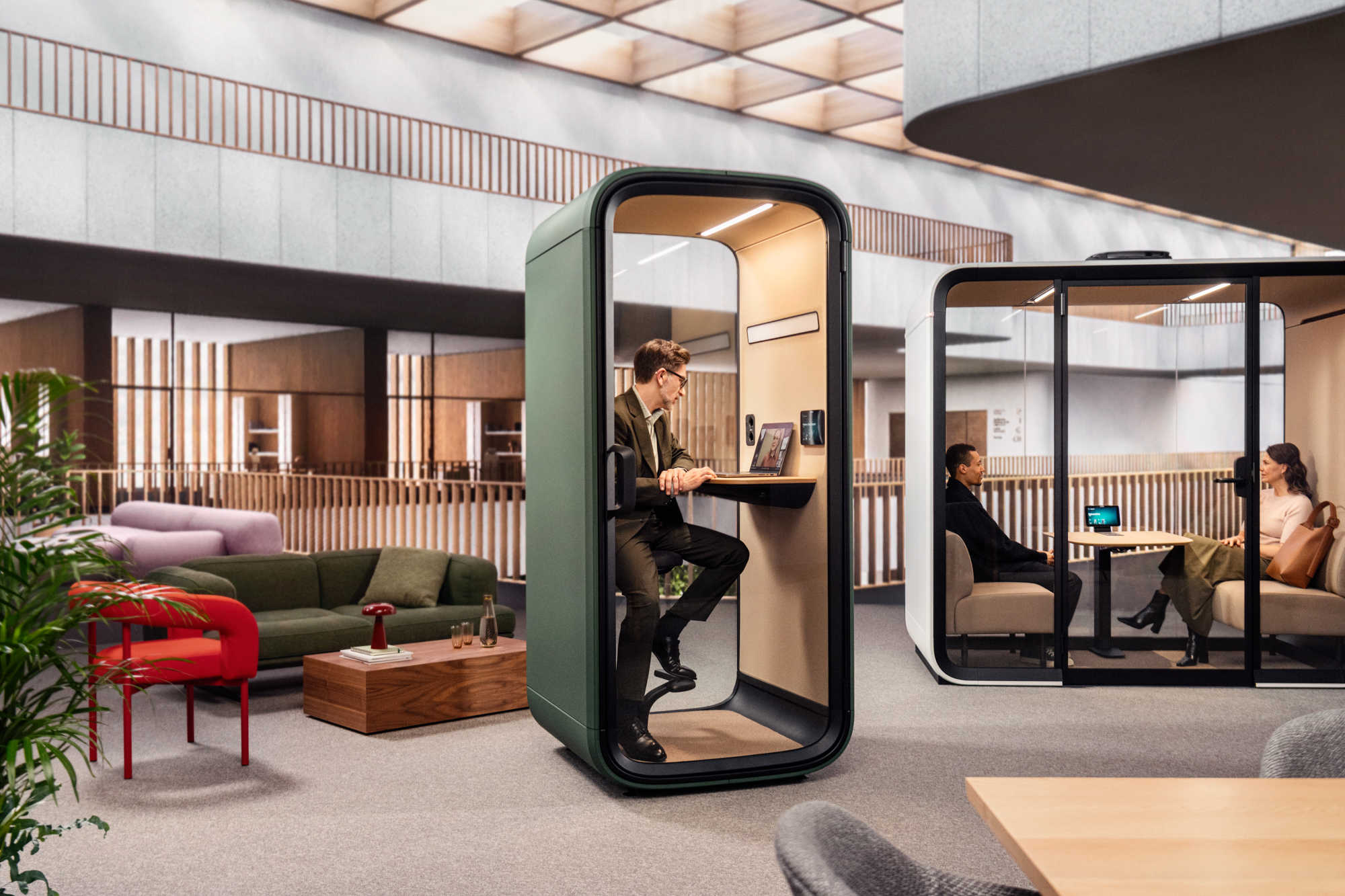
Office pods are self-contained, modular workspaces designed to provide privacy, focus, and flexibility within an office environment. Unlike traditional phone booths, which tend to be smaller and limited to single-person use for brief calls, pods come in a range of sizes and configurations. They can accommodate solo focused work, small team meetings, or video conferencing, and typically include soundproofing, ventilation, and integrated technology as standard. They differ from permanent meeting rooms by offering a movable, cost-effective alternative that does not require structural changes to the office.
With hybrid working now firmly established across most professional sectors, traditional open-plan offices often feel inefficient. Pods address this by providing dedicated workspaces that can be tailored to specific needs, whether that is a quiet space for a confidential call or a four-person room for a team discussion. This guide is aimed at UK tenants looking to enhance their office with pods, covering everything from how to choose the right pod through to regulations, brands, and the financial case for investment. For a detailed breakdown of what pods cost across different sizes and specifications, see our dedicated guide to office pod pricing.
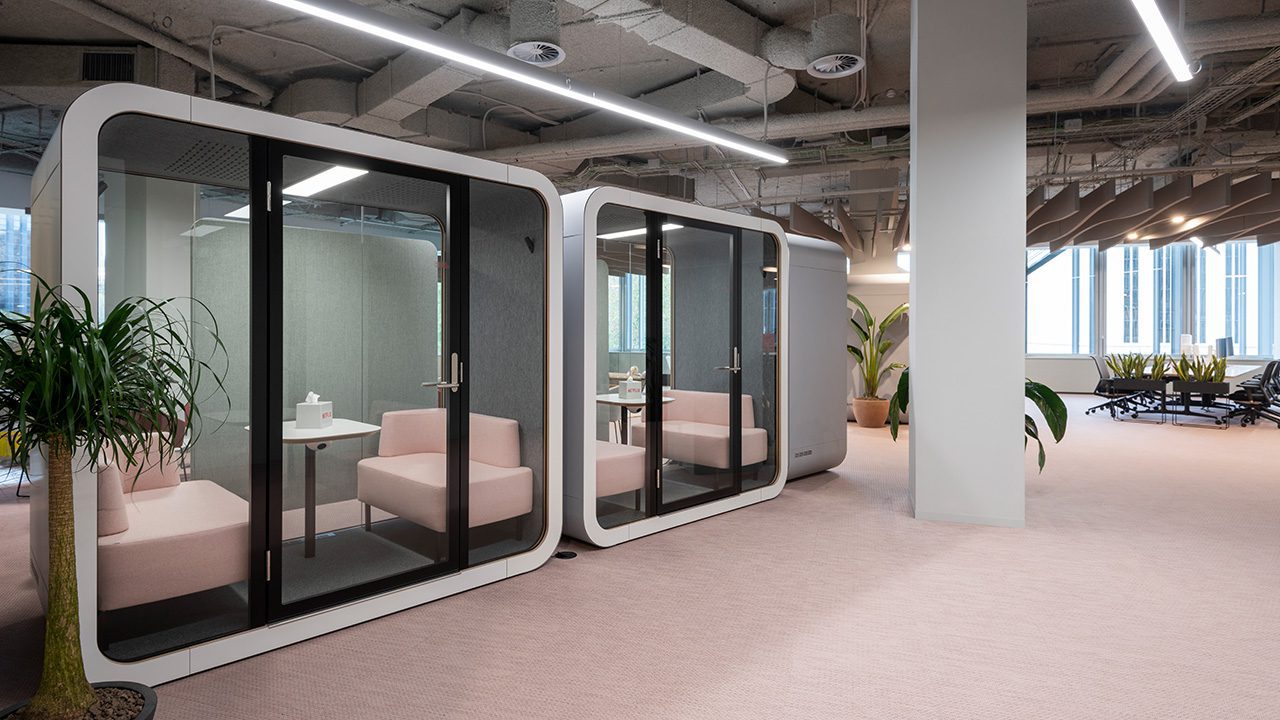
The financial case for pods becomes clear when compared to building a traditional meeting room. In high-cost areas like London, constructing a partitioned meeting room typically costs £150 to £200 per sq ft once you account for design, materials, M&E, building control, and making good at the end of the lease. A pod like the Framery Four delivers comparable functionality at around £100 per sq ft, a saving of roughly a third on the upfront cost, as highlighted in Framery’s own analysis.
Pods also avoid the long-term sunk costs associated with fixed infrastructure. Because they are classified as movable plant and machinery rather than permanent fixtures, they may qualify for tax relief under the Annual Investment Allowance (up to £1 million per year). Premium pods from manufacturers like Framery and Orangebox hold their value well, with resale returns of 50 to 70% of the original price being typical for well-maintained units. And unlike a partitioned meeting room, a pod can be taken with you at the end of a lease, avoiding dilapidation costs entirely. For a full breakdown of pricing by pod type and brand, see our guide to office pod costs.
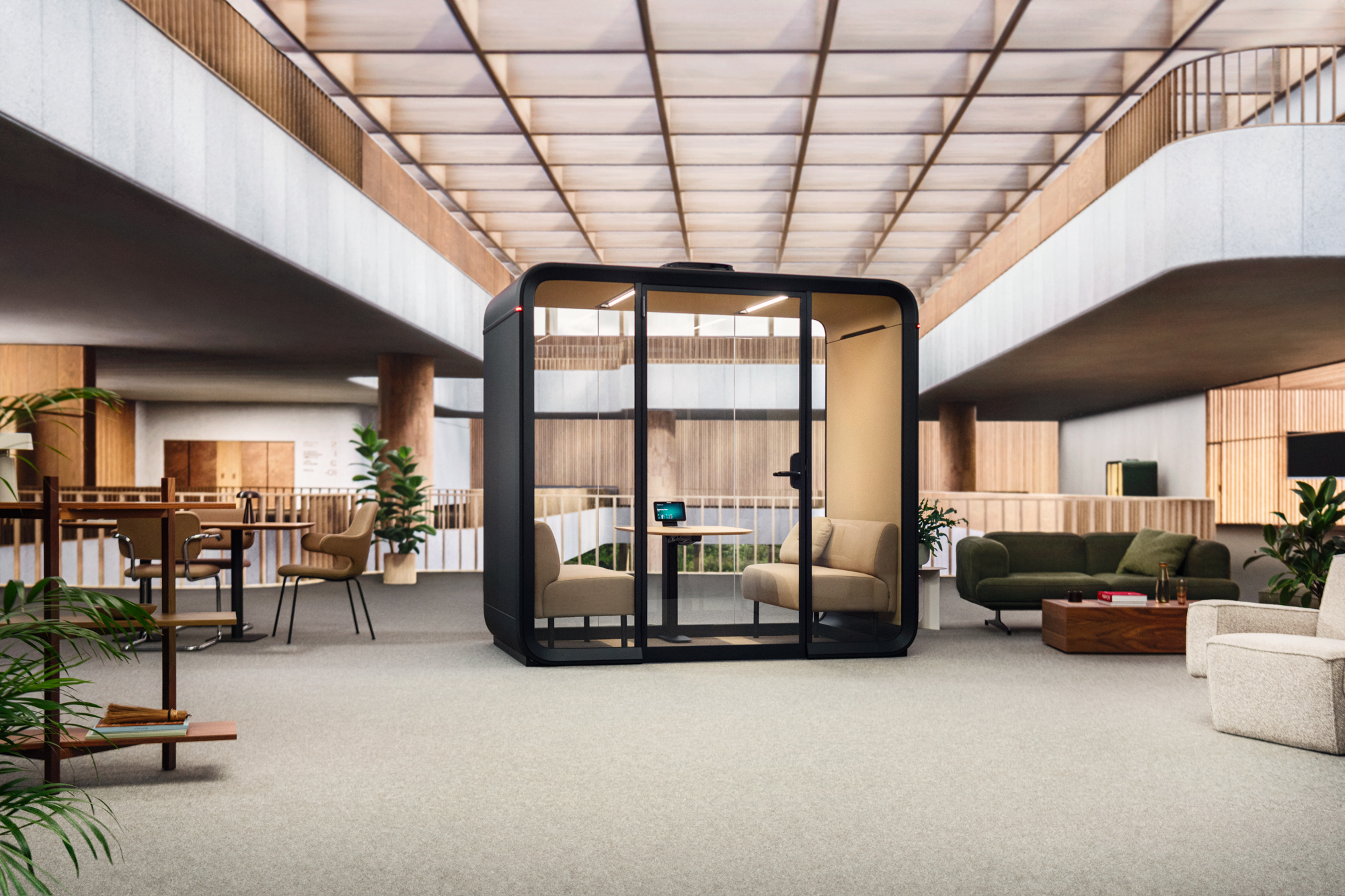
Start by defining how the pod will actually be used. A pod intended primarily for video conferencing needs different acoustics, lighting, and technology from one used for quiet focused work or informal catch-ups. In a busy open-plan London office, pods often serve as quiet spaces for confidential calls and focused tasks that are difficult to do at an open desk. Understanding the primary use case will determine the size, features, and specification you need. For more on how office layouts are adapting, see our article on collaborative workspace design.
How many people need to use the pod at once? Single-person pods suit quick calls and individual focus time. Two-person pods work well for one-to-one meetings or paired working. Four-to-six-person pods accommodate team discussions, client calls, and workshop-style sessions. Research suggests the average office worker loses around 60 hours every month to distractions and is interrupted roughly 56 times per day. The right mix of pod sizes, informed by actual team needs and usage patterns, can make a real dent in that lost time.
Consider what kind of environment the pod needs to create. Some users need a traditional seated setup with a desk and monitor. Others prefer a standing desk option. Some pods are configured as booth-style seating with two cushioned benches around a table, while others offer a sofa and low table for a more relaxed feel. Think about the type of work your team actually does and the setting that would best support it. A sales team making client calls has different needs from a design team running collaborative reviews.
Sound insulation is the single most important feature in a pod. The best pods achieve speech-level reductions of 30 to 40 dB, rated to the ISO 23351-1 standard. This level of performance genuinely isolates conversation in both directions, meaning the pod user cannot hear the office and the office cannot hear the pod user. Budget pods may offer some noise reduction but rarely deliver true speech privacy, which limits their usefulness in busy environments. For more on this topic, see our guide to workplace acoustics.
A sealed pod without proper airflow becomes uncomfortable quickly, particularly during longer meetings. The Workplace (Health, Safety and Welfare) Regulations 1992 require that enclosed workspaces are adequately ventilated, with a recommended rate of 8 to 10 litres of fresh air per second per person. Premium pods like the Framery One fully change the air inside roughly every 66 seconds through adaptive ventilation systems. Cheaper pods may rely on passive airflow or basic fans, which can introduce noise and still leave the interior stuffy. For more on sustainable office design and air quality, see our dedicated guide.
Good lighting affects both comfort and the quality of video calls. CIBSE guidelines recommend illuminance of 300 to 500 lux for general office work. The best pods offer adjustable LED lighting with preset modes optimised for video conferencing and focused work. Simpler models may provide only a fixed overhead light. If the pod will be used regularly for Teams or Zoom calls, adjustable, front-facing lighting that minimises glare is worth specifying. See our article on natural light in the workplace for broader context.
At a minimum, any pod should include power outlets and USB ports. Higher-specification models offer USB-C fast charging, HDMI connectivity for external displays, wireless charging surfaces, and cable management integrated into the furniture. Some premium pods, such as the Framery One, include smart booking via an 8-inch touchscreen, occupancy sensors, and over-the-air software updates. Think about the devices your team uses daily and the connectivity they need. For more on how technology shapes workplaces, see our article on technology and office design.
If the pod needs to be accessible to wheelchair users, it should have a level entrance (or a threshold no higher than 15mm), a turning radius of at least 1500mm inside, and electrical sockets positioned between 450mm and 1200mm from the floor. The Equality Act 2010 requires that workplaces, including all internal spaces, are accessible to all employees. ACAS guidance confirms this extends to all parts of the premises. Choose pods that comply with these requirements to maintain an inclusive office design.
The pod should complement your office environment and brand identity rather than feel like an afterthought. Most established manufacturers offer a range of exterior colours, interior fabric finishes, carpet options, and table surfaces. Framery, for example, offers over 3,000 combinations of colours and materials on their One range. Orangebox’s Air3 system uses a mix of high-quality glass and soft acoustic panelling that can be configured to suit different interior schemes. If brand consistency matters to your organisation, it is worth specifying finishes early in the process. Browse our office furniture options for broader inspiration.
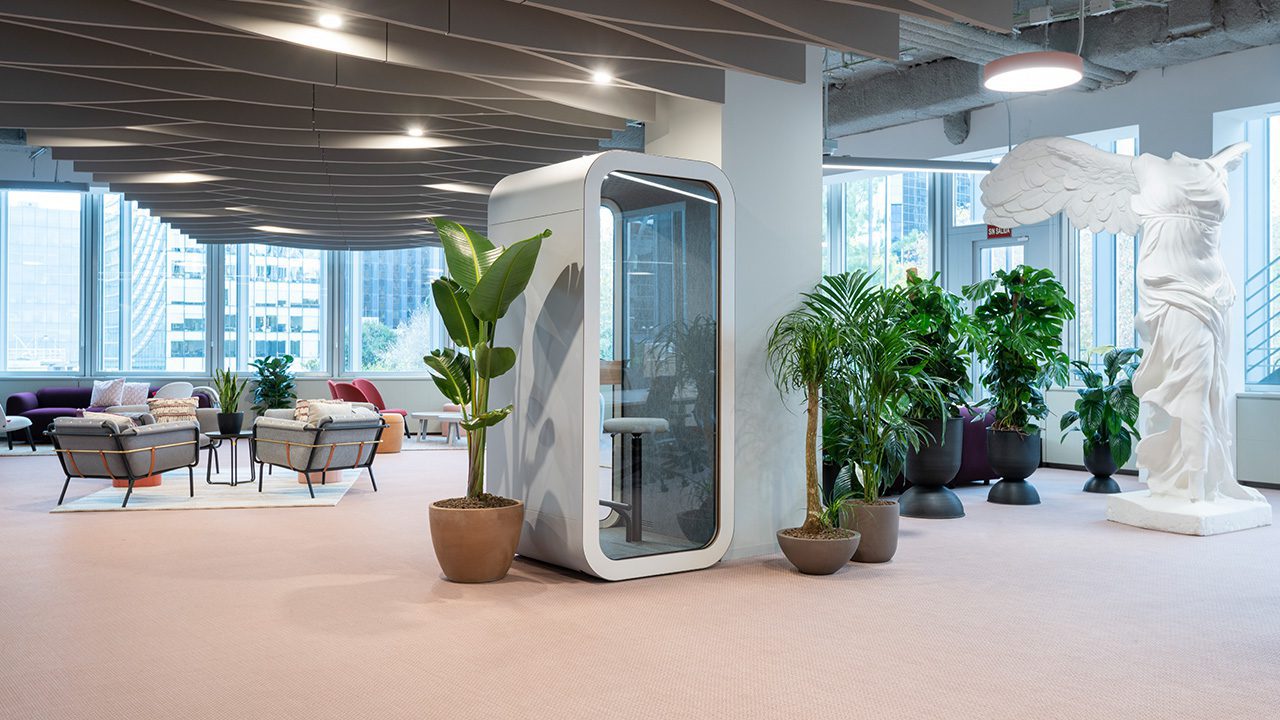
Measure your available space carefully before committing. Standard single-person pods are typically around 1m x 1m, while meeting pods can exceed 2m x 3m. Check that the pod fits comfortably without obstructing walkways, fire escape routes, or disrupting the flow of the office. Our guide to the mathematics of office space can help with planning.
If you anticipate needing to reconfigure the office or relocate in future, look for pods with casters or modular designs that allow for repositioning without specialist equipment. This is particularly valuable in leased offices where the layout may need to change as the team grows. Because pods are classified as furniture rather than construction, they can be removed at the end of a lease without making good. See our move management service for support with office reconfigurations.
Lead times vary between manufacturers, typically ranging from 4 to 12 weeks depending on customisation and stock levels. If you are working to a specific move-in or fit-out deadline, confirm delivery timescales early. Most reputable brands offer warranties of 2 to 5 years, with longer coverage available on premium models. Our fit-out timeline tool can help with programme planning.
Take time to compare the offerings from established manufacturers. Framery, Orangebox, Workstories, and Spacestor each have distinct strengths in terms of design, acoustics, sustainability, and price point. Read customer reviews and, where possible, visit a showroom or request a trial unit before committing. K2 Space works with all the leading brands and can help you shortlist the right options based on your brief, budget, and workspace. Visit our testimonials page for feedback from clients we have supported with pod and furniture projects.
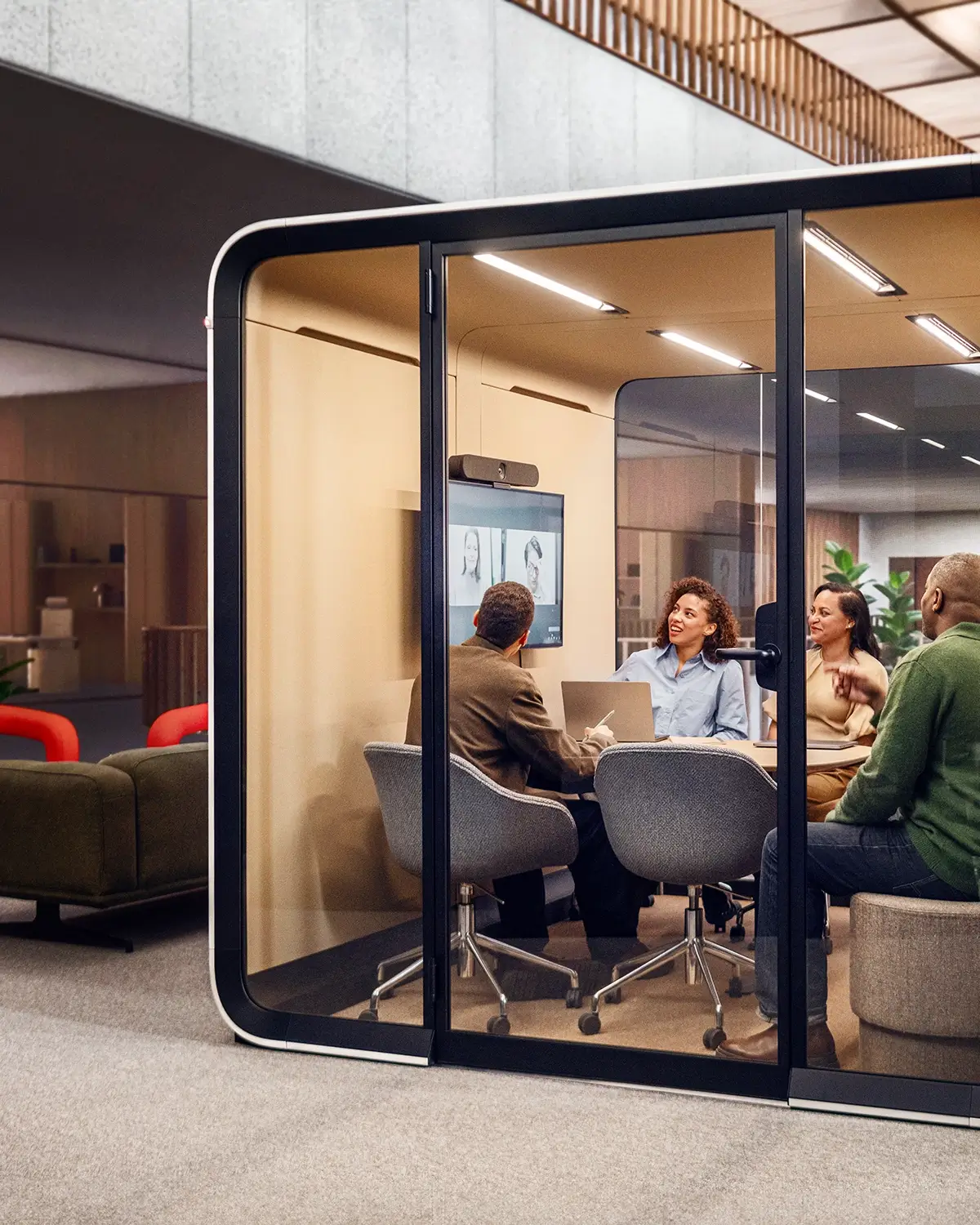
Before installing an office pod in a rented workspace, it is important to understand the regulatory requirements that apply. These cover fire safety, ventilation, accessibility, and energy performance.
Office pods installed within an existing building will not normally require planning permission, as they are classified as internal alterations rather than new structures. However, it is always worth checking with your landlord and local authority, particularly if the office is in a listed building or conservation area where additional restrictions may apply. If there is any doubt, a Lawful Development Certificate (LDC) provides formal confirmation that the pod is a permitted change.
Pods should have adequate fire detection integrated with the building’s main alarm system. Materials used in construction must meet fire safety classifications, with internal walls and ceilings achieving at least a D-s3,d2 rating for surface spread of flame. Smoke detectors should meet BS EN 54-7 or BS EN 54-31 standards. For enclosed pods in sprinklered buildings, sprinkler systems may need to be extended into the pod to comply with BS EN 12845. Pods with openable ceilings should have a clear opening of at least 70%, automatically activated by localised detectors.
Enclosed pods must provide sufficient ventilation to maintain a healthy environment. The recommended rate is 10 litres per second per person or 1 litre per second per sq m of floor area, whichever is greater. Premium manufacturers like Framery exceed these requirements with adaptive systems, but it is worth verifying compliance with any pod you are considering, particularly for models from less established brands.
Pods must be accessible to all employees, including wheelchair users. Level access is required where possible. Where a raised threshold is unavoidable, it should not exceed 15mm, and any upstands above 5mm should be chamfered or rounded. A 300mm clear space is needed adjacent to the leading edge on the pull side of the door. Electrical sockets and USB ports should be positioned at heights accessible to all users.
Pods can affect the energy profile of the office space they sit within. Since commercial properties in England and Wales must currently achieve at least an E rating (rising to B by 2030), specifying energy-efficient pods with good insulation and LED lighting helps rather than hinders your building’s EPC compliance. Framery’s pods, for example, consume only 27 watts of power during use.
Pods used for regular desk work fall under the Health and Safety (Display Screen Equipment) Regulations. Employers must conduct DSE workstation assessments for anyone using a pod as a regular workspace. Electrical installations within the pod must comply with the Electricity at Work Regulations 1989. Ergonomic considerations, including comfortable seating, adjustable surfaces, and adequate lighting, are covered in our guide to ergonomic office furniture.
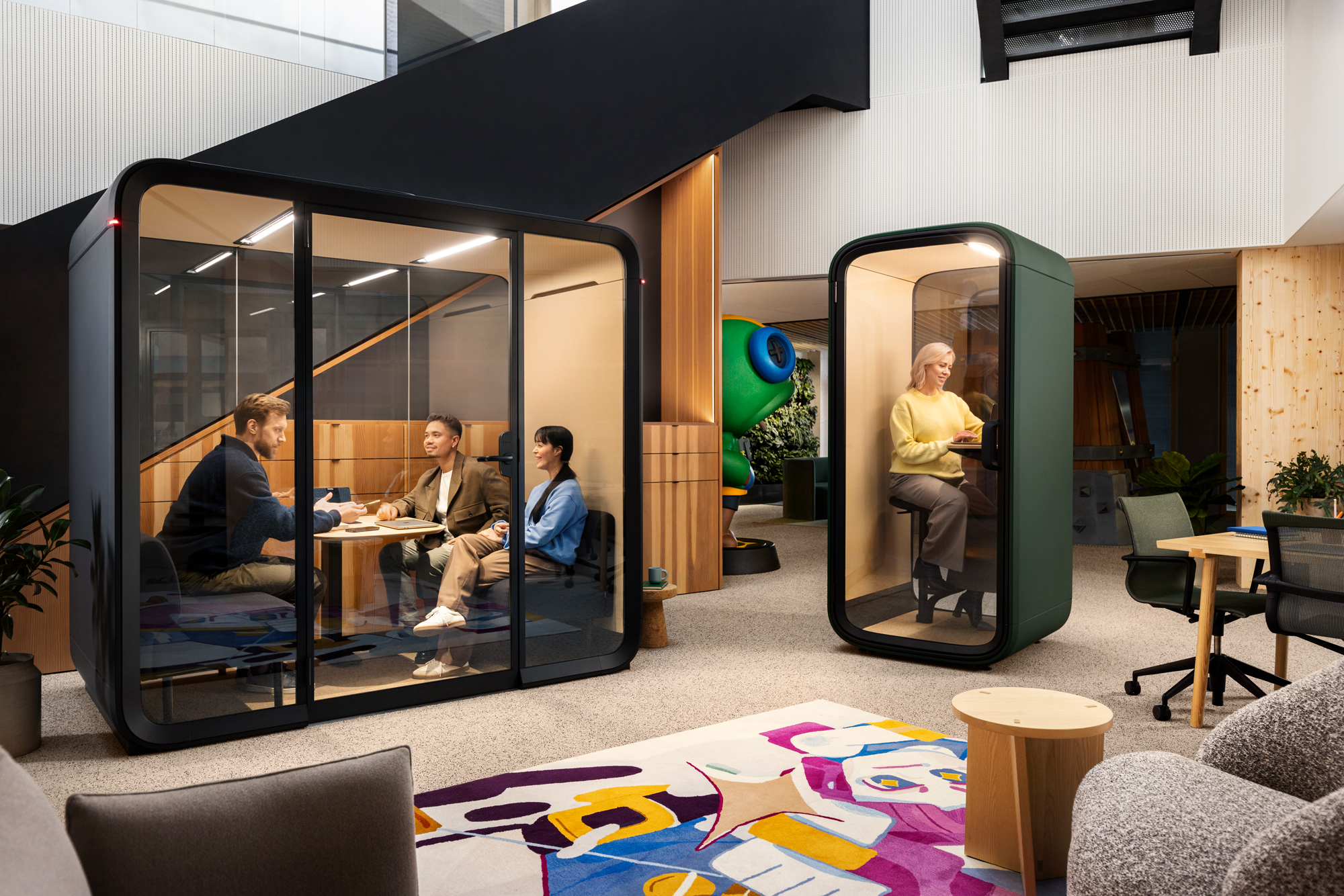
The UK market for office pods has matured considerably over the past few years, with several established manufacturers offering distinct strengths.
Framery is the Finnish manufacturer that has become synonymous with premium acoustic pods. Their range spans from the Framery One Compact (a single-person phone booth with A-class 30 dB soundproofing, adaptive ventilation, smart booking, and a touchscreen interface) through to the Framery 2Q (a meeting pod for four to six people) and the Framery Six, their largest model designed for full team meetings. Framery pods are widely praised for their acoustic performance, build quality, and technology integration. They also offer Framery Subscribed, a hire model that converts the capital outlay into a predictable monthly operating cost, useful for organisations that want flexibility without the upfront commitment.
Orangebox is the UK-based manufacturer that introduced one of the very first acoustic pod systems back in 2006. Their current Air3 range combines high-quality glass with soft acoustic panelling and is available in configurations from compact single-person booths through to larger meeting pods. The Air3 features a patented roof opening system (AIRO) for instant fresh air and an advanced fire safety system designed for sprinklered office environments. Orangebox is a strong option for organisations that want a UK-manufactured product with proven acoustic performance and a high degree of configurability.
Spacestor offers a range of pods with a strong focus on sustainability and accessibility. Their Residence range accommodates one to four people and uses FSC-certified timber and LBC Red List Compliant materials. For organisations that prioritise environmental credentials alongside acoustic performance, Spacestor is worth considering.
Established in 2013, Workstories provides a range of phone booths and meeting pods with clean, modern design at a more accessible price point. They offer a practical option for organisations looking for solid acoustic performance without the premium pricing of brands like Framery.
For a detailed comparison of pricing across all these brands, including specific model costs, see our guide to office pod pricing.
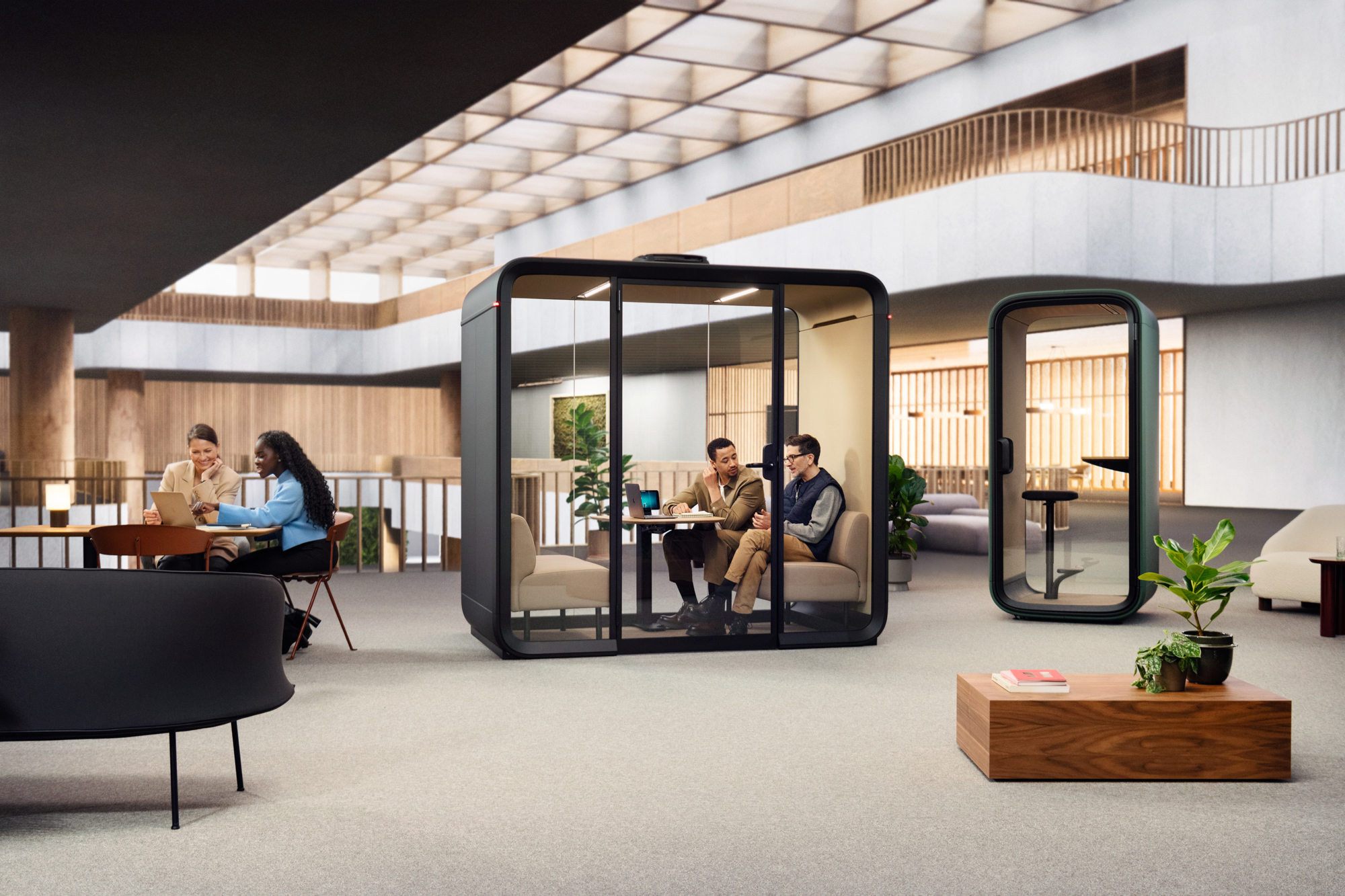
Office pods are not simply a purchase. They represent an investment in how your team works, and that investment pays back in several ways.
Providing quiet, private workspaces directly supports focused work and reduces the productivity cost of constant interruptions. Research consistently shows that access to private spaces improves both the quality and speed of output, particularly for tasks that require sustained concentration. For more on this relationship, see our article on office design and productivity.
The ability to step away from the noise of an open-plan office and into a controlled environment reduces stress and supports workplace well-being. Pods give employees a sense of control over their working conditions, which is consistently linked to higher job satisfaction and lower absenteeism.
Meeting pods create dedicated spaces for team discussions, client calls, and creative breakout sessions without requiring a formal meeting room booking. The lower friction of a walk-in pod encourages more spontaneous collaboration while keeping the conversation contained.
The cost comparison with built meeting rooms is stark. At £150 to £200 per sq ft for traditional construction in London versus around £100 per sq ft for a premium pod, the upfront saving is roughly a third. Pods may also qualify for tax relief as movable plant and machinery under the Annual Investment Allowance, and high-quality units from established brands typically retain 50 to 70% of their value at resale. For a full comparison of office fit-out costs, see our dedicated guide.
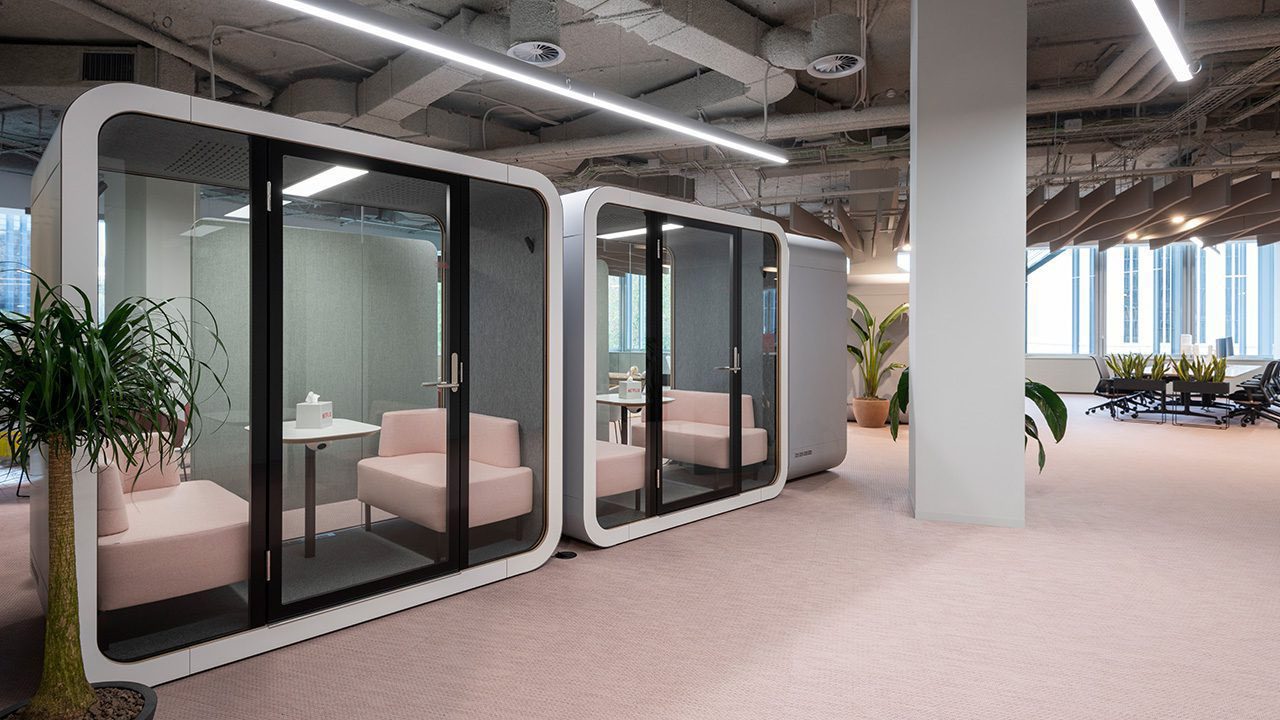
Pods are not the right answer for every situation, and it is worth being honest about the limitations before committing.
Even the largest meeting pods cannot replicate the space of a proper meeting room. For teams that regularly need to spread out materials, use large whiteboards, or accommodate more than six people, a pod will feel cramped. Carefully match the pod size to how it will actually be used rather than trying to make a pod do the job of a meeting room.
Soundproofing performance varies widely between manufacturers and price points. A budget pod may offer some noise reduction but fall well short of true speech privacy. If the pod will sit in a noisy open-plan environment and be used for confidential calls, spending more on a pod with proven ISO-rated acoustic performance is usually the better decision. See our guide to reducing office noise for practical context.
Pods need regular cleaning and periodic maintenance, including ventilation filter replacements, surface cleaning, and general wear-and-tear checks. Depending on the model and intensity of use, annual maintenance costs typically run between £200 and £500 per pod. Establishing a clear cleaning schedule from day one helps prevent issues and extends the lifespan of the unit.
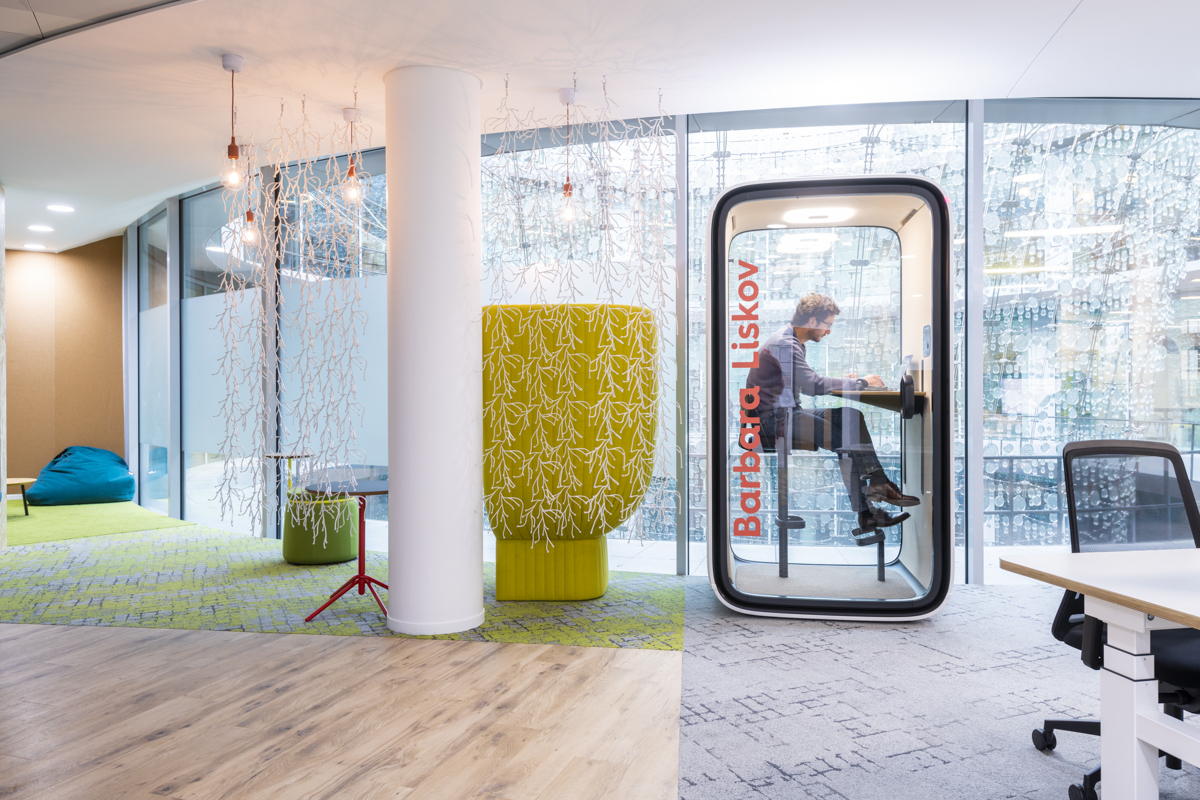
K2 Space has delivered workspace transformations across London since 2004, with furniture installations completed across the UK and Europe. Our furniture consultancy team works with all the leading pod manufacturers, including Framery, Orangebox, Spacestor, and Workstories, and can help you select the right product based on your workspace brief, budget, and programme.
Pods are part of a broader picture. Our design-and-build service brings together office design, fit-out, furniture, and move management under a single team, a defined timeline, and a fixed budget. Whether you need a single phone booth or a full pod programme integrated into a wider office fit-out, we can help you get the specification right and deliver it on time.