Share
Summarise


/ Flight to Character: Why London Tenants Are Choosing Smaller, Better Workplaces
We coined the term Flight to Character to describe a shift in tenant requirements away from large, inefficient floor plates toward smaller, character-led spaces that are more adaptable, more space-efficient, and richer in architectural identity, building features, and amenities.
For the last five years or so, the dominant narrative in London’s office market has been the “flight to quality“, the shift from lower-quality Grade B properties to higher-quality, premium Grade A assets. These are tenants seeking the highest sustainability credentials, such as BREEAM, along with better amenities and specifications to justify the commute into London. The reality, however, is that there’s a vast imbalance between these Grade A spaces (which remain in short supply) and the broader stock that doesn’t meet these ultra-high sustainability standards. What our team at K2 Space has been noticing in our conversations with London tenants, particularly in financial services, legal, and professional services, is that alongside the flight to quality, there’s a parallel shift underway. Tenants are increasingly prioritising character and the quality of the fit-out over sheer floor space. A firm of say 40-60 people taking 8,000 sq ft on a 20,000 sq ft floor plate is paying for oversized receptions, communal lobbies, and shared amenities they have little control over. They occupy the floor, but they don’t own the identity; there’s limited scope for branding, bespoke layout, or creating a space that truly reflects who they are. What’s driving this? In part, the large Grade A buildings that were designed for the pre-hybrid era are no longer as efficient as they once were. The way people use offices has fundamentally changed, and the spaces haven’t always kept pace. 
Rolls-Royce Partners Finance’s 8,000 sq ft London SW1 headquarters.
The original flight to quality was driven largely by measurable factors. Energy performance certificates, BREEAM ratings, air handling specifications, and connectivity infrastructure all became baseline requirements rather than differentiators. Tenants left buildings that could not meet these standards and moved into ones that could. Landlords who invested in upgrades were rewarded with stronger demand. Those who did not saw their vacancy rates climb. Market data from late 2025 and early 2026 confirms how far this polarisation has gone. Prime West End rents have approached £182.50 per square foot, while Grade B stock in the same submarket has fallen by roughly five per cent year on year. Around 68 per cent of all take-up across Central London has been in new or comprehensively refurbished buildings. The two-speed market that analysts predicted several years ago is now firmly established. Yet within this quality-led demand, something more nuanced has emerged. Tenants are not simply seeking the newest tower or the highest-rated building. They are gravitating toward spaces with personality, toward buildings that offer something beyond specification. Period features, distinctive architectural detailing, characterful neighbourhoods, and buildings with stories to tell have become as important to many occupiers as EPC ratings and WELL certifications. The flight to quality has not ended. It has matured into something richer, where character and efficiency sit alongside environmental performance as defining criteria. 
A Mayfair Private Investment Firm’s 5,000 sq ft headquarters, centred around a bespoke 9.2-metre Corian table with leather inlay.
The numbers tell a clear story. Office demand across Central London is now driven primarily by small to mid-sized businesses seeking between 5,000 and 20,000 square feet. In the West End in 2025, occupiers taking sub-10,000-square-foot deals accounted for more than 55% of transactions. Firms in media, design, professional services, and technology are leading these lettings, attracted by characterful spaces and strong locations rather than sheer scale. Several forces are driving this trend. Hybrid working has fundamentally changed how organisations calculate their space requirements. With fewer people in the office on any given day, the raw square footage needed to accommodate a workforce has decreased. But the quality expected of that space has increased dramatically. People who commute three or four days a week expect their workplace to offer something they cannot replicate at home. A generic open-plan floor in a glass tower no longer meets that expectation. The financial logic is compelling. Rather than leasing 15,000 square feet of average space and spending modestly on the fit-out, organisations are taking 8,000 square feet of exceptional space and investing significantly in creating an environment that genuinely supports their people and reflects their brand. The total occupancy cost may be similar, but the outcome is dramatically different. Every square foot earns its place, and the workplace becomes a genuine asset rather than an overhead. This “less space, better fit-out” approach also changes the relationship between tenant and building. In smaller, characterful spaces, the building’s architectural qualities become part of the workplace experience. Exposed brickwork, generous ceiling heights, period joinery, and natural light become design assets that would cost a fortune to replicate in a new build. The building does some of the design work for you. 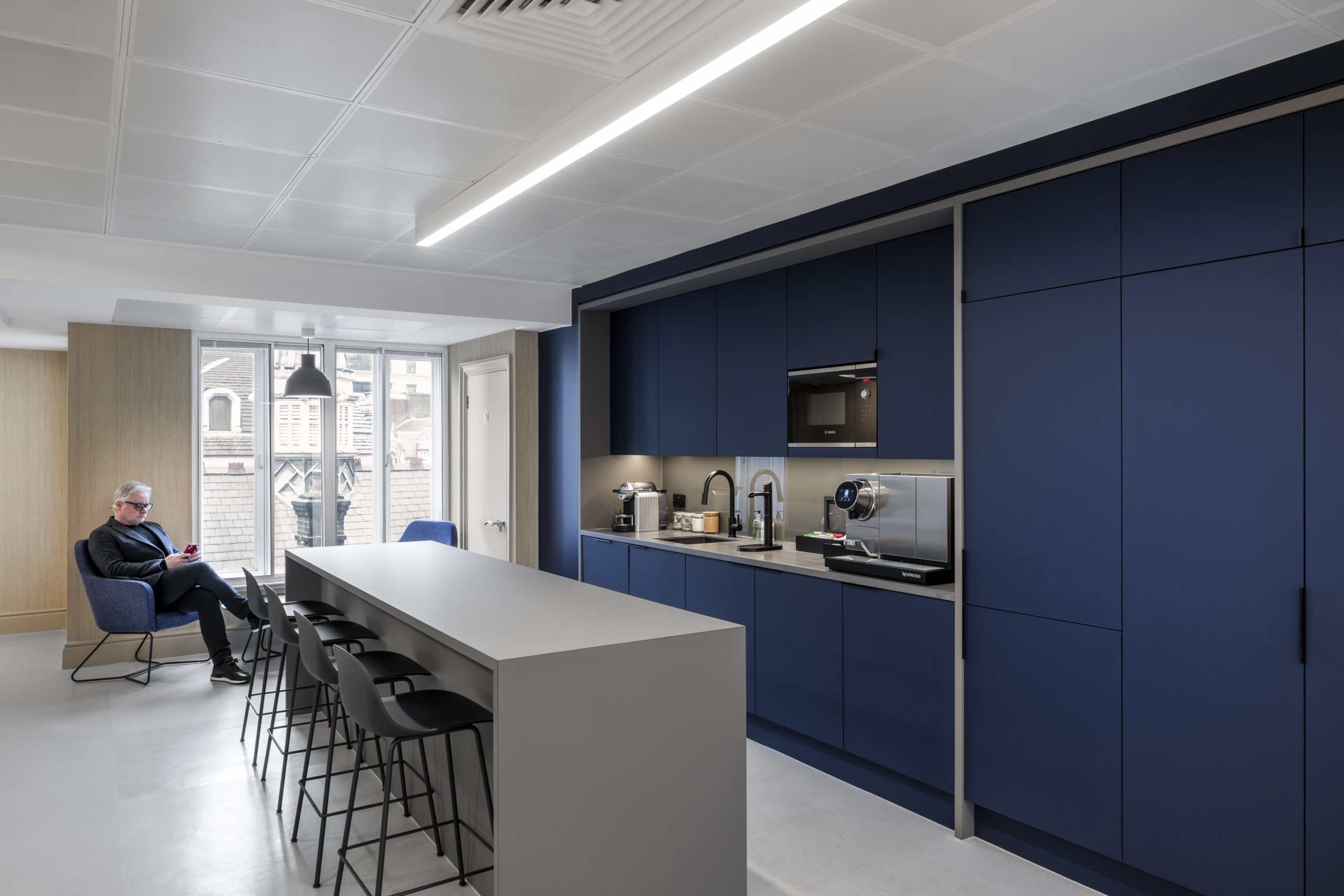
Genetec’s 6,000 sq ft London W1 office, delivered in eight weeks and using decorative finishes that give the workspace a distinctive identity.
The shift toward characterful spaces is not purely aesthetic. It is a strategic response to the challenges of talent attraction and retention in a competitive labour market. When every professional services firm, investment house, and technology company is competing for the same people, the workplace becomes a differentiator. A distinctive environment communicates something that a generic one cannot. Clients notice too. For advisory firms, wealth managers, and professional services practices, the office is where relationships are built and trust is established. A workspace that feels considered and intentional reinforces confidence in the organisation’s judgement and attention to detail. The relationship between brand identity and office design is well documented, but the flight to character takes this further. Rather than applying branding to a neutral shell, organisations are choosing buildings and spaces where the environment itself becomes part of the brand story. The transformation of a 1930s former bank into an investment firm’s London headquarters illustrates this approach perfectly. The project preserved the building’s original vault door and heritage detailing while creating a contemporary workspace for a demanding financial services occupier. The building’s character became inseparable from the business’s identity. That kind of authenticity cannot be manufactured in a new-build tower, and for an increasing number of organisations, it is exactly what they are looking for. 
The 2,496 sq ft conversion of a 1930s former bank into an investment firm’s London headquarters.
Character in the workplace is not a single look. It takes different forms depending on the organisation, the building, and the sector. What unites characterful spaces is a sense of intention, a feeling that every element has been considered and that the environment tells a coherent story. For some organisations, character comes from the building itself. Period properties in neighbourhoods like Marylebone, Fitzrovia, and Mayfair offer architectural qualities that give workplaces instant personality. High ceilings, ornate plasterwork, original fireplaces, and generous windows create environments that feel established and permanent. The DTRE project in Mayfair demonstrates how a design-and-build approach can work with these qualities rather than against them, creating a workspace that achieved BREEAM Very Good accreditation while celebrating the character of its setting. For others, character is expressed through material choices and design details. Bespoke joinery, considered lighting, distinctive furniture selections, and curated art programmes all contribute to workplaces that feel personal rather than corporate. The workplace experience is shaped by these details, by the texture of materials people touch, the quality of light in the spaces where they work, and the care evident in how everything comes together. The fit-out specification plays a decisive role. In smaller spaces, every design decision has a greater impact. A reception area in a 5,000-square-foot office is experienced by everyone who enters the building, not just those who happen to walk past it. A kitchen or breakout area serves the entire team, not just one department. This concentration of experience means that investment in quality materials, considered design, and well-chosen furniture delivers returns that are felt immediately and consistently. 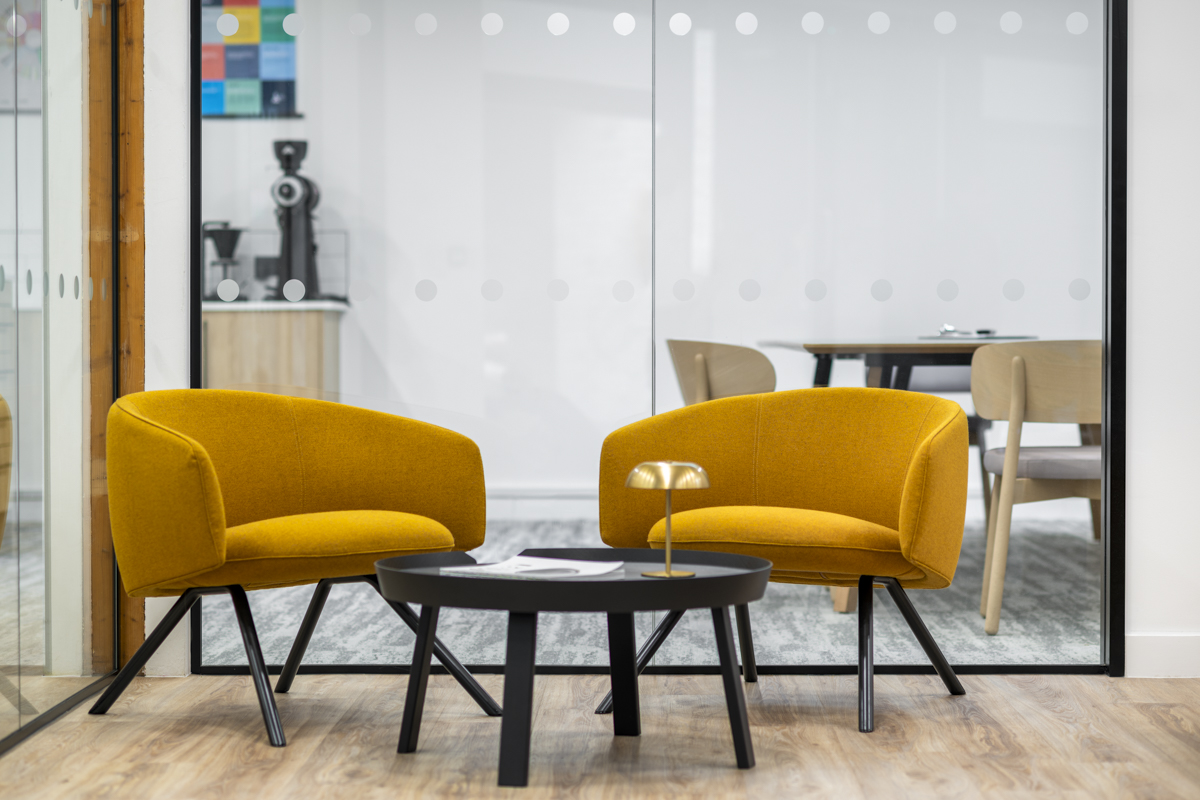
Löfbergs’ 4,000 sq ft London workspace, delivered in three months and reflecting the brand’s Swedish heritage.
One of the most persistent misconceptions about characterful workplaces is that they sacrifice efficiency for atmosphere. The opposite tends to be true. When organisations commit to smaller, better spaces, they are forced to think carefully about how every square foot is used. There is no room for dead zones, underused meeting rooms, or corridors that serve no purpose beyond circulation. Space planning in these environments demands precision. The balance between desks, meeting spaces, collaborative areas, and social zones must be calibrated to the organisation’s actual working patterns rather than assumptions inherited from previous offices. Occupancy data, departmental workflows, and the rhythms of the working week all inform decisions that maximise the utility of every area. The result is workplaces where character and efficiency reinforce each other. A well-proportioned breakout area with quality soft seating and good natural light is both a characterful space that people enjoy using and an efficient use of floor area that reduces pressure on formal meeting rooms. A reception that doubles as an informal client-hosting area serves two functions within one footprint. Smaller spaces encourage this kind of multi-functional thinking, and the best designs make it feel effortless rather than compromised. Technology integration supports this efficiency. Smaller spaces can be more densely served by AV systems, booking platforms, and environmental controls than larger ones. The per-capita investment in workplace technology is higher, ensuring that every seat has excellent connectivity, every meeting room has reliable video conferencing, and every zone is well-lit and climate-controlled. The technology disappears into the background, but the experience it enables is markedly better. 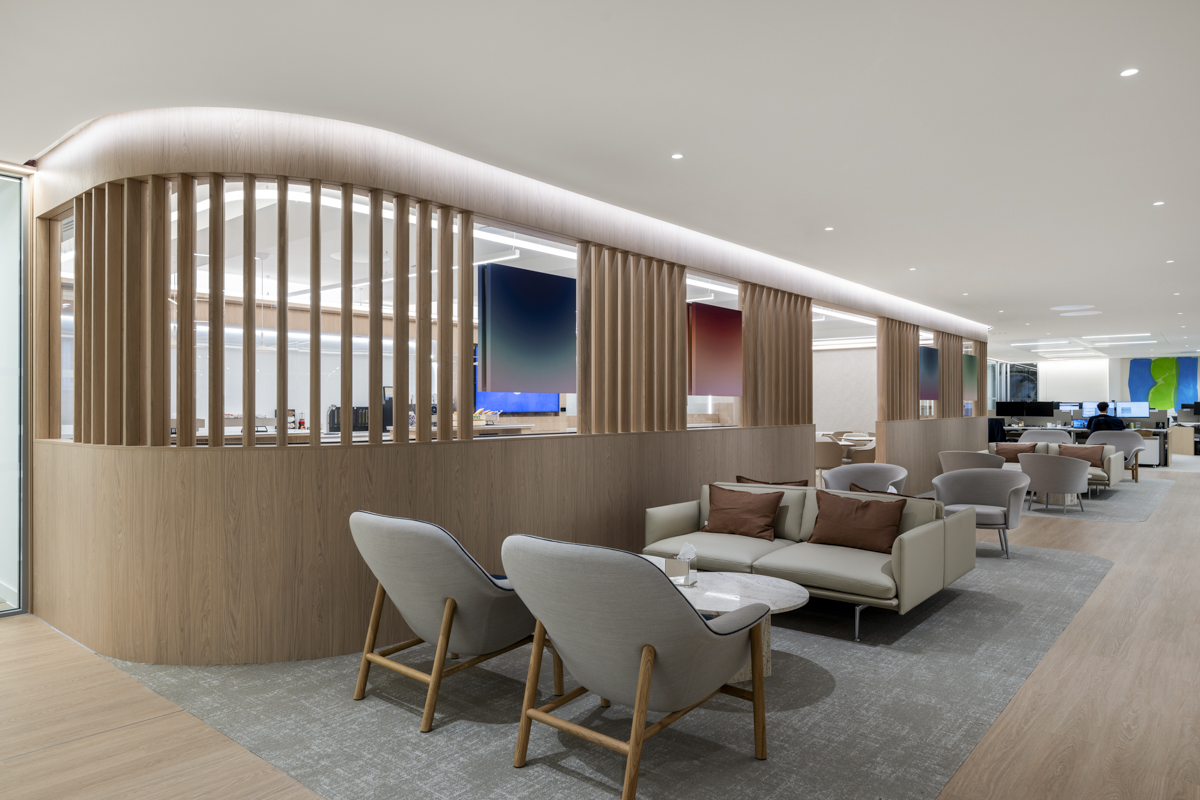
PJT Partners’ London workspace.
The flight to character is not happening in isolation. It is a response to specific market conditions that make smaller, higher-specification spaces both more attractive and more accessible than they have been for years. Supply dynamics play a significant role. While headline vacancy across Central London has stabilised at around 7.7 per cent, that figure masks a sharp divergence. Prime buildings in sought-after locations remain fiercely competitive, with West End prime vacancy sitting below two per cent. Meanwhile, secondary stock continues to carry availability above ten per cent in many submarkets. For organisations seeking characterful space in the 2,000 to 20,000 square-foot range, particularly in West End and Midtown neighbourhoods, competition is fierce and acting early is advisable. Rental economics also favour this approach. Prime West End rents have reached record levels, but the cost per person can actually decrease when organisations take less space and invest more in how it performs. A team of 40 occupying 6,000 square feet of exceptional space pays less in total rent than the same team spread across 10,000 square feet of average accommodation, even at a higher per-square-foot rate. The savings on rent can be redirected into fit-out quality, creating a better environment without increasing overall occupancy costs. The development pipeline reinforces the trend. New completions in 2026 are forecast to fall by roughly 40 per cent from 2025 levels, with only around 1.2 million square feet of new space expected. The bulk of development activity is now focused on refurbishment rather than new build, which means the market is increasingly offering characterful, upgraded buildings that align with this shift in occupier preference. Landlords are investing in heritage restoration, energy upgrades, and amenity improvements that create exactly the kind of space tenants want. 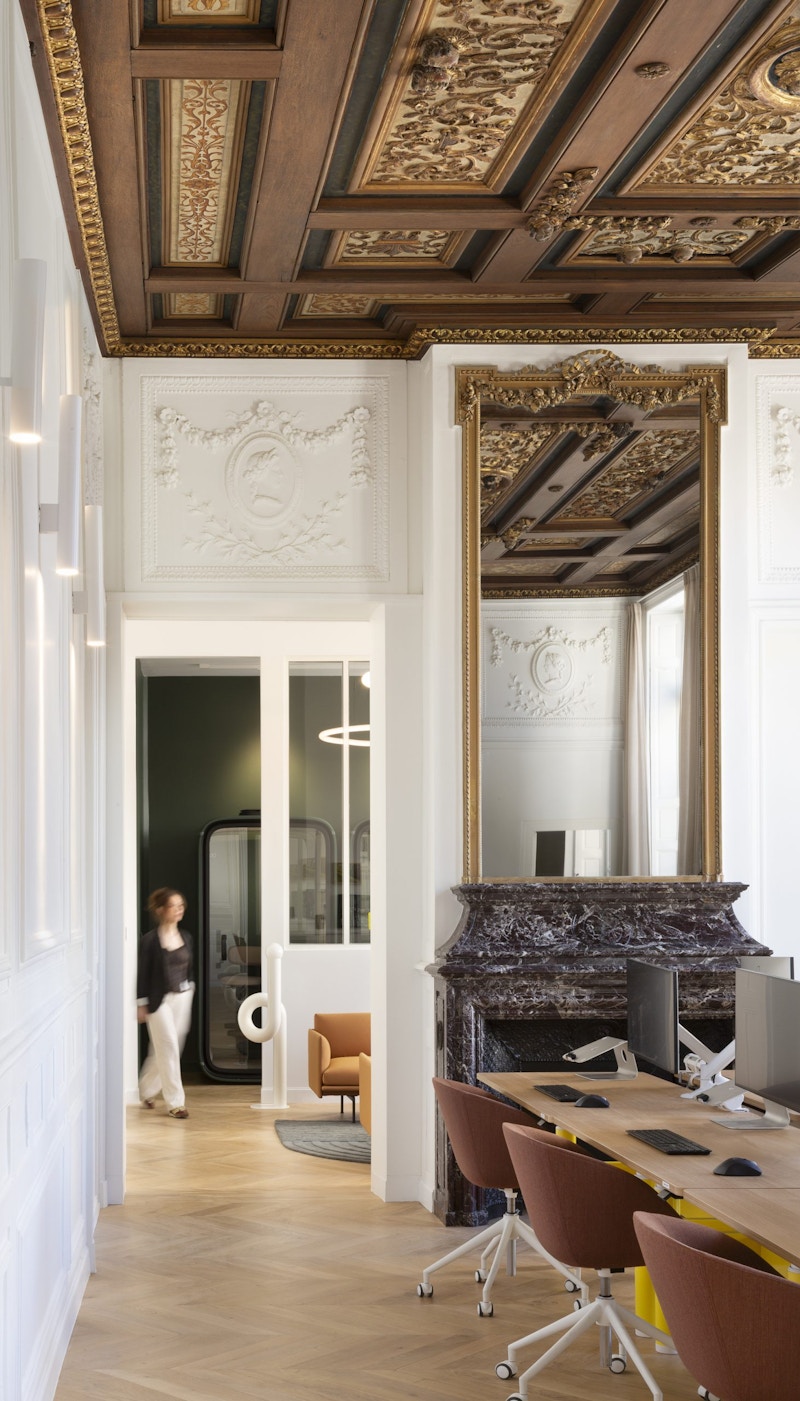
The Global Tech Media Company’s 102,000 sq ft Paris headquarters in a listed Hôtel Particulier, furnished by K2 Space using over 30 manufacturers.
The practical challenge of the flight to character lies in execution. Taking a smaller space and fitting it out to an exceptional standard requires a different approach than filling a large floor plate with workstations and meeting rooms. The margin for error is thinner, the impact of every decision is greater, and the coordination between design, construction, and furniture must be tighter. In a 5,000 square foot space, there is nowhere to hide poor workmanship. Joinery must be precise. Material transitions must be clean. Lighting must be carefully considered rather than uniformly applied. The fit-out needs to feel crafted rather than constructed, and that demands both skill and attention to detail from everyone involved. Furniture selection becomes particularly important in compact environments. Products need to work at the dimensional level, fitting the space without crowding it, and they need to work at the experiential level, contributing to the character of the environment rather than defaulting to generic commercial specification. An ergonomic task chair and a height-adjustable desk remain essential, but in a characterful space they sit alongside softer elements: considered upholstery, quality meeting tables, and reception furniture that makes a statement. Understanding fit-out costs is particularly important in this context. A high-specification fit-out for a demanding occupier in a characterful building might exceed £200 per square foot, but applied to a smaller footprint, the total project cost remains manageable. The per-square-foot investment is higher, but it buys something genuinely different from what a larger, more moderately specified project delivers. 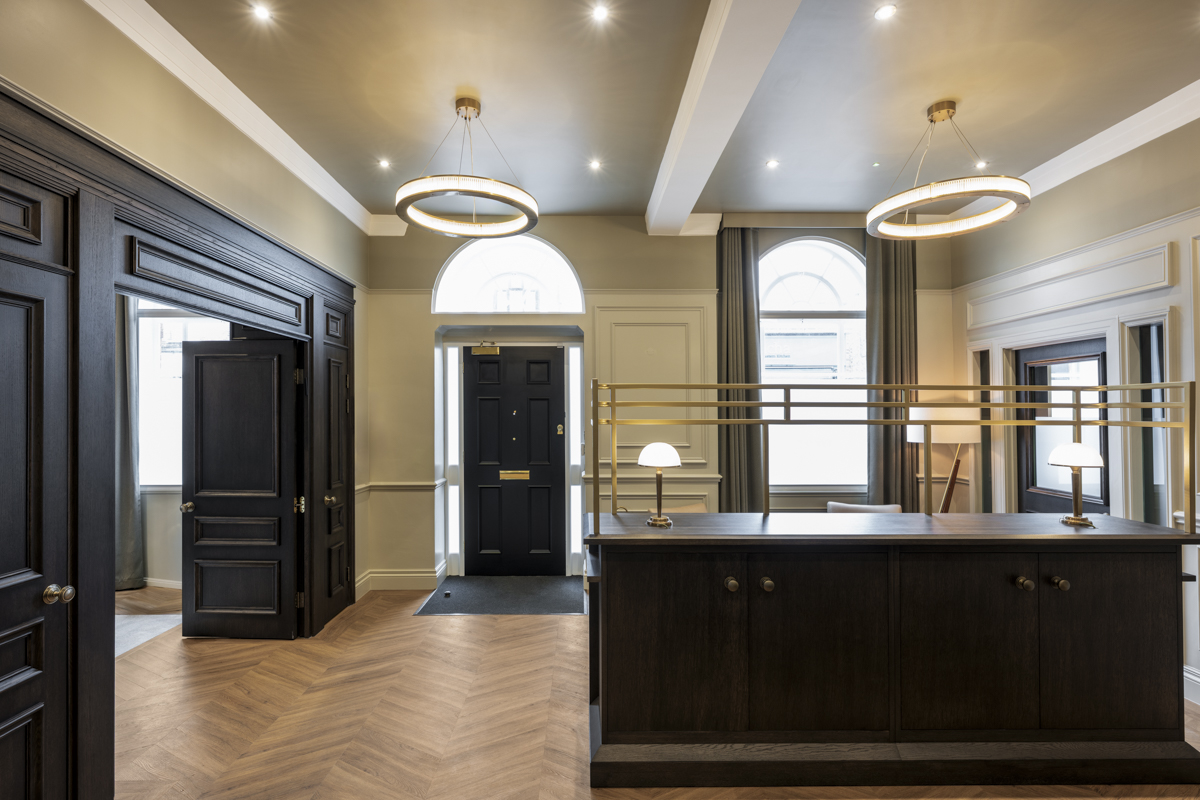
Bespoke joinery at the Investment Firm’s 2,496 sq ft London headquarters, converted from a 1930s bank.
The flight to character extends beyond the front door. Organisations choosing smaller, more distinctive spaces are increasingly selecting neighbourhoods that reinforce the culture they want to build. The location itself becomes part of the workplace proposition. Submarkets like Fitzrovia, Soho, Marylebone, and parts of Clerkenwell and Farringdon have benefited significantly from this trend. These areas offer the kind of walkable, amenity-rich environments that make coming to the office worthwhile. Independent restaurants, quality coffee shops, green spaces, and cultural venues all contribute to a working experience that begins the moment someone steps off the train. Footfall data supports this shift. Weekday pedestrian counts in the West End were up 19 per cent year on year in 2025, reflecting renewed worker presence and the pull of well-located, characterful neighbourhoods. For organisations competing for talent, an address in a vibrant neighbourhood sends a different signal than a postcode on an anonymous business park. The workplace is no longer just the space you lease. It is the area you inhabit. This neighbourhood dimension also influences how organisations think about amenities. A 5,000-square-foot office cannot accommodate a gym, a full-service kitchen, and a library. But it doesn’t need to if those amenities are within a five-minute walk. The surrounding area becomes an extension of the workplace, and the decision about where to locate becomes as much about what is nearby as what is inside the building. 
The Roald Dahl Story Company’s 4,500 sq ft Marylebone workspace, featuring a replica of Dahl’s garden writing shed.
The flight to character aligns naturally with sustainability ambitions. Taking up less space is inherently more efficient than occupying more, and investing in the quality of what you have reduces the frequency of future refurbishment cycles. Buildings with genuine character are, by their nature, existing buildings, and refurbishing an existing structure has a significantly lower carbon footprint than constructing a new one. The market reflects this alignment. Around 47 per cent of available office space across Central London now carries a BREEAM rating of Excellent or Outstanding, up seven per cent from the previous year. Landlords are investing heavily in energy-efficient upgrades to achieve carbon-neutral operations and WELL certifications. For tenants, choosing a characterful space in a building with strong sustainability credentials allows them to meet environmental commitments without compromising on the quality of their workplace. Sustainable design in smaller spaces can be more ambitious than in larger ones. Material budgets go further when there is less area to cover, allowing specification of responsibly sourced timber, low-VOC finishes, and recycled acoustic treatments that might be cost-prohibitive at scale. Energy-efficient lighting and climate control systems are simpler to implement and more effective in compact environments. The result is a workspace that performs well environmentally while feeling warm, considered, and distinctive. For some organisations, formal environmental certification through schemes such as BREEAM or SKA provides third-party validation of this commitment. These certifications demonstrate to clients, employees, and stakeholders that sustainability is embedded in the way the organisation operates, not just stated in a policy document. 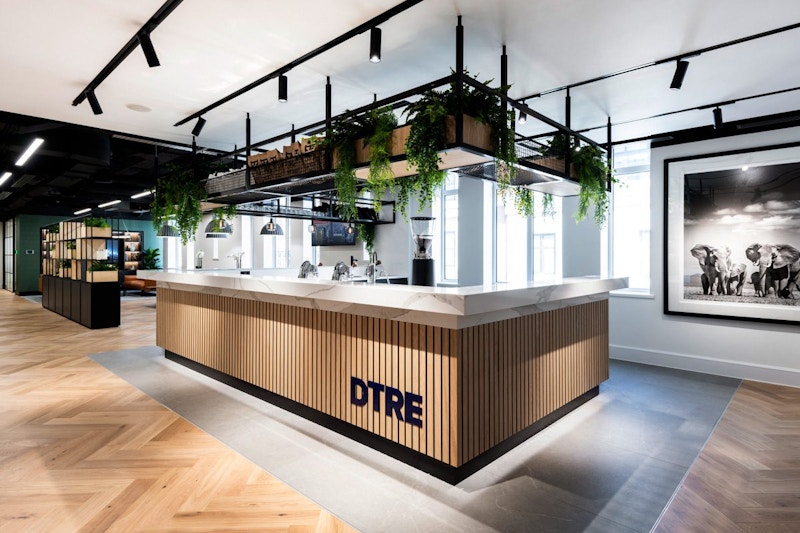
DTRE’s 11,000 sq ft Mayfair workspace, which achieved BREEAM Very Good accreditation while maintaining a stunning aesthetic.
The coordination challenges of a workplace project do not scale linearly with size. A 6,000 square foot fit-out in a heritage building can be more complex to deliver than a 20,000 square foot project in a new shell-and-core tower. Building constraints are less predictable. Heritage considerations add layers of sensitivity. The tolerance for error in material selection, construction quality, and furniture fit is tighter because everything is experienced up close. When design, fit-out, furniture, and move management are handled by separate parties, the coordination burden falls on internal teams who typically have other responsibilities. In smaller projects, the gaps between providers become larger in proportion, and the risk of misalignment between design intent and delivered reality increases. An integrated design-and-build partner changes this equation. With a single team responsible for the entire process, design decisions are made with full awareness of their construction implications. Furniture can be specified alongside the fit-out rather than bolted on afterwards. Warehousing and staging ensure that products arrive only when spaces are ready to receive them, which is particularly important in smaller buildings where storage space is limited and the construction programme leaves little room for congestion. The Genetec project in London W1 demonstrates how this integrated approach works in practice. The 6,000 square foot refurbishment of a period building was delivered in just eight weeks, requiring precise coordination between construction trades, furniture delivery, and technology installation within a tight programme. A characterful building with its own constraints demands that kind of integrated thinking. A fragmented delivery team would have struggled to maintain that pace without compromising quality. 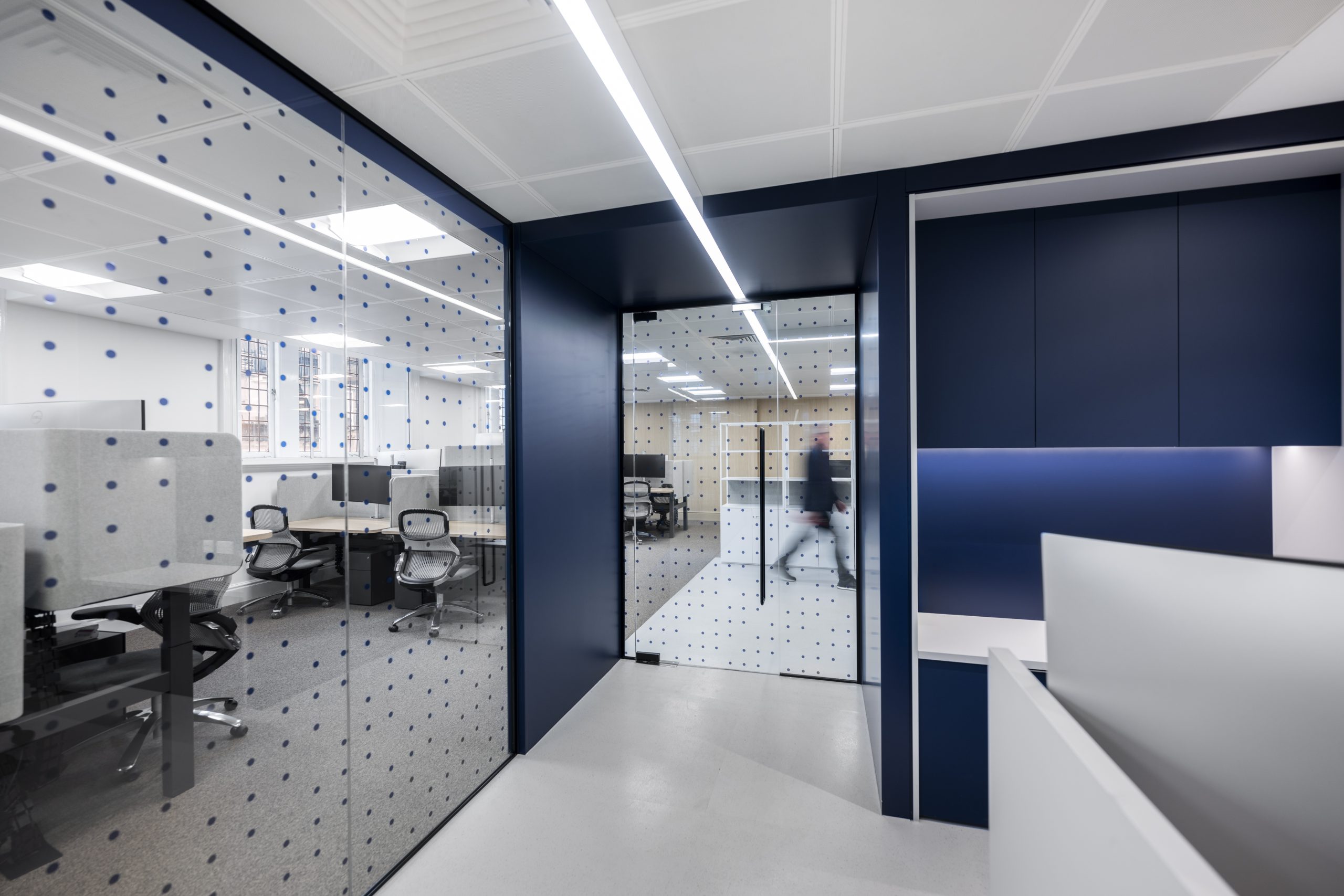
Genetec’s completed 6,000 sq ft workspace in London W1, delivered by K2 Space in eight weeks through an integrated design-and-build model.
The flight to character is not a passing trend. It is a structural shift in how organisations think about their workplaces, driven by changes in working patterns, talent expectations, and market dynamics that are unlikely to reverse. For businesses in the 2,000 to 20,000 square-foot range, the opportunity is significant: to create workplaces that punch well above their weight, attract and retain the best people, and communicate something meaningful about the organisation to everyone who experiences them.
K2 Space has delivered workplace transformations across London since 2004, working with organisations ranging from global financial institutions to growing creative businesses. Our integrated approach brings together design, fit-out, furniture, and move management under a single team with a defined timeline and a fixed budget. For organisations ready to make the most of the flight to character, this experience provides confidence that the result will be as distinctive and considered as the ambition behind it.
To discuss how K2 Space can help with your next workplace project, contact our team or request an initial cost estimate to begin the conversation.