Share
Summarise


The workplace is evolving rapidly. Here are 10 key office design trends for 2026, from hybrid-ready activity-based design and smart building technology to biophilic environments, acoustic intelligence, sustainable materials, and neuro-inclusive spaces to guide your next office refurbishment or fit-out.
The ten office design trends shaping workplaces in 2026 reflect a market that has moved beyond post-pandemic experimentation into deliberate, evidence-based strategy. Hybrid working has settled into a permanent operating model. Sustainable materials and circular economy principles have shifted from aspiration to expectation. Nature-inspired design has evolved well beyond decorative planting into a discipline grounded in evidence about human physiology. Smart building technology has advanced from passive monitoring into active environmental management. And neuro-inclusive design has emerged as the next frontier of workplace accessibility.
These forces do not operate in isolation. They overlap, reinforce, and sometimes create productive tension with one another. A commitment to sustainable materials influences the sensory qualities of a space. Smart technology enables the environmental personalisation that neuro-inclusive design demands. Hybrid patterns determine the acoustic and spatial requirements that activity-based layouts must address. Understanding these connections is what separates a genuinely forward-thinking workplace from one that simply follows fashion.
This guide examines how each of these forces is shaping workplace design across London and beyond, drawing on current market data, emerging research, and practical experience from projects delivered for organisations ranging from financial services firms to growing technology companies.
Trends are what’s changing; our office design ideas cover what consistently works.
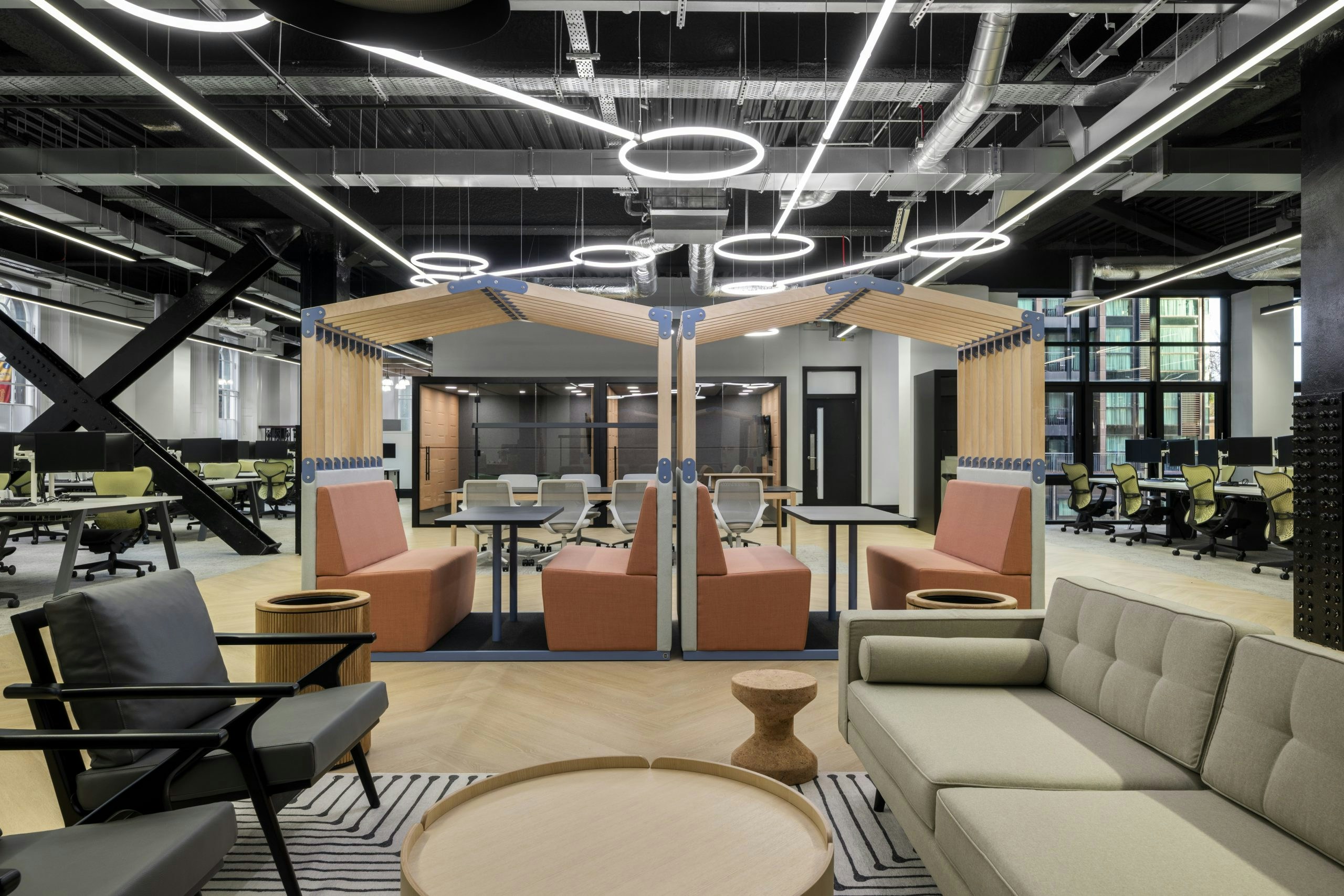
ONS data confirms that 28% of working adults in Great Britain now follow a hybrid pattern, a proportion that has risen steadily since 2022. Among degree-educated workers the figure climbs to over 40%, and for those earning above £50,000 it reaches 45%. The UK now has the second highest rate of hybrid working in the world, behind only Canada, with workers averaging 1.8 remote days per week. The CIPD reports that 74% of organisations support hybrid arrangements as long-term strategy rather than pandemic hangover.
For office design, the implication is that spaces built around rows of identical desks no longer reflect how people actually use the workplace. The office must provide what a home cannot: high quality collaboration, spontaneous social connection, mentoring, and access to specialist environments. Data from the AWA Hybrid Working Index shows that desk provision has fallen from 79 to 56 desks per 100 employees among UK corporates, a reduction of roughly 30% since 2022. The space freed up has been reallocated to the settings that make the commute worthwhile.
Activity-based design creates distinct neighbourhoods within the floor plate, each tuned to a specific mode of work. Deep focus nodes with library-level quiet sit alongside social hubs with cafe acoustics, tech-light escape zones for mental reset, and high-energy collaboration areas with flexible furniture. Boundaries between zones are defined through acoustic treatment, material changes and visual cues rather than walls. This approach addresses one of the most persistent complaints about open-plan offices: interruption and noise are consistently the primary sources of dissatisfaction with workplace environments.
The space planning process must account for these varied requirements from the outset. Building the right acoustic infrastructure into the fit out from the start is far more effective than attempting corrections after occupation.
The hybrid office design approach requires careful analysis of how people actually work, not assumptions about how they should work. Occupancy studies and utilisation audits provide the evidence base, revealing patterns of use that can be surprising even to organisations that believe they understand their own working culture. Reception areas have been reimagined as concierge experiences, with the welcoming atmosphere of boutique hotels replacing the security-first approach of traditional corporate lobbies. Coffee bars, curated art and comfortable client lounges blur the line between waiting areas and social spaces. For professional services firms, hospitality influences extend to client-facing areas, where the quality of the physical environment communicates capability and attention to detail.

The intelligent building of 2026 has moved beyond passive monitoring toward active environmental management. The global smart building market was valued at approximately USD 142 billion in 2025 and is projected to grow at a compound annual rate exceeding 20% through the end of the decade. In the UK alone, the market is expected to grow at over 22% annually, bolstered by energy efficiency requirements and the integration of AI and IoT systems into building management.
Occupancy sensors, real-time air quality dashboards, automated HVAC and predictive booking systems now work together to create workplaces that respond to the people inside them. AI driven systems adjust lighting, temperature and ventilation based on actual use rather than fixed schedules, cutting energy waste while improving comfort.
Digital twin technology has matured rapidly. Virtual replicas of physical spaces allow facilities teams to visualise occupancy, energy consumption and environmental conditions in real time. Predictive algorithms adjust HVAC proactively rather than reactively, maintaining optimal conditions while minimising consumption. For employees, the intelligence manifests through experience apps that suggest quiet zones, flag the best time to visit the cafe, or confirm which colleagues are in the building.
The connection to hybrid working is direct. When desk provision has dropped and mid-week peaks create pressure, smart booking and wayfinding tools ensure the right settings are available to the people who need them. Technology also enables the environmental personalisation that neuro-inclusive design demands, adjusting sensory conditions zone by zone rather than treating the entire floor as a single environment.
Privacy governance matters. The collection of behavioural data requires clear frameworks so that employees understand what is gathered and how it is used. Organisations that get this right gain genuine value. Those that treat smart technology as a surveillance tool will erode the trust that makes it effective.
Building technology readiness into the fit out from the outset, rather than retrofitting later, protects the long-term value of the investment. Smart building systems also offer one of the most effective routes to reducing operational carbon, providing both the performance improvements and the data trail needed to demonstrate BREEAM compliance. For practical guidance on planning AV and connectivity, see workplace technology.
Biophilic design has evolved from decorative greenery into a discipline grounded in evidence about human physiology and cognitive performance. Exposure to natural light, views of vegetation, natural materials and variable sensory experiences all contribute to reduced stress, improved concentration and enhanced creativity. A Human Spaces study found that proximity to natural elements was associated with a 15% improvement in wellbeing and creativity, alongside 6% higher productivity.
The approach in 2026 goes well beyond placing a few statement planters in reception. Effective schemes distribute natural elements across the entire floor plate, varying density and character by zone. Lively planted clusters near social areas create energy. Finer, calmer foliage near focus zones supports concentration. Timber trims, stone textures, visible grain and natural fabrics amplify the sensory connection without significant additional cost.
Tactile naturalism emphasises the feel of materials as well as their appearance. Imperfect wood grains, textured stone and natural fabrics provide sensory variety that sterile corporate finishes cannot match. Colour palettes have shifted toward desaturated naturals, with sage greens, dusty roses and warm neutrals creating calming environments that anchor focused work. The connection between sustainable material choices and biophilic sensory qualities is worth noting: when designers specify natural, low-impact materials for environmental reasons, they often gain biophilic benefits as well.
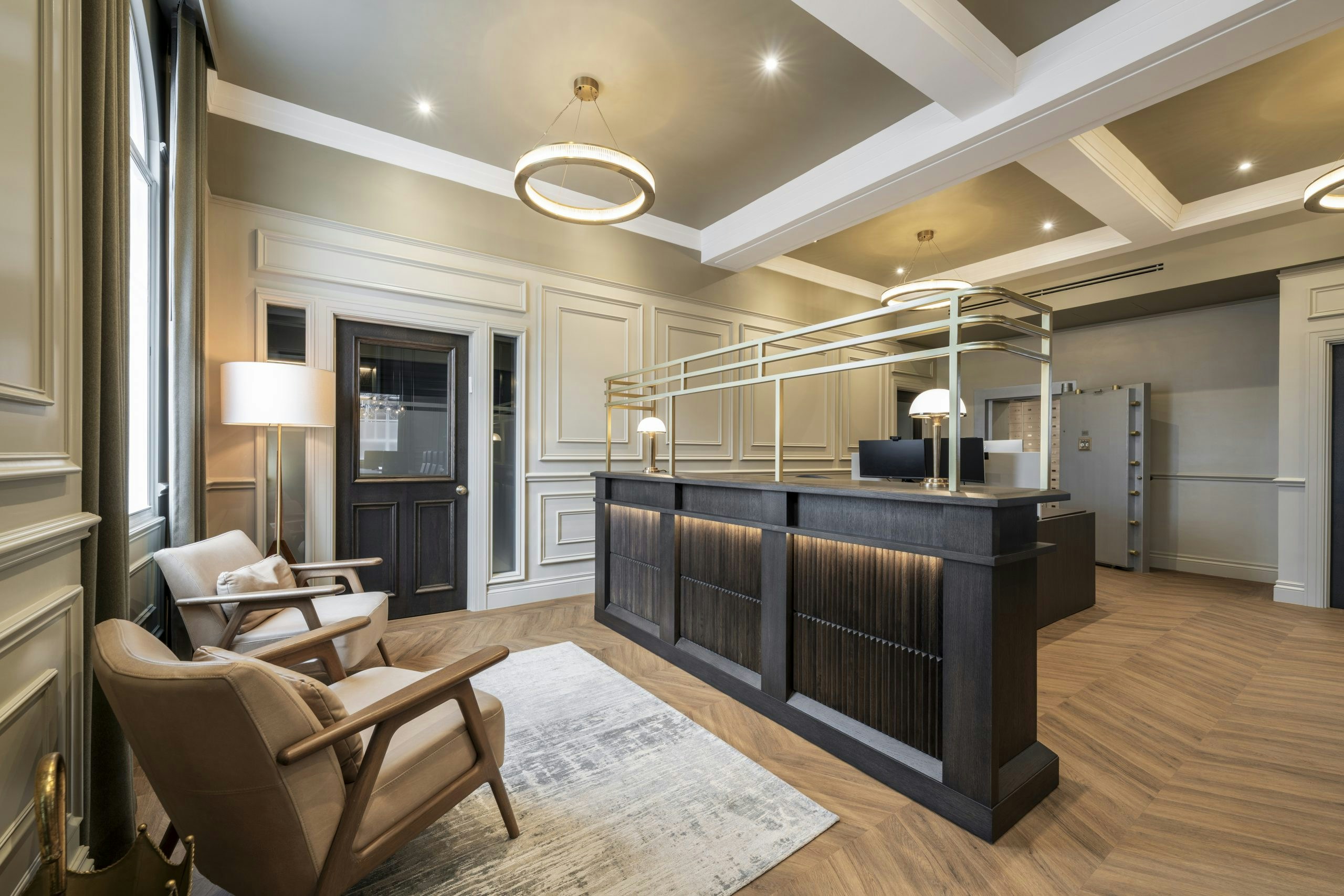
The most ambitious projects are exploring rewilding concepts, creating functioning ecosystems within and atop buildings. Green roofs, living walls and integrated planting systems contribute to biodiversity while providing the psychological benefits of connection with nature. The investment firm project housed in a 1930s former bank illustrates how natural materials and heritage character work together, creating a workspace that feels rooted in something authentic. For maintenance and specification guidance, see our biophilic office design guide.

Poor acoustics consistently ranks as the number one workplace complaint. The shift toward hybrid patterns has made this more pressing. With more people joining meetings remotely, the number of video calls taken from open plan desks has risen sharply. At the same time, the days people do come in tend to be concentrated mid-week, creating noise peaks that older layouts were never designed to handle. Studies have linked background office noise to productivity drops of up to 66%, with conversations among colleagues the most significant source of distraction.
The response in 2026 is more sophisticated than simply adding phone booths. Acoustic intelligence means treating the floor plate as a collection of zones with distinct sound profiles, each supported by the right combination of absorption, isolation and masking. Fabric wall panels, ceiling baffles, upholstered furniture and carpet reduce reverberation in open areas. Sealed doors, close-fitting partitions and acoustic gaskets contain sound in meeting rooms and focus pods. When quiet zones have clear acoustic boundaries and visible cues, people self-select the right environment for their task without being told.
Our OSRL meeting suite demonstrates how layered materials deliver speech clarity without sacrificing the transparency and openness that make modern workplaces feel connected. For practical specification guidance, see understanding workplace acoustics and reducing noise levels in offices.
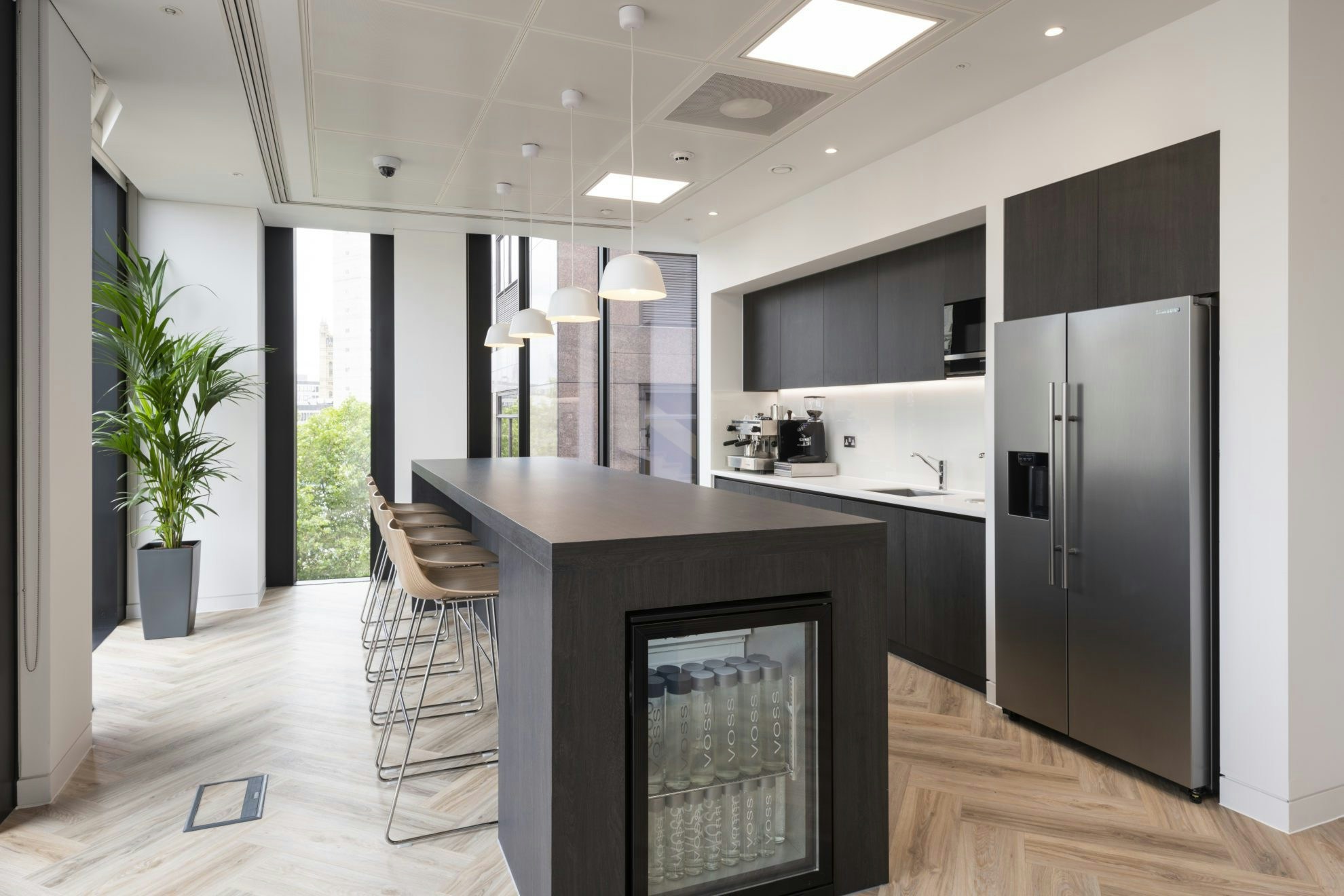
Sustainability has moved from aspiration to expectation. Tightening regulation, corporate ESG commitments and genuine shifts in occupier priorities have made material selection one of the most scrutinised decisions in any fit out project. The question is no longer whether to specify sustainably but how far to push it.
Circular economy thinking now shapes procurement. Products made from recycled content, those designed for disassembly and reuse, and those derived from rapidly renewable sources all feature more prominently in commercial specifications. Reclaimed timber, recycled metals and upcycled upholstery reduce waste while adding depth and character. Low VOC finishes, traceable supply chains and modular systems that simplify future adaptation have become standard expectations rather than premium add-ons.
The retrofit-first philosophy has gained significant traction, particularly in London where embodied carbon considerations increasingly influence planning decisions. Preserving existing building fabric avoids the substantial carbon cost of new concrete and steel, and aligns with the aesthetic interest in heritage character that many occupiers value. Honest materiality, including exposed concrete, original brickwork and visible services, carries no additional embodied carbon and creates environments with genuine personality.
Formal certification through schemes such as BREEAM or SKA provides third party validation. The DTRE project at 25 Argyll Street achieved BREEAM Very Good within an 11,000 square foot Mayfair fit out that also delivered a gym, Peloton studio and high specification client areas. Furniture consultancy plays a role in ensuring that sustainability claims are backed by credible data rather than marketing language. For specification guidance, see designing sustainable offices.
The definition of workplace amenity has changed. Foosball tables and bean bags have given way to practical services that genuinely improve the working day. Barista quality coffee, healthy food options, on-site fitness, concierge support and well designed social zones now form part of a broader strategy to make the commute worthwhile. Research from Steelcase’s 2024 Global Report confirms that employees are most motivated to come in for connection with colleagues, not mandates or gimmicks.
Cafe-style breakout areas, lounge seating and bar zones enable spaces to shift from daytime work settings to evening event venues with minimal changeover. A modular approach to furniture and AV means the same area can host a team lunch, a client reception and a town hall within the same week. Concealed storage, robust surfaces and clear operational protocols keep these areas looking sharp through heavy use.
For professional services firms, the quality of client-facing spaces communicates capability and attention to detail. Reception areas have been reimagined as concierge experiences, with comfortable waiting areas that blur the line between lobby and lounge. End of trip facilities with showers and secure cycle storage support active commuting. On-site fitness facilities, yoga studios and dedicated relaxation zones reflect a growing focus on holistic employee health. Our article on tea point and kitchen design covers the operational detail, while making a good first impression addresses the client-facing elements.
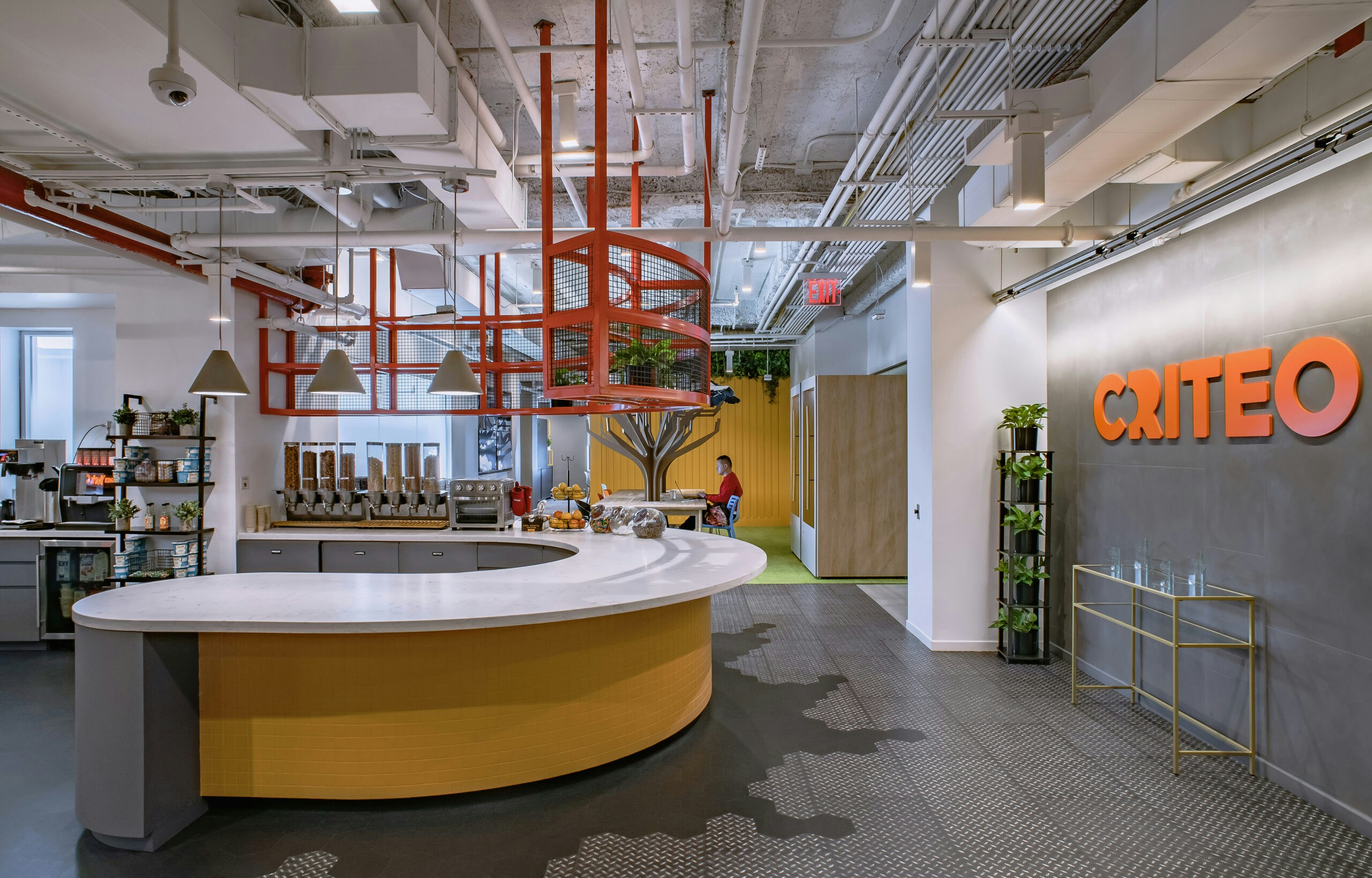
Neuroinclusion has emerged as one of the most significant developments in workplace design thinking. Research suggests that between 15 and 20% of the population is neurodivergent, encompassing conditions such as ADHD, autism, dyslexia and dyspraxia. Most built environments still assume a neurotypical user, and the gap between that assumption and reality represents both a wellbeing challenge and a missed opportunity.
In practical terms, neuro-inclusive design means providing genuine choice and control over sensory input. This goes well beyond a single quiet room labelled as inclusive. It means offering a spectrum of environments with predictable and clearly communicated characteristics: sheltered seating away from circulation, quiet corners with consistent acoustics, window-side spots with controlled daylight and higher-energy collaborative zones. The principles of micro-zoning discussed in the hybrid workspaces section provide much of the spatial framework that neuroinclusion requires.
Material and finish selections play a significant role. Muted colour palettes and natural textures tend to be universally calming. Harsh fluorescent lighting, high-contrast patterns and hard reflective surfaces can be actively distressing for people with sensory processing differences. Adjustable task lighting, acoustic management through soft furnishings, and clear wayfinding with consistent visual cues all contribute to environments that feel manageable. The ergonomic furniture specification process should account for sensory preferences as well as postural support, offering choices in surface finish, texture and temperature.
The business case extends beyond compliance. Studies have shown that neurodivergent teams can be up to 30% more productive, and organisations with inclusive cultures report lower turnover and higher engagement. For financial services firms competing for talent, the quality of the physical environment sends a strong signal about values. See our guides on inclusive office design and workplace neurodiversity for practical specifications.
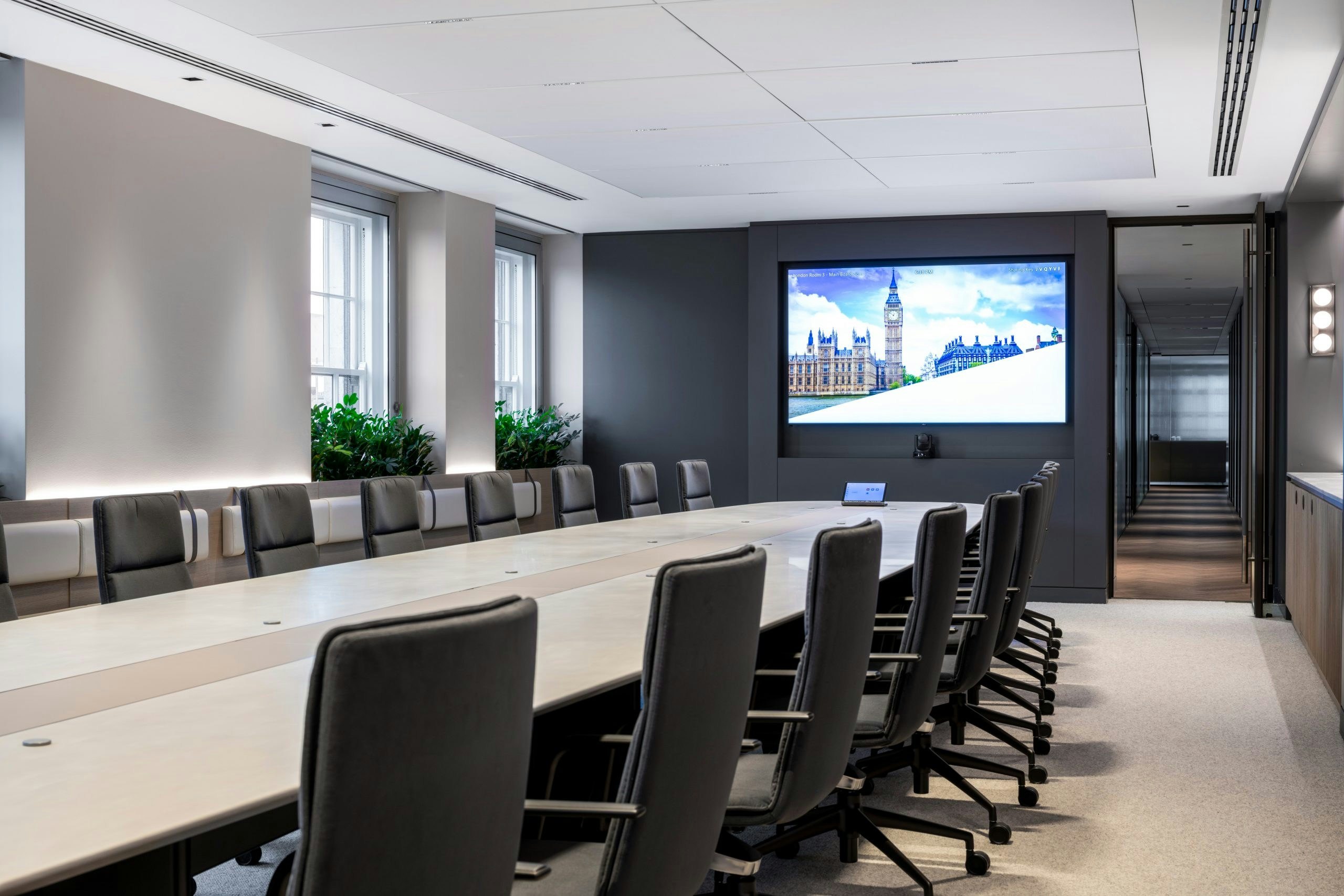
Human-centric lighting systems that mimic the natural progression of daylight through the day have become standard in high-performance fit outs. Cool, bright tones in the morning support alertness. A secondary boost after lunch combats the natural circadian dip. Warm, amber hues in the late afternoon signal the body to prepare for rest. Studies demonstrate productivity improvements of up to 12% and significant improvements in sleep quality among employees in circadian-optimised workplaces.
Research from Cornell University found that workers exposed to optimised daylight experienced an 84% reduction in eyestrain, headaches and blurred vision. Northwestern University research showed that employees near windows slept an average of 46 minutes longer per night than those in windowless spaces. These benefits are particularly valuable in northern climates where natural daylight is scarce during winter months.
The practical application goes beyond automated colour temperature shifts. Layered lighting, with distinct recipes for deep work, collaboration and decompression, allows different zones to function at their best simultaneously. Micro-zoning of light intensity and warmth reinforces the behavioural cues already established through furniture, materials and acoustic treatment. The result is a floor plate that feels intuitively right as people move through it.
For organisations where natural light is limited, particularly in deeper floor plates or north-facing buildings, circadian systems offer a meaningful way to compensate. When combined with glazed partitions and reflective ceiling finishes that push daylight further into the space, the cumulative effect on mood, productivity and workplace wellbeing is considerable. For organisations that have invested in workplace technology, circadian lighting represents one of the most tangible returns.
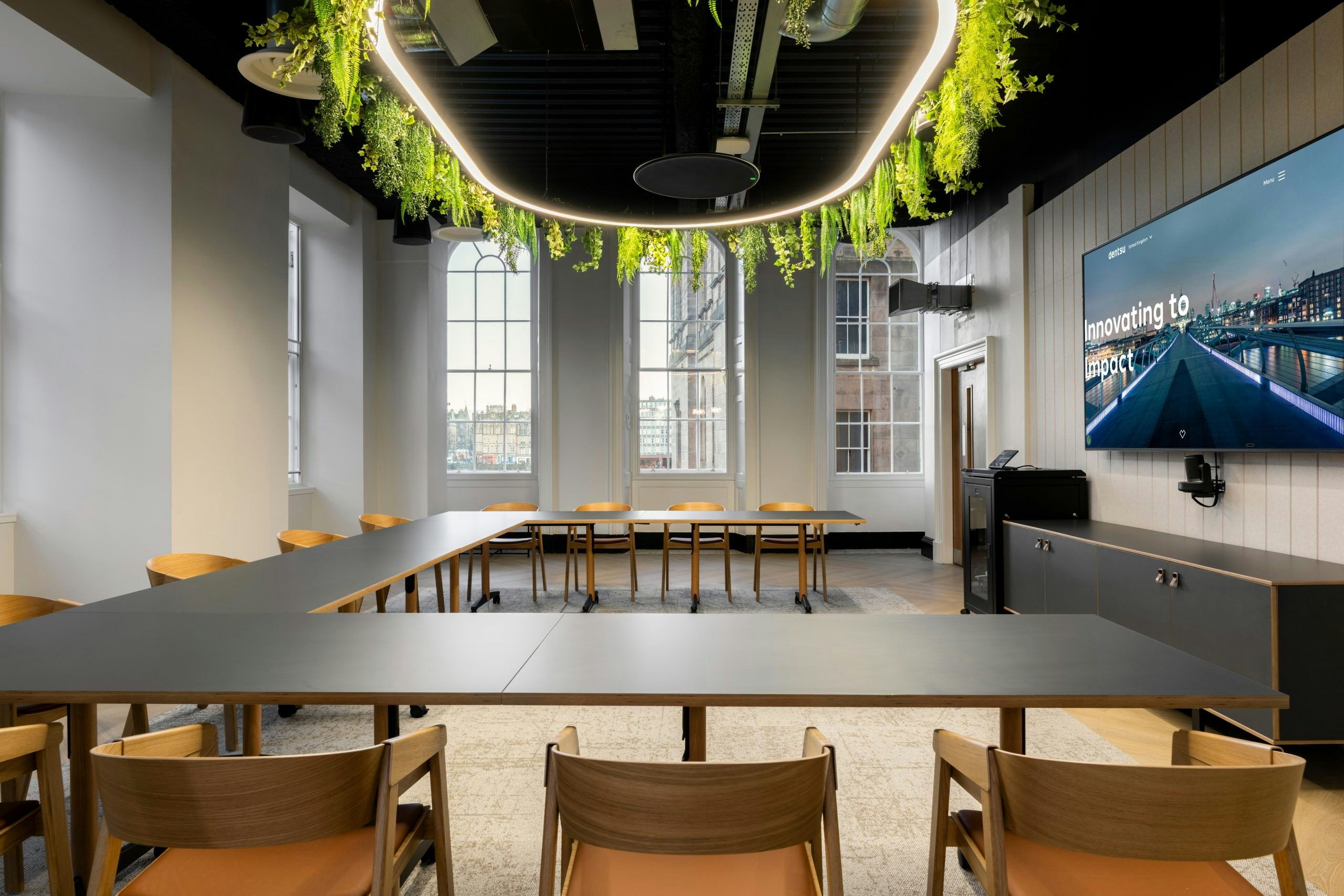
Flexibility remains a cornerstone of workplace design, but in 2026 it is expressed through furniture that genuinely adapts rather than just looks modular. Reconfigurable tables, fold-out collaboration zones, stackable seating and mobile dividers allow spaces to evolve with changing team dynamics and daily schedules. A room that hosts a workshop in the morning can reset for a client lunch by midday and open up for an all-hands presentation by late afternoon.
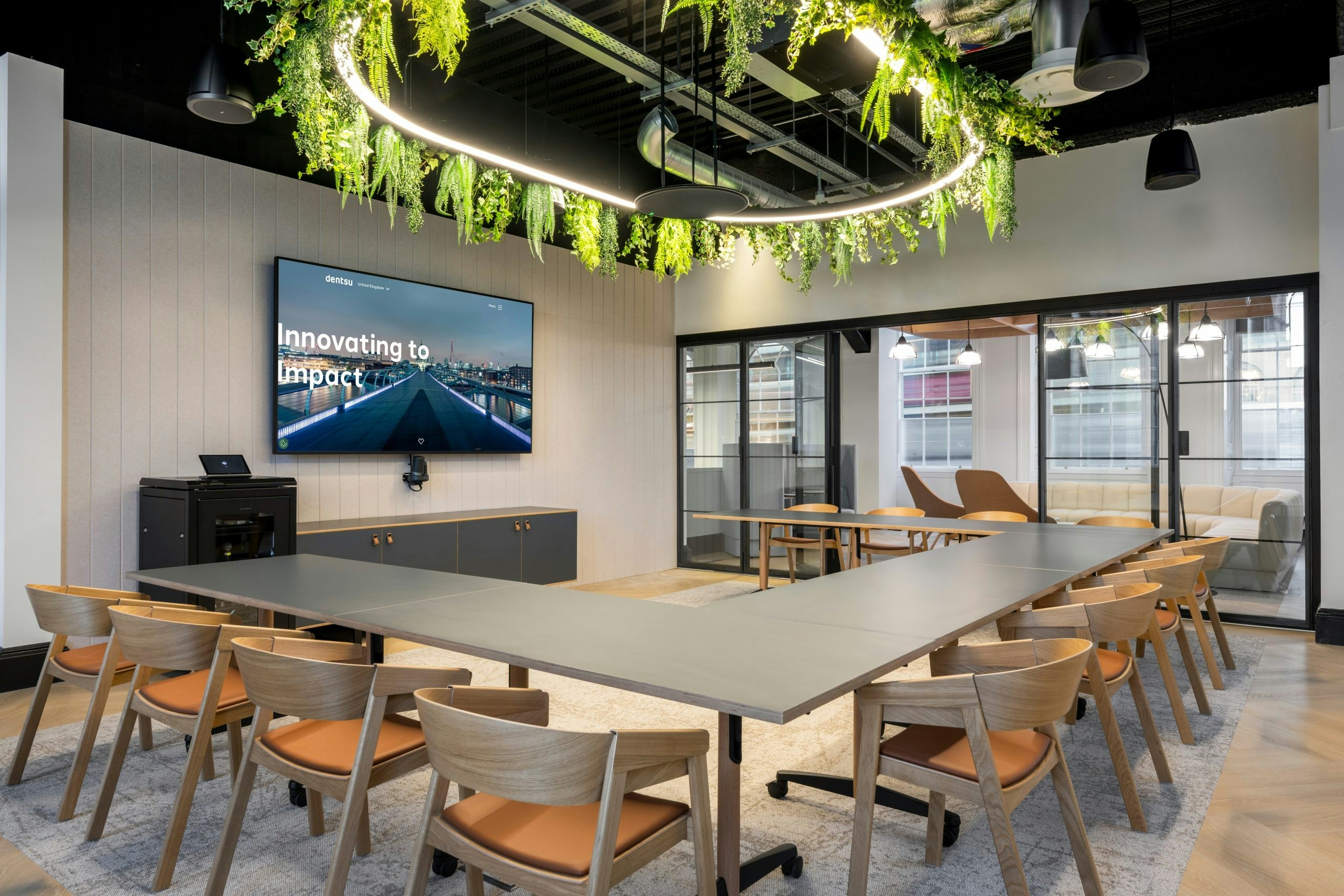
This matters more than ever in hybrid environments where mid-week peaks demand high-density collaborative settings while quieter days benefit from a more spacious, relaxed layout. Rather than building fixed rooms for every scenario, organisations are investing in furniture systems that let the space flex to match demand. The Dentsu project in Edinburgh illustrates this approach, with modular meeting configurations and mobile elements that allow the 7,000 square foot space to serve a far wider range of activities than its footprint would suggest.
Modern offices also increasingly require spaces tailored for content creation. Folding walls, mobile tables and stackable furniture facilitate activities from podcasting to video production, allowing transitions between brainstorming sessions, studio setups and formal meetings within the same workspace.
Furniture specification has also shifted toward products designed for longevity and circularity. Manufacturers increasingly offer pieces with replaceable components, re-upholsterable frames and materials that can be disassembled and recycled at end of life. The role of furniture consultancy is to match these products to operational needs, benchmarking options across manufacturers and ensuring that flexibility does not come at the expense of comfort, ergonomics or durability.
The office is one of the most visible expressions of what an organisation stands for. In 2026, the connection between workplace design and brand identity has become more deliberate, moving beyond logo walls and brand-coloured chairs into something more layered and considered.
Material choices, spatial qualities, lighting moods and art programmes all communicate values without the need for explicit branding. A law firm that specifies natural stone, warm timber and understated detailing signals precision and permanence. A technology company that uses raw concrete, playful graphics and open, adaptable spaces conveys energy and innovation. The best workplace designs feel intentional, with every element contributing to a coherent narrative that reinforces the organisation’s culture.
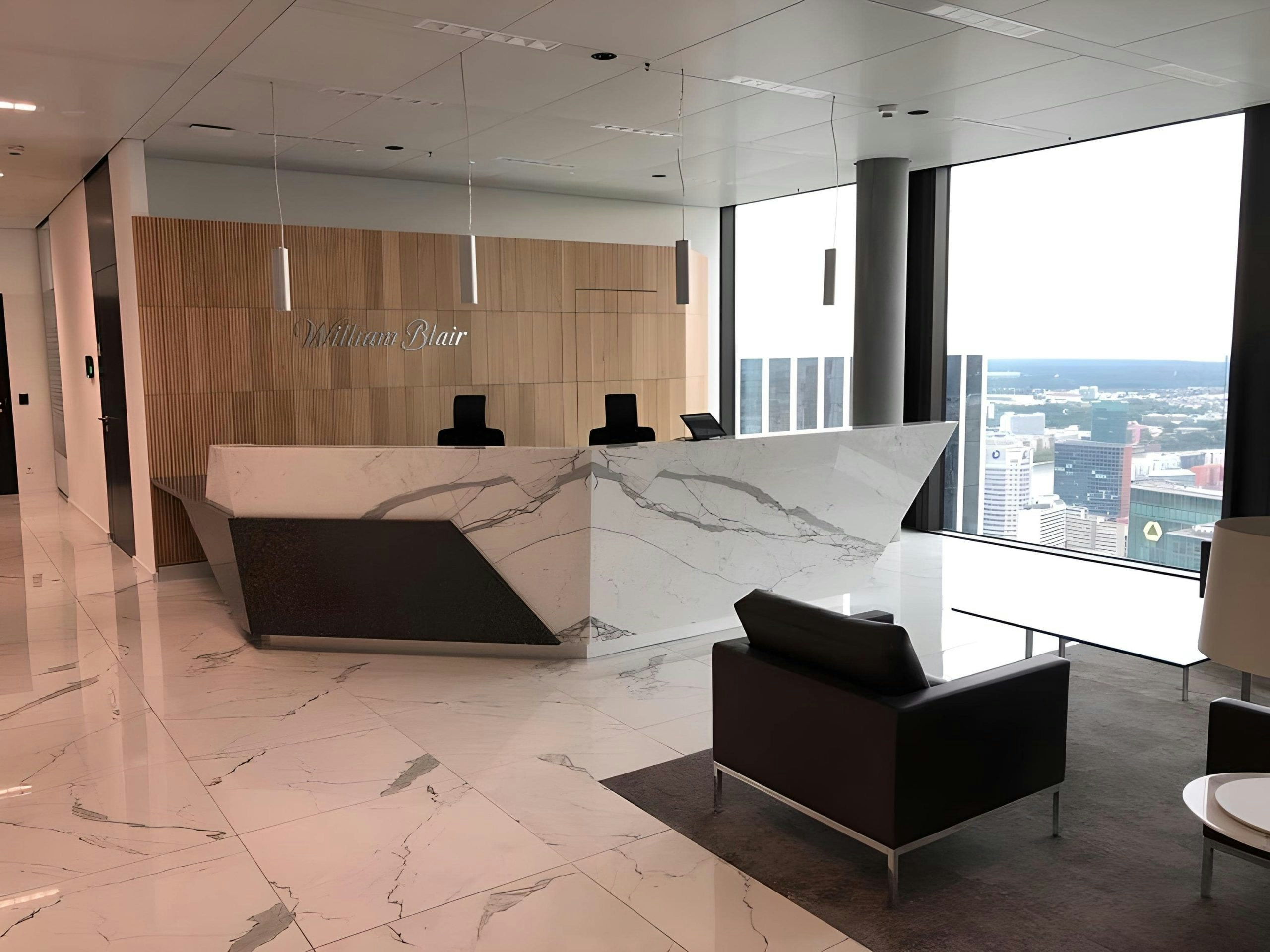
Custom furniture and bespoke joinery play a role here, offering opportunities to create signature pieces that differentiate the space. The William Blair project in Frankfurt demonstrates how a carefully curated reception and meeting environment can express a global brand consistently across multiple locations. Cultural zones that celebrate milestones, showcase employee achievements or house curated art collections add further depth.
For organisations undergoing change, whether through growth, merger or relocation, the design of the new workplace is a chance to signal a fresh direction. Getting this right requires understanding the brand deeply enough to translate it into physical space without resorting to cliches. Our brand identity in office design guide covers the principles, while our article on workplace culture and design explores how the physical environment shapes behaviour over time.
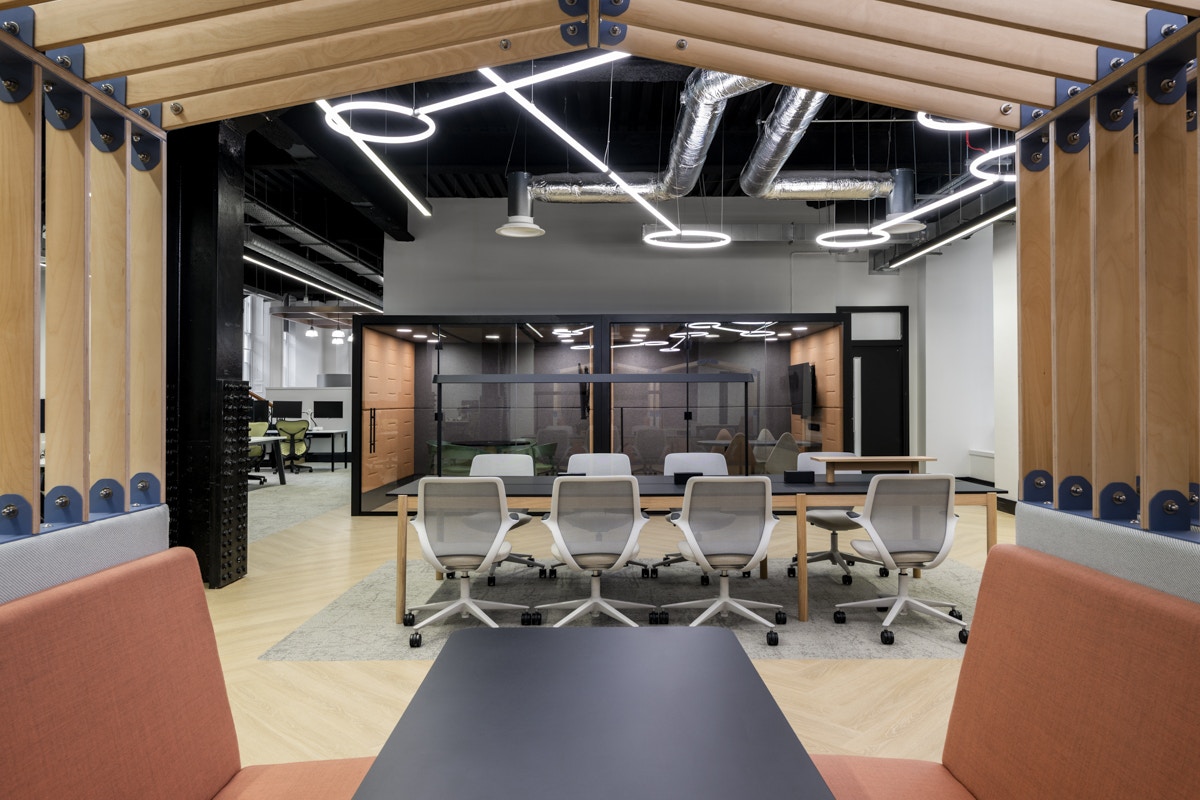
These ten office design trends do not operate in isolation. They overlap, reinforce and sometimes create productive tension with one another. A commitment to sustainable materials influences the sensory qualities of a space. Smart technology enables the environmental personalisation that neuro-inclusive design demands. Hybrid patterns determine the acoustic and spatial requirements that activity-based layouts must address. Understanding these connections is what separates a genuinely forward-thinking workplace from one that simply follows fashion.
The most successful projects begin with a clear understanding of organisational objectives rather than a checklist of features. Budget constraints require prioritisation. Operational requirements shape which interventions deliver the greatest return. Workplace design in 2026 requires integration of multiple disciplines: architecture, interior design, furniture specification, acoustic engineering, technology integration, and change management. Coordinating these elements across separate suppliers creates a significant management burden. An integrated partner changes this dynamic, with all capabilities under a single responsibility so that design decisions can be made with full awareness of their cost, programme and practical implications.
K2 Space has delivered workplace transformations across London since 2004, working with organisations ranging from global financial institutions to growing technology companies. Our integrated approach brings together office design, fit out, furniture and move management under a single team, a defined timeline, and a fixed budget.
To discuss how these trends might apply to your workplace, contact our team or request an initial cost estimate to begin the conversation.