Share
Summarise

/ Office Design for Focus
Organisations are spending heavily on artificial intelligence, but a growing body of research suggests the biggest constraint on productivity is not the technology itself. It is the ability of employees to concentrate. Acoustic design, focus booths, and quiet zones offer some of the most cost-effective interventions available, and most workplaces still do not have them.
Corporate leaders are investing heavily in artificial intelligence tools, hoping to transform how their organisations generate, process, and act on information. The logic is straightforward. AI systems can draft reports, verify data, automate workflows, and produce analysis at speeds no human team could match. The promise of a productivity leap has driven adoption at pace, with many organisations deploying multiple AI platforms across departments simultaneously.
What few leaders have accounted for is a surprisingly familiar bottleneck. Machines can produce unlimited output, but human attention remains fixed. The capacity of people to process, verify, and act on information has not changed just because the volume of information being generated has multiplied. A new study from Boston Consulting Group, published in the Harvard Business Review in March 2026, provides the clearest evidence yet that this mismatch is already causing measurable harm.
For organisations planning a new office design or refurbishment, the implications are profound. The physical environment in which people work has a direct and well-documented effect on their ability to concentrate. Acoustic conditions, spatial variety, and the provision of quiet, focused workspaces all determine whether employees can make the most of the technology they are being asked to use.
The BCG study surveyed 1,488 full-time workers across the United States and found that productivity gains from AI follow a curve with a surprisingly low ceiling. Workers who adopted a second AI tool reported a notable rise in productivity. Adding a third tool produced further gains, though at a slower rate. Beyond three tools, however, productivity actually declined. The study describes a phenomenon its authors call “AI brain fry”, defined as mental fatigue caused by excessive use of, interaction with, or oversight of AI tools beyond an individual’s cognitive capacity.
Fourteen per cent of respondents reported experiencing this effect. Workers in marketing departments were worst affected at 25 per cent, with HR, operations, and engineering roles also showing elevated rates. The symptoms described include mental fog, a persistent “buzzing” sensation, slower decision-making, and headaches. Those affected reported 39 per cent more major errors than their colleagues, and their intent to leave their organisation rose from 25 to 34 per cent.
The pattern has direct parallels with conventional multitasking research. Decades of cognitive science have established that the human brain does not truly multitask. Instead, it switches rapidly between activities, paying a time and accuracy penalty with every switch. Studies of workplace interruption consistently show that knowledge workers change tasks roughly every three minutes, and that regaining full focus after a disruption can take considerably longer. AI oversight adds new layers to this problem by generating constant streams of output that require human verification, interpretation, and decision-making.
For organisations investing in hybrid working environments, this research poses a direct challenge. If the office is the place where employees are expected to do their most demanding, AI-augmented work, the physical environment must be designed to protect the cognitive capacity that makes that work possible.
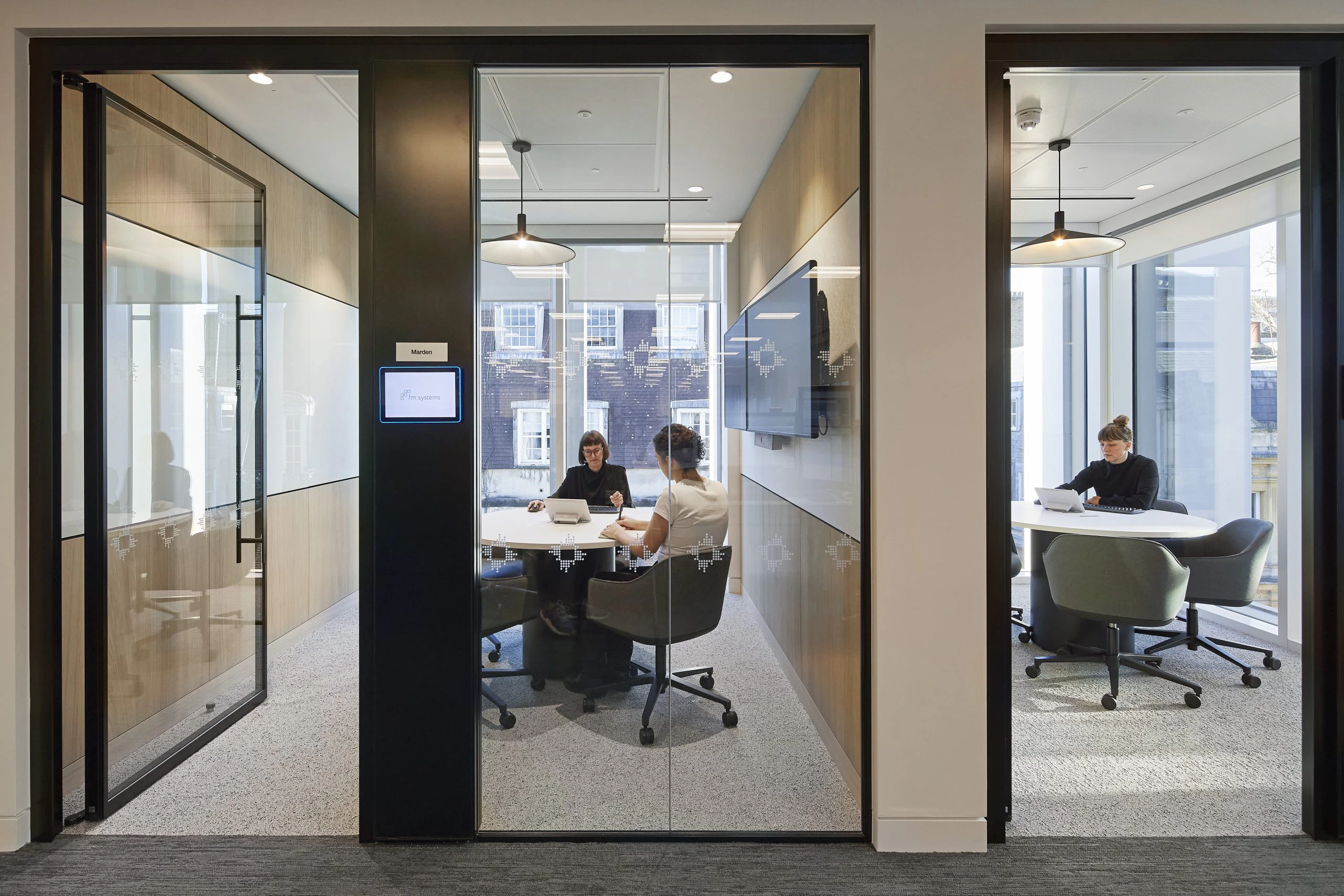
Open plan offices were adopted for straightforward reasons. Removing walls was expected to increase collaboration, speed up communication, and allow organisations to accommodate more people per square metre. Property costs fell. Managers assumed productivity would follow. The evidence, gathered over decades, tells a different story.
According to Leesman Index data, only 30 per cent of employees report satisfaction with noise levels in their workplace. Dissatisfaction with noise is statistically the strongest single predictor of poorly perceived productivity across the entire Leesman database. Their most recent research also found that 89 per cent of employees consider desk-based individual focused work to be their most important activity, and that the home environment still outperforms the office for supporting it.
These findings have consequences for any organisation trying to attract people back to the workplace. If the office cannot support the focused, concentrated work that employees value most, the commute becomes harder to justify. The challenge has been compounded by AI adoption, because employees are now being asked to manage complex information streams while sitting in environments that were designed primarily for density and visibility rather than for cognitive performance.
The result is a double problem. Background noise from conversations, phone calls, and movement disrupts concentration. At the same time, the volume of AI-generated output demanding attention has increased. The open plan layout that was supposed to make teams more connected has become an environment where the most valuable work is the hardest to do. Space planning that fails to account for this tension will underperform regardless of how much technology has been deployed.

The relationship between noise and cognitive performance is one of the most thoroughly documented findings in environmental psychology. Research published in the Journal of Applied Psychology has consistently shown that even moderate levels of background speech — the kind found in every open plan office — reduce performance on tasks requiring sustained attention by measurable margins. The effect is not subjective. It shows up in error rates, completion times, and the quality of decisions made under noisy conditions.
What makes background speech particularly disruptive is its unpredictability. The human auditory system is wired to track meaningful sound, especially conversation. Unlike steady-state noise from an air conditioning unit or traffic, intermittent speech forces the brain into a cycle of involuntary attention capture and effortful refocusing. Each cycle consumes working memory resources that would otherwise be directed at the task in front of the employee.
This matters more now than it did five years ago. The tasks that AI tools are designed to support — reviewing generated content, cross-referencing data, validating recommendations — all draw heavily on exactly the cognitive resources that background noise depletes. An employee asked to verify an AI-drafted financial summary while three colleagues hold a speakerphone call nearby is not simply uncomfortable. They are measurably less capable of catching the errors that matter.
The implication for office design is clear. Noise is not a comfort issue to be addressed if budget allows. It is a performance variable with direct consequences for output quality, error rates, and the return an organisation gets on every other investment it has made in tools and technology.
Acoustic treatment is one of the most effective and affordable interventions available to any organisation looking to improve workplace performance. Acoustic ceiling panels, wall absorption materials, carpeting, and sound-dampening partitions all reduce ambient noise and make it easier for people to maintain focus. Trading floors and broadcast studios have treated acoustic control as essential infrastructure for decades, because mistakes in those environments carry immediate financial cost. Corporate offices have historically treated it as a cosmetic afterthought.
That distinction is becoming harder to defend. If knowledge workers are expected to review and verify AI-generated analysis, interpret complex data, and make high-stakes decisions, the environment in which they do so matters as much as the technology they use. A poorly designed acoustic environment forces the brain to work harder just to filter out background noise, leaving less cognitive capacity for the task at hand.
The good news is that acoustic improvements can be layered. Organisations do not need to undertake a complete office fit-out to make meaningful progress. Ceiling baffles, fabric-wrapped wall panels, and carpet tiles in focused work areas can be installed with minimal disruption. For organisations planning a more comprehensive project, integrating acoustic design from the outset is far more cost-effective than retrofitting it later. Our guide to soundproofing an open office covers the full range of techniques available.
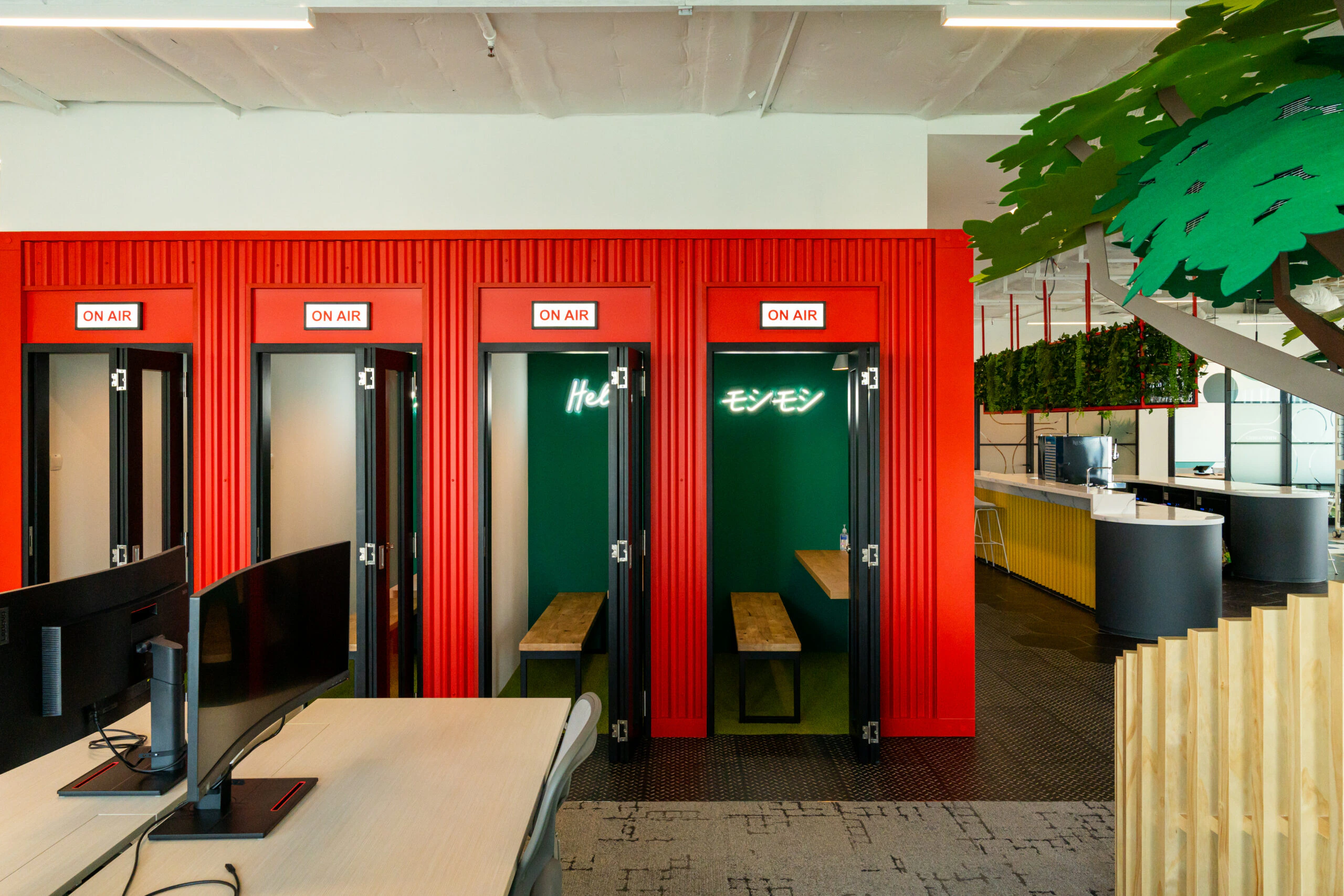
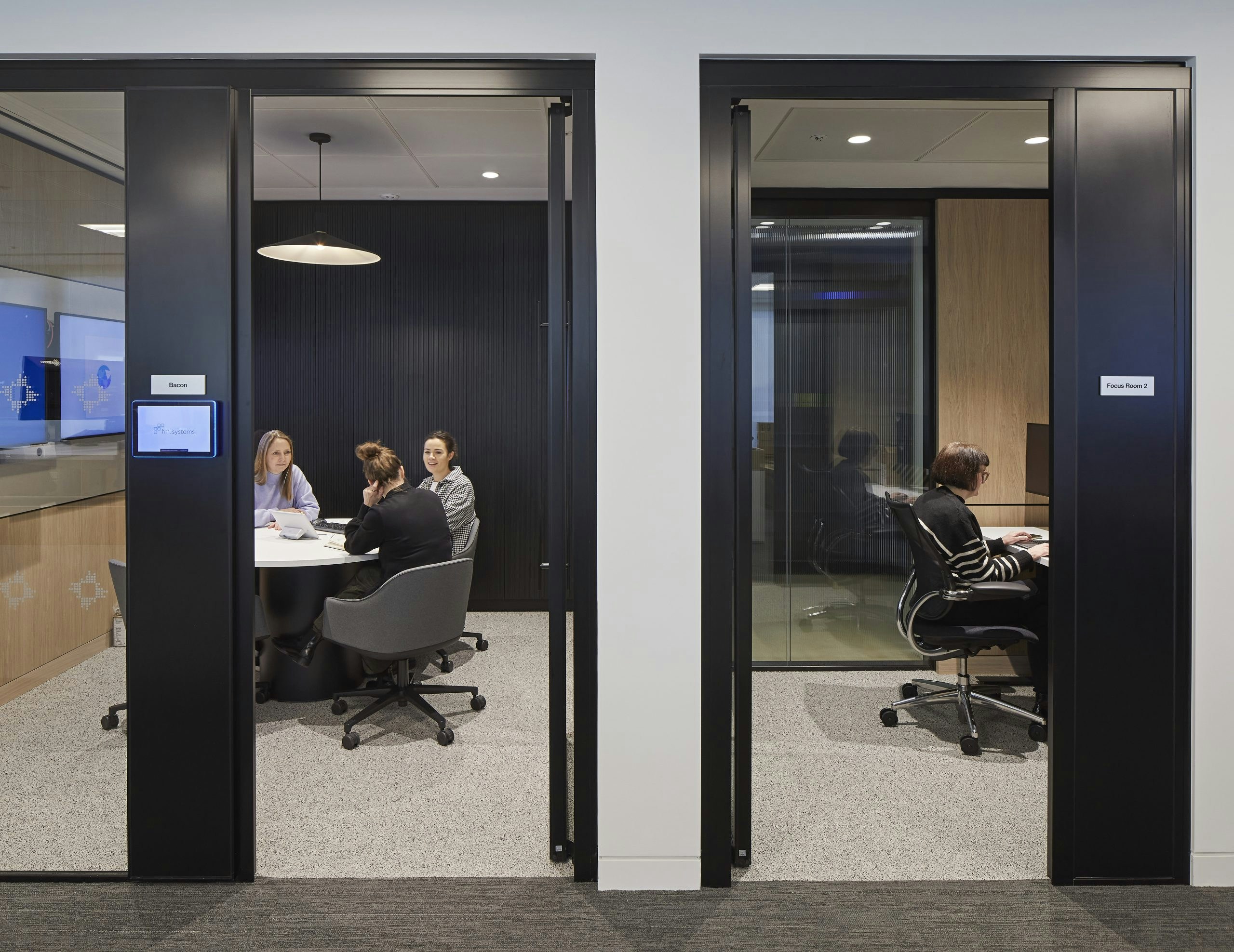
Many offices provide abundant meeting rooms and collaboration zones yet almost no spaces designed for uninterrupted individual work. Focus booths, single-person pods, and designated quiet zones allow employees to step away from the noise of the open floor plate and concentrate without distraction. High-end acoustic pods can deliver up to 30 dB of speech level reduction, enough to block casual conversation from nearby desks entirely.
Office pods have evolved considerably in recent years. Products such as the Framery One offer integrated sit-stand desks, adaptive airflow that refreshes the environment every 42 seconds, and smart features that adjust lighting for video calls. Multi-person pods accommodate small teams for focused discussions without requiring a traditional meeting room booking. Organisations that have installed pods commonly report a 30 to 40 per cent reduction in ambient noise and measurable improvements in both employee satisfaction and meeting efficiency.
The financial case for pods is also compelling. In high-cost areas like London, constructing a traditional meeting room can cost £150 to £200 per square foot once design, materials, and labour are accounted for. A comparable pod offers a meaningful saving on that figure while also providing flexibility that built rooms cannot match. Pods can be relocated if the organisation restructures, resold if no longer needed, and claimed as plant and machinery for tax purposes under the Annual Investment Allowance. Our detailed breakdown of office pod costs covers the full range of pricing and specifications.
Quiet zones require a different approach. Rather than a physical product, they represent a spatial strategy supported by design cues, signage, and organisational culture. Locating quiet zones away from circulation routes, kitchens, and high-traffic meeting areas is essential. Acoustic partitioning, soft flooring, and reduced lighting all signal the purpose of the space and encourage appropriate behaviour. Our guide to reducing noise levels in offices explores how to create effective zones at varying budget levels.
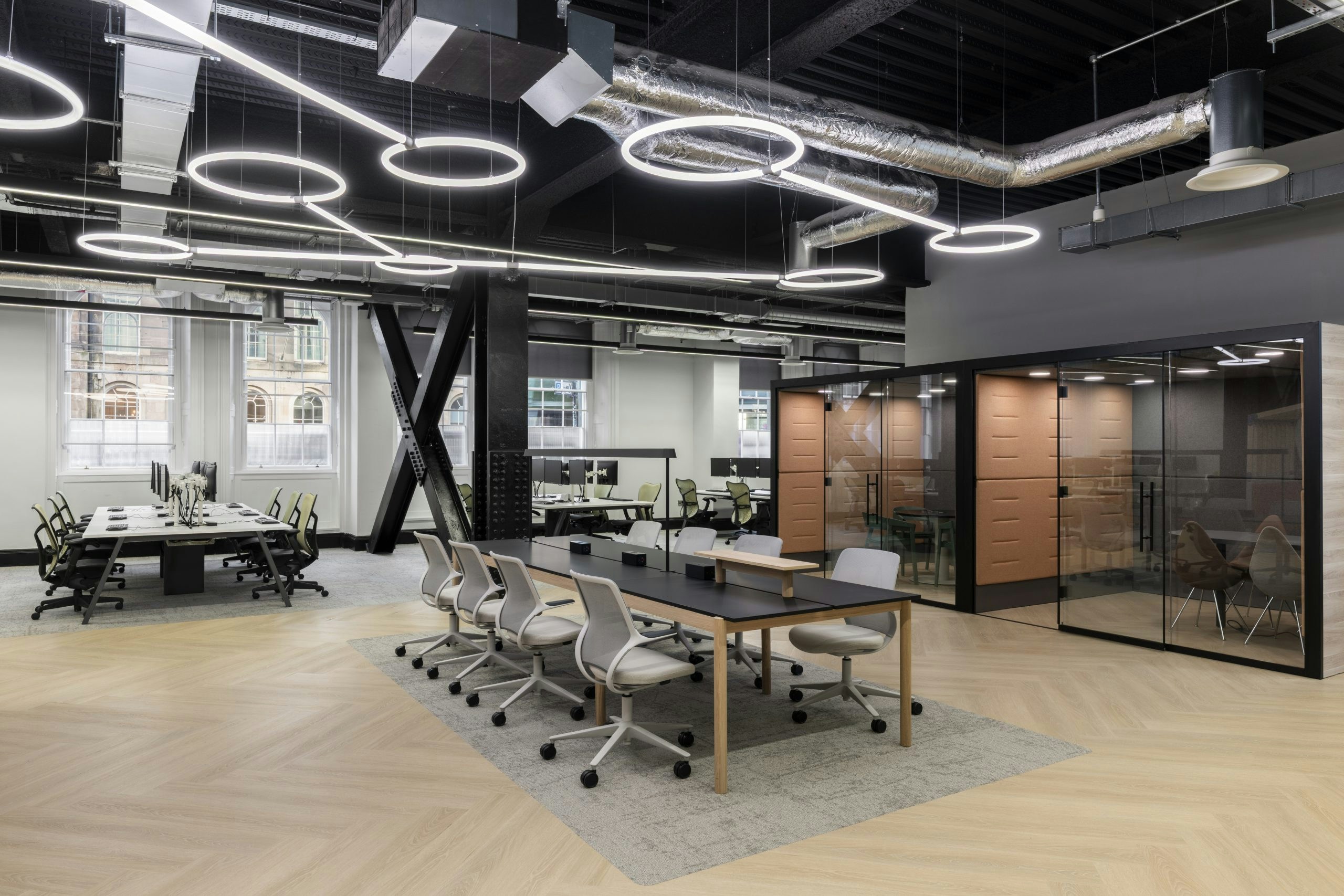
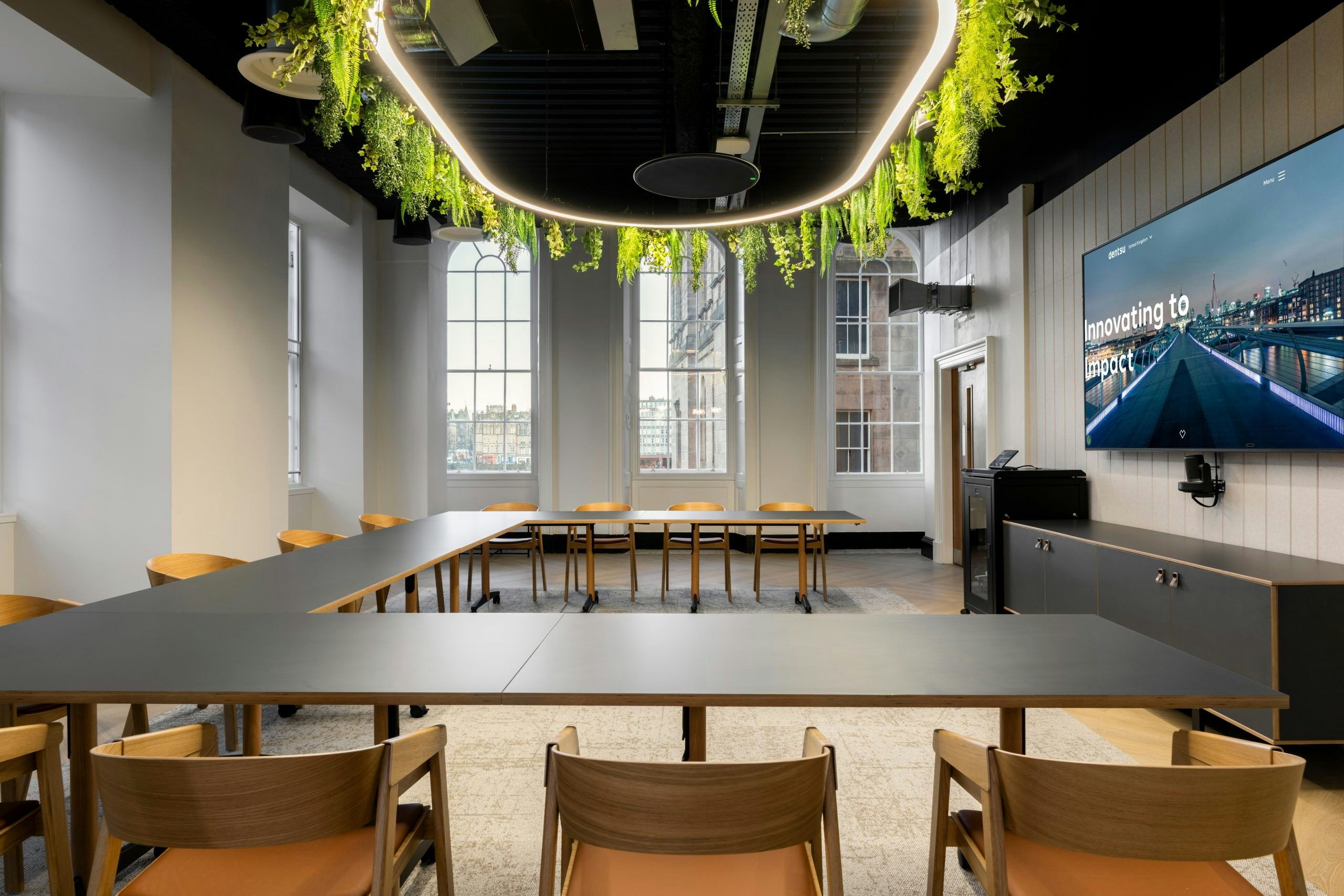
The answer is not to eliminate open plan working entirely. Collaboration, spontaneous conversation, and team connection are all genuine benefits of shared space, and they remain important reasons for coming into the office. The challenge lies in providing the right mix of settings so that people can move between collaborative and focused modes of work without friction. Effective office design achieves this through careful zoning. Activity-based working principles group spaces by the type of work they support rather than by departmental ownership. A well-zoned floor plate might include collaborative neighbourhoods with open desking and breakout seating, transitional areas with informal perching spots and huddle spaces, and dedicated quiet zones with acoustic treatment and focus pods. The critical detail is the transition between zones. Noise from a lively team area should not bleed into a quiet concentration zone two metres away. Buffer spaces, acoustic barriers, and thoughtful circulation routes all help to create clear boundaries between different working environments. Experienced design-and-build teams add real value here, because the success of zoning depends on understanding how sound travels through a floor plate and where the pinch points will occur. During the fit-out of Criteo’s London office, this balance was central to the design approach. The 190,000 square foot project included sculptural acoustic elements that defined lounge areas while simultaneously controlling sound, alongside modular collaboration spaces that could be reconfigured as needs changed. The result is a workspace where teams can work together energetically without compromising the focus of colleagues nearby.

The stakes are highest in sectors where concentration and precision carry direct financial or legal consequences. In financial services, analysts reviewing AI-generated models, traders monitoring multiple systems, and compliance teams auditing complex documentation all depend on sustained attention. A noisy, poorly designed environment does not just reduce comfort. It increases the probability of the kind of costly errors the BCG study identified.
Legal and professional services firms face similar pressures. Lawyers reviewing contracts, accountants working through audit files, and consultants building client deliverables all require extended periods of deep focus. The expectation that AI tools will make this work faster only holds true if the person using those tools has the cognitive capacity to verify and refine the output. A workspace that undermines concentration undermines the entire value chain.
In K2 Space’s work for a US hedge fund in Mayfair, the design incorporated individual focus rooms bordering collaboration areas, allowing analysts and portfolio managers to move between deep work and team discussion without leaving the floor. Glass walls maintained visual connection and daylight while acoustic separation kept each mode of work distinct. The approach reflects a principle that applies across all high-performance environments: proximity does not have to mean noise.
For PJT Partners, the design balanced the formality expected of an advisory firm with the spatial variety needed to support different work styles. Quiet, private areas for focused work sat alongside more open settings for team interaction, all connected by a design language that felt cohesive and considered. The same thinking informed the William Blair project, where the challenge was to create an environment that expressed the firm’s culture while giving individuals genuine control over their acoustic surroundings.
Acoustic performance is shaped by decisions that span every stage of a fit-out project. Floor finishes are a foundational choice. Hard surfaces such as polished concrete and stone reflect sound and increase reverberation. Carpet tiles, vinyl with acoustic backing, and rugs all absorb impact noise and reduce the ambient sound level across a floor plate.
Ceiling treatments offer some of the largest gains. Acoustic ceiling tiles, suspended baffles, and fabric-wrapped rafts absorb sound energy before it bounces back into the workspace. In offices with exposed soffits, which are popular for their visual appeal, acoustic treatment becomes even more important because the hard concrete surface would otherwise act as a reflector.
Wall treatments complement ceiling and floor interventions. Fabric-wrapped panels, perforated timber cladding, and acoustic plaster can all be integrated into the interior design without compromising aesthetics. In meeting rooms and phone call areas, acoustic wall finishes are essential for both speech privacy and call quality. A room that sounds good on a video call is a room where people want to take calls, reducing the tendency for impromptu calls to happen at open desks.
Fit-out cost planning should account for acoustic performance from the outset rather than treating it as an optional extra. The marginal cost of specifying acoustic products during a fit-out is far lower than the cost of retrofitting them once the space is occupied and the noise complaints have begun. Organisations that integrate acoustics into their design-and-build programme avoid the common scenario where expensive acoustic remediation is needed within months of moving in.

Furniture specification plays an underappreciated role in acoustic performance and in the broader experience of focused work. High-backed soft seating creates a sense of enclosure and reduces sound transmission. Desk-mounted screens provide both visual and minor acoustic separation between workstations. Storage walls and shelving systems can double as sound barriers between activity zones when positioned thoughtfully.
Office furniture selection should be informed by the acoustic strategy of the space. An open plan area with no screening, no soft materials, and hard-surfaced desking will amplify every conversation and keyboard tap. The same area with upholstered desk dividers, ergonomic task chairs with fabric shells, and a mix of high-backed and low-backed seating in breakout zones will feel noticeably calmer.
Our furniture consultancy team works with organisations to select products that perform acoustically as well as visually. This extends to pod specification, where we help clients choose the right size, configuration, and brand for their environment. Products from manufacturers such as Framery offer independently tested acoustic performance data, giving organisations confidence that the investment will deliver the noise reduction they need.

The BCG research makes an important point that extends well beyond technology strategy. Organisations that simplify their tool stacks, set sensible limits on how many AI systems employees are expected to supervise, and invest in environments that protect human attention will extract far more value from their technology investments than those that deploy AI without any thought for how people experience the work.
This is not a technology problem. It is a workplace design problem. The interventions that make the biggest difference, including acoustic treatment, focus pods, quiet zones, and thoughtful spatial zoning, are available now, proven by research, and far less expensive than the AI platforms they are designed to complement. An organisation that spends six figures on AI licences while leaving its people in a noisy, undifferentiated open plan is leaving productivity on the table.
For organisations considering a relocation, a refurbishment, or a fit-out, building acoustic performance into the brief from day one is the single most reliable way to ensure the new space supports the kind of work people are actually being asked to do. The workplace experience must be designed around concentration as much as collaboration.
K2 Space has delivered workplace transformations across London since 2004. Our integrated approach brings together design, fit-out, furniture, and move management under a single team, a defined timeline, and a fixed budget. From acoustic strategy and pod specification through to final installation and post-occupancy review, we help organisations create workplaces where people can think clearly, work effectively, and get the most from every tool at their disposal.
If you are planning a project and want to discuss how acoustic design can improve focus and productivity in your workplace, get in touch with our team.